 24 citations
,
April 2020 in “Cells”
24 citations
,
April 2020 in “Cells” DNA methylation and long non-coding RNAs are key in controlling hair growth in Cashmere goats.
 15 citations
,
December 2014 in “PLoS ONE”
15 citations
,
December 2014 in “PLoS ONE” A mutation in the iRhom2 gene causes hairless mice due to abnormal hair follicle development.
 12 citations
,
June 2019 in “The journal of pharmacology and experimental therapeutics/The Journal of pharmacology and experimental therapeutics”
12 citations
,
June 2019 in “The journal of pharmacology and experimental therapeutics/The Journal of pharmacology and experimental therapeutics” Activating TRPV3 channels stops hair growth by killing hair follicle cells.
 9 citations
,
April 2006 in “American Journal of Pathology”
9 citations
,
April 2006 in “American Journal of Pathology” SGK3 is essential for proper hair growth and health.
 7 citations
,
November 2014 in “Histochemistry and Cell Biology”
7 citations
,
November 2014 in “Histochemistry and Cell Biology” The we/we wal/wal mice have defects in hair growth and skin layer formation, causing hair loss, useful for understanding alopecia.
 6 citations
,
February 2012 in “American Journal of Animal and Veterinary Sciences”
6 citations
,
February 2012 in “American Journal of Animal and Veterinary Sciences” Growth factors are crucial for hair follicle growth and development.
 6 citations
,
April 1996 in “Journal of histochemistry and cytochemistry/The journal of histochemistry and cytochemistry”
6 citations
,
April 1996 in “Journal of histochemistry and cytochemistry/The journal of histochemistry and cytochemistry” TGF-alpha is present in sheep and ferret skin and may affect hair growth without directly stimulating cell proliferation.
 November 2023 in “Animal Bioscience”
 miR-133a-3p and miR-145-5p help goat hair follicle stem cells differentiate by controlling NANOG and SOX9.
 240 citations
,
April 2011 in “Pigment Cell & Melanoma Research”
240 citations
,
April 2011 in “Pigment Cell & Melanoma Research” Melanocyte stem cells in hair follicles are key for hair color and could help treat greying and pigment disorders.
 August 2024 in “Journal of Animal Science and Technology”
 Angora goat hair growth is influenced by gene expression, sex hormones, and breed differences.
 128 citations
,
August 2015 in “Cell Stem Cell”
128 citations
,
August 2015 in “Cell Stem Cell” Damage to skin releases dsRNA, which activates TLR3 and helps in skin and hair follicle regeneration.
81 citations
,
February 2014 in “Clinics in dermatology” Demodex mites can cause skin issues, especially in people with weak immune systems.
 205 citations
,
March 2012 in “Science Translational Medicine”
205 citations
,
March 2012 in “Science Translational Medicine” PGD2 stops hair growth and is higher in bald men with AGA.
 59 citations
,
June 2008 in “Journal of The American Academy of Dermatology”
59 citations
,
June 2008 in “Journal of The American Academy of Dermatology” The article explains the genetic causes and symptoms of various hair disorders and highlights the need for more research to find treatments.
 8 citations
,
November 2022 in “International Journal of Cosmetic Science”
8 citations
,
November 2022 in “International Journal of Cosmetic Science” Human hair varies widely and should be classified by curl type rather than race.
 2 citations
,
May 2002 in “Clinics in Dermatology”
2 citations
,
May 2002 in “Clinics in Dermatology” Ethnic differences in hair and skin are significant and under-researched, requiring tailored dermatologic treatments and more study.
 40 citations
,
June 2013 in “Scientific Reports”
40 citations
,
June 2013 in “Scientific Reports” A gene variant in KRT71 causes the curly fur in Selkirk Rex cats.
 3 citations
,
February 2024 in “International Journal of Pharmaceutical Sciences Review and Research”
3 citations
,
February 2024 in “International Journal of Pharmaceutical Sciences Review and Research” Herbal hair oil with natural ingredients promotes healthy hair and addresses common hair issues.
 November 2025 in “International Journal for Research in Applied Science and Engineering Technology”
 The herbal hair oil made with natural ingredients effectively reduces hair fall, dandruff, and prevents premature graying.
 February 2024 in “International journal of biology, pharmacy and allied sciences”
 The polyherbal hair oil effectively treats various hair problems and promotes hair health.
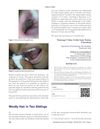 January 2012 in “International Journal of Trichology”
 Two siblings have a rare genetic condition causing curly, coarse hair.
 November 2025 in “Journal of Neonatal Surgery”
 Herbal hair oil formulations A4 and A5 effectively promote hair growth and stability.
 41 citations
,
November 2011 in “The Journal of Dermatology”
41 citations
,
November 2011 in “The Journal of Dermatology” Some hair loss disorders are caused by genetic mutations affecting hair growth.
 27 citations
,
July 2018 in “Journal of optometry”
27 citations
,
July 2018 in “Journal of optometry” Eyelashes protect the eyes, but more research is needed to understand how.
 10 citations
,
November 2017 in “Journal of Investigative Dermatology”
10 citations
,
November 2017 in “Journal of Investigative Dermatology” A mutation in the FAM83G gene is linked to skin and hair abnormalities in two related individuals.
 9 citations
,
January 2005 in “Journal of Cosmetic and Laser Therapy”
9 citations
,
January 2005 in “Journal of Cosmetic and Laser Therapy” In 2005, hair transplants looked natural and worked best with realistic goals, medication to preserve hair, and depended on the amount of donor hair.
 4 citations
,
June 2022 in “Clinical, cosmetic and investigational dermatology”
4 citations
,
June 2022 in “Clinical, cosmetic and investigational dermatology” The new SFS Scale predicts hair transplant difficulty using hair and skin types, with thick skin and coily hair being hardest to work with.
 January 2024 in “Journal of Pharmacognosy and Phytochemistry”
 Rosemary hair serum promotes healthier, stronger, and shinier hair.
 7 citations
,
January 2020 in “Journal of Dermatology”
7 citations
,
January 2020 in “Journal of Dermatology” Cantu syndrome, which causes excessive hair growth and skin issues, is due to a mutation in the ABCC9 gene, and understanding this could help develop new treatments for hair diseases.
 218 citations
,
January 2013 in “The Lancet Oncology”
218 citations
,
January 2013 in “The Lancet Oncology” Chemotherapy causes hair loss by damaging hair follicles and stem cells, with more research needed for prevention and treatment.