July 2023 in “Journal of personalized medicine” Injecting a person's own fat stem cells into their skin can make it look younger and improve double eyelids for over a year.
 April 2018 in “Journal of Investigative Dermatology”
 Older mice healed wounds better but lost more weight and might have weaker immune systems afterward.
 August 2016 in “Journal of Investigative Dermatology”
 DHT reduces a cell's ability to promote hair growth, while 3D culture without DHT improves it.
35 citations
,
December 2020 in “International Journal of Molecular Sciences” Mast cells likely promote skin scarring and fibrosis, but their exact role is still unclear.
 17 citations
,
June 2016 in “Croatian Medical Journal”
17 citations
,
June 2016 in “Croatian Medical Journal” Patients with chronic graft-versus-host disease often have skin problems like vitiligo and alopecia areata.
 4 citations
,
November 2016 in “Journal of Cutaneous Pathology”
4 citations
,
November 2016 in “Journal of Cutaneous Pathology” Three characteristics of plasmacytoid dendritic cells help tell apart lupus-related hair loss from LPP.
 3 citations
,
February 2012 in “The American Journal of Dermatopathology”
3 citations
,
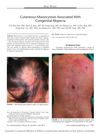
February 2012 in “The American Journal of Dermatopathology” A 3-year-old girl with skin mast cell buildup and congenital baldness improved with treatment, suggesting a rare link between these conditions.
2 citations
,
April 2025 in “Journal of Investigative Dermatology” T cells affect skin cell genes in inflammatory diseases, and therapy can normalize these changes.
 1 citations
,
January 2010 in “Elsevier eBooks”
1 citations
,
January 2010 in “Elsevier eBooks” Any drug can cause skin reactions, but antibiotics, NSAIDs, and psychotropic drugs are more common, with some reactions being life-threatening.
 September 2017 in “Journal of Investigative Dermatology”
 Researchers created human cells that can turn into sebocytes, which may help study and treat skin conditions like acne.
 9 citations
,
July 2018 in “European journal of dermatology/EJD. European journal of dermatology”
9 citations
,
July 2018 in “European journal of dermatology/EJD. European journal of dermatology” Disrupted sleep patterns can harm skin and hair cell renewal, but melatonin might help.
180 citations
,
January 2011 in “EMBO Reports” A combined approach is needed to fully understand adult stem cells, with genetic lineage-tracing being crucial.
 27 citations
,
January 2006 in “Colloids and Surfaces B: Biointerfaces”
27 citations
,
January 2006 in “Colloids and Surfaces B: Biointerfaces” Researchers found that bulge cells from human hair can grow quickly in culture and have properties of hair follicle stem cells, which could be useful for skin treatments.
4 citations
,
March 2024 in “The Journal of Cell Biology” Caspase-1 helps hair stem cells move to heal wounded or inflamed skin.
91 citations
,
June 2011 in “The EMBO Journal” TCF/Lef1 activity is essential for proper skin cell development and renewal.
55 citations
,
March 2014 in “EMBO Reports” Protein ubiquitylation is crucial for controlling stem cell functions and could be targeted for cancer treatment.
 2 citations
,
September 2022 in “Cytotherapy”
2 citations
,
September 2022 in “Cytotherapy” Fat-derived stem cells show promise for treating skin issues and improving wound healing, but more research is needed to confirm the best way to use them.
 1 citations
,
November 2023 in “iScience”
1 citations
,
November 2023 in “iScience” A protein called desmoglein 3 is important for keeping hair follicle stem cells inactive and helps in their regeneration.
1279 citations
,
November 2005 in “Nature Medicine” 141 citations
,
May 2007 in “Cancer Research” CD34 is crucial for skin tumor development in mice.
132 citations
,
April 2021 in “Stem Cell Research & Therapy” A special membrane with cell particles helps heal diabetic wounds faster.
105 citations
,
December 2017 in “Journal of Biological Engineering” Artificial skin grafts face immune rejection, but stem cells may improve future designs.
102 citations
,
April 2014 in “PloS one” Wharton’s Jelly stem cells from the umbilical cord improve skin healing and hair growth without scarring.
90 citations
,
July 2020 in “Stem Cell Research & Therapy” Stem cell vesicles can reduce skin aging from UVB by lowering inflammation and oxidative stress.
 77 citations
,
April 2016 in “Science Advances”
77 citations
,
April 2016 in “Science Advances” Researchers created a fully functional, bioengineered skin system with hair from stem cells that successfully integrated when transplanted into mice.
 61 citations
,
July 2011 in “PLOS ONE”
61 citations
,
July 2011 in “PLOS ONE” Spermidine may help reduce hair loss and deserves further testing as a treatment.
 60 citations
,
June 2019 in “Ageing Research Reviews”
60 citations
,
June 2019 in “Ageing Research Reviews” Fat from the body can help improve hair growth and scars when used in skin treatments.
 60 citations
,
June 1997 in “Journal of The American Academy of Dermatology”
60 citations
,
June 1997 in “Journal of The American Academy of Dermatology” Apoptosis is crucial for healthy skin and treating skin diseases.
50 citations
,
August 2021 in “Stem Cell Research & Therapy” Adipose-derived stem cells help heal radiation skin damage by reducing cell death and inflammation.
 49 citations
,
March 2014 in “Journal of Investigative Dermatology”
49 citations
,
March 2014 in “Journal of Investigative Dermatology” Using the drugs AMD3100 and Tacrolimus together greatly improves skin healing and hair growth after a deep skin cut by increasing stem cells in the wound.