15 citations
,
January 1998 Frequent blow-drying causes cracks and breakage in hair cuticles.
 4 citations
,
August 2021 in “Journal of the Korean Society of Cosmetology”
4 citations
,
August 2021 in “Journal of the Korean Society of Cosmetology” Plasma hairdryers cause less hair damage than regular hot air dryers.
12 citations
,
July 2015 in “British journal of dermatology/British journal of dermatology, Supplement” Curly hair breaks due to mechanical damage and environmental factors, not chemical makeup, and needs ongoing care to prevent breakage.
January 2008 in “대한미용학회지” UV exposure severely damages hair, making it rough and weak.
May 2026 in “Jurnal Pendidikan Kimia Fisika dan Biologi” Rebonding damages hair cuticles, causing erosion and cracks.
 August 2007 in “Microscopy and Microanalysis”
 Hair fibers break by cuticle cell slipping, shape changing, cuticle fraying, and surface cracking when stretched under specific conditions.
3 citations
,
January 2002 in “Springer eBooks” Alkaline hair relaxers damage hair, but cationic and non-ionic polymers can help reduce this damage.
3 citations
,
October 2006 in “Journal of dermatology” X-ray microscopy can non-invasively show hair structure changes after treatments, but it's less detailed than TEM and needs improvement.
 3 citations
,
March 2024 in “Discover Applied Sciences”
3 citations
,
March 2024 in “Discover Applied Sciences” Spirulina proteins can improve hair smoothness and strength in hair care products.
 January 2003 in “Research Portal (King's College London)”
 Hair color affects light reflection, with black hair having higher cuticle angles and lighter hair showing less specular reflection.
 May 2024 in “Indian journal of pharmacy and pharmacology”
 Luliconazole is more effective than ketoconazole at repairing damaged hair cuticles.
 January 2024 in “Uttar Pradesh journal of zoology”
 Chemical treatments severely damage hair cuticles, especially in previously treated hair.
 September 2019 in “University of the Arts London Research Online (University of the Arts London)”
 Plant oils and polymers can help protect African hair from damage during styling.
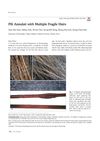 4 citations
,
January 2017 in “Annals of Dermatology”
4 citations
,
January 2017 in “Annals of Dermatology” Frequent hairdryer use may worsen hair fragility in people with Pili Annulati.
December 2025 in “Biopolymers” Heat worsens damage in chemically treated hair, especially bleached and straightened hair.
 March 2010 in “Cosmetic Dermatology”
 Hair straightening methods have advanced to improve effectiveness and reduce damage, but still rely on heat and chemicals.
 20 citations
,
September 2018 in “Journal of colloid and interface science”
20 citations
,
September 2018 in “Journal of colloid and interface science” Modified keratin binds better to hair, especially bleached hair.
 8 citations
,
November 2019 in “International Journal of Morphology”
8 citations
,
November 2019 in “International Journal of Morphology” Henna dye improves hair cuticle and thickness but effects vary by hair type and health.
 9 citations
,
April 2019 in “Journal of structural biology”
9 citations
,
April 2019 in “Journal of structural biology” Hair's internal fibers are arranged in a pattern that doesn't let much water in, and treatments like oils and heat change how much water hair can absorb.
 23 citations
,
August 2019 in “Proceedings of the National Academy of Sciences of the United States of America”
23 citations
,
August 2019 in “Proceedings of the National Academy of Sciences of the United States of America” Pollution exposure speeds up hair damage.
 November 2023 in “Borneo Journal of Pharmacy”
 Sappan wood hair tonic helps protect and repair damaged hair.
15 citations
,
October 2004 in “Colloids and surfaces. B, Biointerfaces” Holes in mature hair are likely caused by the removal of substances during hair care.
7 citations
,
September 2021 in “Journal of Applied Polymer Science” Cuttlefish ink melanin protects hair from UV damage.
 July 2025 in “Scientific Reports”
 Fermented grapeseed oil effectively repairs and protects chemically damaged hair.
8 citations
,
July 2015 in “International Journal of Dermatology” A new DSG4 gene mutation causes hair defects in a young girl.
 34 citations
,
October 1982 in “Journal of applied polymer science”
34 citations
,
October 1982 in “Journal of applied polymer science” Moisture content significantly affects how human hair breaks.
 January 2017 in “Clinical approaches and procedures in cosmetic dermatology”
 Cosmetic procedures can harm hair, but damage can be minimized with knowledge and care; however, once hair is damaged, it cannot be reliably repaired.
 November 2011 in “Informa Healthcare eBooks”
 Environmental, chemical, mechanical, and personal health factors can all damage hair and contribute to hair loss or changes in hair quality.
December 2019 in “C&EN Global Enterprise” Thicker hair isn't always stronger.
SLE patients experience hair loss similar to telogen effluvium, with hair damage and immune activity at hair follicles.