 10 citations
,
September 2020 in “Biopolymers”
10 citations
,
September 2020 in “Biopolymers” Hair's structure and properties change with pH; acidic pH maintains strength and less swelling, while alkaline pH increases water content and swelling.
 2 citations
,
November 2018 in “International Journal of Cosmetic Science”
2 citations
,
November 2018 in “International Journal of Cosmetic Science” Chamomile extract can protect hair from damage caused by light.
 January 2017 in “Nihon Keshouhin Gijutsushakaishi/Journal of S C C./Nihon Keshouhin Gijutsushakai kaishi”
 Sunlight and chemical treatments change hair's internal structure differently, needing specific care.
 20 citations
,
June 2012 in “British Journal of Dermatology”
20 citations
,
June 2012 in “British Journal of Dermatology” Bleaching hair damages protein structure, especially keratin, leading to weakened hair.
 1 citations
,
January 2013 in “Chronicles of young scientists”
1 citations
,
January 2013 in “Chronicles of young scientists” Immuno-cosmeceuticals from chicken egg yolk can effectively repair and improve damaged hair.
 59 citations
,
January 2013 in “Annals of Dermatology”
59 citations
,
January 2013 in “Annals of Dermatology” Asian hair is more resistant to UV damage due to higher lipid content.
 10 citations
,
May 2020 in “Journal of proteome research”
10 citations
,
May 2020 in “Journal of proteome research” Explosions don't stop hair proteins from being used to identify people.
 4 citations
,
January 2007 in “Sen'i Gakkaishi”
4 citations
,
January 2007 in “Sen'i Gakkaishi” Permed hair degrades faster and shows more damage after protease treatment compared to untreated hair.
 April 2024 in “Research Square (Research Square)”
 16-MHA can restore the barrier and moisture of damaged hair, making it similar to undamaged hair.
 66 citations
,
September 2005 in “Photochemical & photobiological sciences”
66 citations
,
September 2005 in “Photochemical & photobiological sciences” We don't fully understand how sunlight damages different types of hair.
 January 2011 in “Journal of Society of Cosmetic Chemists of Japan”
 18-MEA and SPDA can restore damaged hair's smoothness and reduce frizz.
 January 2005 in “Seibutsu Butsuri/Seibutsu butsuri”
 Chemical treatments damage hair more than UV exposure, making it thinner and less flexible.
 5 citations
,
October 1984 in “The BMJ”
5 citations
,
October 1984 in “The BMJ” Up to 50% of scalp hair can be lost before it appears thin, and treatment is only needed for hair loss caused by diseases or deficiencies.
 3 citations
,
July 2003 in “PubMed”
3 citations
,
July 2003 in “PubMed” The research found a way to measure hair surface changes by analyzing how light reflects off of it, and determined hair cuticle angles vary by hair length and color.
 February 2025 in “International Journal of Cosmetic Science”
 Protein carbonylation is a sensitive marker for oxidative damage in hair, especially from light exposure.
 June 2021 in “Journal of emerging technologies and innovative research”
 Onion and Aloe vera can help protect hair from damage caused by hair dyes.
 42 citations
,
April 2008 in “Acta materialia”
42 citations
,
April 2008 in “Acta materialia” Different ethnicities and treatments affect human hair strength and structure.
 20 citations
,
September 2018 in “Journal of colloid and interface science”
20 citations
,
September 2018 in “Journal of colloid and interface science” Modified keratin binds better to hair, especially bleached hair.
 11 citations
,
January 2004 in “Exogenous dermatology”
11 citations
,
January 2004 in “Exogenous dermatology” Outside factors like grooming, chemicals, and the environment can damage hair and cause disorders.
 7 citations
,
August 2018 in “Journal of cosmetic dermatology”
7 citations
,
August 2018 in “Journal of cosmetic dermatology” Chemical hair straightening improves smoothness and shine but may cause side effects, suggesting a need for safer methods.
 22 citations
,
July 2004 in “International Journal of Cosmetic Science”
22 citations
,
July 2004 in “International Journal of Cosmetic Science” UV radiation and visible light can damage hair, but there are ways to protect it.
 20 citations
,
July 2010 in “Skin Research and Technology”
20 citations
,
July 2010 in “Skin Research and Technology” Aging makes hair thinner and rougher, with less clear edges.
 20 citations
,
April 1999 in “British journal of plastic surgery”
20 citations
,
April 1999 in “British journal of plastic surgery” Ruby laser hair removal significantly reduces hair density.
 15 citations
,
August 2015 in “Scanning”
15 citations
,
August 2015 in “Scanning” Corkscrew and cigarette-ash-shaped hairs in tinea capitis are caused by internal hair degradation and external resistance.
 15 citations
,
July 2002 in “Clinical and Experimental Dermatology”
15 citations
,
July 2002 in “Clinical and Experimental Dermatology” Hair microscopy is useful for diagnosing certain hair loss conditions but has limitations and must be interpreted carefully.
 12 citations
,
January 2007 in “Current problems in dermatology”
12 citations
,
January 2007 in “Current problems in dermatology” Environmental and cosmetic factors, including heat, chemicals, and sun exposure, can cause hair loss and damage.
 4 citations
,
July 2016 in “Journal of cosmetic dermatology”
4 citations
,
July 2016 in “Journal of cosmetic dermatology” Dermatologists should use hair relaxers carefully to avoid hair and scalp damage, following specific guidelines for application and maintenance.
 2 citations
,
January 2000 in “Elsevier eBooks”
2 citations
,
January 2000 in “Elsevier eBooks” The document explains how hair is studied in forensics to identify its source and its role in criminal investigations.
 1 citations
,
July 2019 in “Microscopy Today”
1 citations
,
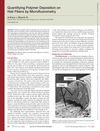
July 2019 in “Microscopy Today” Microfluorometry effectively measures how much polymer coats and penetrates hair, useful for evaluating hair products.
1 citations
,
June 2016 in “Experimental Dermatology” Metabolomics can identify hair damage markers, but its use in creating treatments is uncertain.