30 citations
,
July 2000 in “PubMed” Hair has unevenly distributed proteins and lipids, with lipids mainly in the cuticle and proteins in the cortex and medulla.
March 2026 in “Journal of the mechanical behavior of biomedical materials/Journal of mechanical behavior of biomedical materials” Hair cuticles remain stable and resilient under stress due to strong protein content and crosslinking.
 161 citations
,
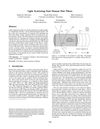
July 2003 in “ACM Transactions on Graphics”
161 citations
,
July 2003 in “ACM Transactions on Graphics” Researchers developed a new model for more realistic computer graphics rendering of hair by considering how light scatters on hair fibers.
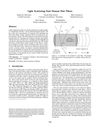
Researchers developed a new model for more realistic computer graphics of hair by considering how light scatters on hair fibers.
31 citations
,
June 2010 in “Journal of dermatology” Hair bleaching causes significant damage to hair and skin.
14 citations
,
July 2007 in “International Journal of Cosmetic Science” The new 3D imaging method accurately measures hair surface details quickly.
6 citations
,
January 2005 in “PubMed” Cotton honeydew extract improves hair smoothness and reduces damage.
2 citations
,
July 2013 in “Fashion business” Keratin essence protects and improves damaged hair.
 2 citations
,
March 1977 in “Journal of animal science/Journal of animal science ... and ASAS reference compendium”
2 citations
,
March 1977 in “Journal of animal science/Journal of animal science ... and ASAS reference compendium” Defective mink guard hairs have split tips and missing cuticle cells, causing a metallic sheen.

Understanding hair surface properties is key for effective hair care products.
May 2026 in “Jurnal Pendidikan Kimia Fisika dan Biologi” Rebonding damages hair cuticles, causing erosion and cracks.
May 2026 in “International Journal of Health Management Review” Alkaline substances can severely damage hair and scalp health.
 December 2025 in “The American Journal of Medical Sciences and Pharmaceutical Research”
 Ultrasonic and infrared treatments can improve hair strength and appearance with minimal damage.
November 2024 in “Journal of Microscopy” Human hair varies in structure based on curl type, with high curl hair showing the most differences.
 17 citations
,
June 2012 in “Journal of experimental zoology. Part B, Molecular and developmental evolution”
17 citations
,
June 2012 in “Journal of experimental zoology. Part B, Molecular and developmental evolution” Hair in mammals likely evolved from glandular structures, not scales.
 15 citations
,
August 2015 in “Scanning”
15 citations
,
August 2015 in “Scanning” Corkscrew and cigarette-ash-shaped hairs in tinea capitis are caused by internal hair degradation and external resistance.
 3 citations
,
March 2019 in “Tekstil Ve Konfeksiyon”
3 citations
,
March 2019 in “Tekstil Ve Konfeksiyon” Anatolian native goat down-hair is similar to cashmere and can be used for high-quality textiles.
 January 1991 in “Journal of Society of Cosmetic Chemists of Japan”
 Hair treatments can damage hair by changing its chemical content.
 52 citations
,
August 1978 in “Journal of Applied Polymer Science”
52 citations
,
August 1978 in “Journal of Applied Polymer Science” Human hair's ability to get wet is complex and can change with treatments, damage, and environment.
 18 citations
,
November 2010 in “Journal of morphology”
18 citations
,
November 2010 in “Journal of morphology” Antler velvet hair and body hair of red deer have different structures that help with protection and insulation.
 17 citations
,
January 2011 in “Skin Research and Technology”
17 citations
,
January 2011 in “Skin Research and Technology” Hair from people with seborrheic dermatitis is thicker scaled, more damaged, and thinner than healthy hair, and atomic force microscopy can help monitor the condition.
 2 citations
,
January 2004 in “PubMed”
2 citations
,
January 2004 in “PubMed” Conditioners with PQ-10 soften the flat part of hair cuticles but harden the edges.
5 citations
,
December 2020 in “International journal of biological macromolecules” Treatments improved hair surface and scale structure but didn't increase certain bonds in the hair cortex.
 36 citations
,
October 2014 in “Langmuir”
36 citations
,
October 2014 in “Langmuir” Bleaching hair removes its protective top layer and exposes more hydrophilic groups, changing its chemical surface and affecting how it interacts with products.
9 citations
,
January 2003 The evolution of mammal body hair remains a mystery.
 June 2023 in “Experimental dermatology”
 Pubic hair has a thicker, more protective outer layer than scalp hair, possibly due to evolution.
49 citations
,
April 2010 in “International Journal of Cosmetic Science” Hair ages as the cuticle wears down, especially beyond 1 meter from the root, affecting its strength and shine.
117 citations
,
August 2005 in “Ultramicroscopy” Human hair's strength and flexibility vary by ethnicity, damage, and treatment.
 56 citations
,
January 1996 in “Journal of Forensic Sciences”
56 citations
,
January 1996 in “Journal of Forensic Sciences” Dye enters hair at the edges of cuticle cells and penetrates more from water than alcohol-based solutions.
 November 2017 in “Koubunshi rombunshuu/Kōbunshi ronbunshū”
 Hematin in shampoo helps repair and straighten damaged hair.