 17 citations
,
June 2011 in “The journal of investigative dermatology/Journal of investigative dermatology”
17 citations
,
June 2011 in “The journal of investigative dermatology/Journal of investigative dermatology” The G60S Connexin43 mutation causes hair growth issues and poor hair quality in mice, similar to human ODDD patients.
4 citations
,
January 2021 in “Acta Dermato Venereologica” Titanium nanoparticles may trigger frontal fibrosing alopecia, so avoid products with them.
 52 citations
,
August 1978 in “Journal of Applied Polymer Science”
52 citations
,
August 1978 in “Journal of Applied Polymer Science” Human hair's ability to get wet is complex and can change with treatments, damage, and environment.
January 2020 in “Indian dermatology online journal” Hair styling products can damage hair over time.
 1 citations
,
July 2018 in “Elsevier eBooks”
1 citations
,
July 2018 in “Elsevier eBooks” Avoid chemical and physical damage to protect hair.
 January 2003 in “Research Portal (King's College London)”
 Hair color affects light reflection, with black hair having higher cuticle angles and lighter hair showing less specular reflection.
 January 2024 in “Uttar Pradesh journal of zoology”
 Chemical treatments severely damage hair cuticles, especially in previously treated hair.
 May 2017 in “Journal of microscopy and ultrastructure”
 Water quality affects mineral content in hair, and coconut oil can protect against damage.
The research found that people's hair proteins vary, especially by ethnicity and body part, which could help identify individuals in forensic science.
The research found that people's hair proteins vary by individual and body part, with some differences between ethnic groups, which could help in forensics.
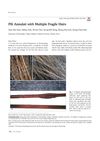 4 citations
,
January 2017 in “Annals of Dermatology”
4 citations
,
January 2017 in “Annals of Dermatology” Frequent hairdryer use may worsen hair fragility in people with Pili Annulati.
 3 citations
,
January 2007 in “Journal of health science”
3 citations
,
January 2007 in “Journal of health science” The enzymatic method can effectively identify chemical treatments on hair.

Understanding hair surface properties is key for effective hair care products.
 September 2019 in “University of the Arts London Research Online (University of the Arts London)”
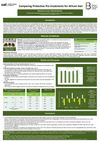
 Plant oils and polymers can help protect African hair from damage during styling.
 July 2016 in “Indian journal of science and technology”
 Neonate scalp hair is thinner, lacks a medulla, and has smaller follicles compared to adult hair.
 17 citations
,
January 2011 in “Skin Research and Technology”
17 citations
,
January 2011 in “Skin Research and Technology” Hair from people with seborrheic dermatitis is thicker scaled, more damaged, and thinner than healthy hair, and atomic force microscopy can help monitor the condition.
68 citations
,
August 2014 in “PeerJ” Human hair proteins vary by individual, body site, and ethnicity, useful for forensics.
 51 citations
,
January 2004 in “Skin Pharmacology and Physiology”
51 citations
,
January 2004 in “Skin Pharmacology and Physiology” The document explains hair growth and shedding, factors affecting it, and methods to evaluate hair loss, emphasizing the importance of skin biopsy for diagnosis.
 31 citations
,
December 2010 in “Journal of the American Academy of Dermatology”
31 citations
,
December 2010 in “Journal of the American Academy of Dermatology” Loose anagen hair syndrome is caused by structural abnormalities in the hair follicle's inner root sheath.
 19 citations
,
January 2009 in “International review of cell and molecular biology”
19 citations
,
January 2009 in “International review of cell and molecular biology” Hair's strength and flexibility come from its protein structure and molecular interactions.
 18 citations
,
November 2010 in “Journal of morphology”
18 citations
,
November 2010 in “Journal of morphology” Antler velvet hair and body hair of red deer have different structures that help with protection and insulation.
 13 citations
,
March 2019 in “Journal of cosmetic dermatology”
13 citations
,
March 2019 in “Journal of cosmetic dermatology” Heat damages hair, with Asian hair losing more protein than Caucasian hair.
 12 citations
,
July 2016 in “Forensic science international”
12 citations
,
July 2016 in “Forensic science international” The research found that postmortem root bands in hair are likely caused by the breakdown of a specific part of the hair's inner structure after death.
 12 citations
,
January 2007 in “Current problems in dermatology”
12 citations
,
January 2007 in “Current problems in dermatology” Environmental and cosmetic factors, including heat, chemicals, and sun exposure, can cause hair loss and damage.
 11 citations
,
January 2004 in “Exogenous dermatology”
11 citations
,
January 2004 in “Exogenous dermatology” Outside factors like grooming, chemicals, and the environment can damage hair and cause disorders.
 8 citations
,
January 2012 in “International journal of polymer analysis and characterization/IJPAC. International journal of polymer analysis and characterization/IJPAC. International journal of analysis and characterization”
8 citations
,
January 2012 in “International journal of polymer analysis and characterization/IJPAC. International journal of polymer analysis and characterization/IJPAC. International journal of analysis and characterization” Hydrogenated palm oil repairs and conditions damaged hair by preventing swelling.
 7 citations
,
August 2018 in “Journal of cosmetic dermatology”
7 citations
,
August 2018 in “Journal of cosmetic dermatology” Chemical hair straightening improves smoothness and shine but may cause side effects, suggesting a need for safer methods.
 2 citations
,
January 2000 in “Elsevier eBooks”
2 citations
,
January 2000 in “Elsevier eBooks” The document explains how hair is studied in forensics to identify its source and its role in criminal investigations.
 1 citations
,
April 2021 in “Han'gug miyong haghoeji/Journal of the Korean society of cosmetology”
1 citations
,
April 2021 in “Han'gug miyong haghoeji/Journal of the Korean society of cosmetology” Aspartic acid at 0.75% makes perms more effective and less damaging to hair.
 1 citations
,
January 2021 in “Pakistan journal of zoology”
1 citations
,
January 2021 in “Pakistan journal of zoology” Red fox, golden jackal, and gray wolf hairs have similar features but differ in length, thickness, and inner structure.