 June 2025 in “Current Issues in Molecular Biology”
 Minoxidil, caffeine, and biotin can improve hair shine by restoring certain genes.
October 2024 in “UNESP Institutional Repository (São Paulo State University)” Straightening and dyeing damage hair structure.
 August 2021 in “Han'gug miyong haghoeji/Journal of the Korean society of cosmetology”
 Using natural polyphenol cross-linkers like tannic acid and green tea extract in perm treatments improves curling and protects hair.
Loose anagen syndrome causes easy hair shedding in children, often resolving on its own.
 September 2017 in “Journal of Investigative Dermatology”
 Hair care products used for 4 weeks made hair smoother.
April 2007 in “Linchuang pifuke zazhi” TGF-β1 and 2 may play a role in hair loss in AGA.
TGF-β1 and 2 in hair follicles may be linked to hair loss in AGA.
January 2006 in “DOAJ (DOAJ: Directory of Open Access Journals)” Loose anagen hair syndrome causes easily pulled, thin hair in kids but is harmless and temporary.
Hair germ cells differ from epidermal cells in keratin expression, and specific keratins form after hair differentiation.
 9 citations
,
February 2022 in “Nature communications”
9 citations
,
February 2022 in “Nature communications” Rare changes in the KRT82 gene are linked to a higher risk of Alopecia Areata.
425 citations
,
August 2002 in “BioEssays” The cornified cell envelope forms a protective barrier in skin and hair, using specific proteins and lipids to maintain effectiveness.
1 citations
,
January 2007 in “AIP conference proceedings” High-resolution x-ray images showed three main structures in human hair: medulla, cortex, and cuticle.
September 2010 in “International Journal of Cosmetic Science” Chemical treatments change hair surface properties, making it more hydrophilic and able to bind conditioners.
 36 citations
,
October 2014 in “Langmuir”
36 citations
,
October 2014 in “Langmuir” Bleaching hair removes its protective top layer and exposes more hydrophilic groups, changing its chemical surface and affecting how it interacts with products.
 April 2025 in “INTERANTIONAL JOURNAL OF SCIENTIFIC RESEARCH IN ENGINEERING AND MANAGEMENT”
 Hair histology helps identify animal species in forensic investigations.
 January 2025 in “Journal of Food Biochemistry”
 2′‐Fucosyllactose reduces hair loss and promotes hair growth in mice.
January 2024 in “World Congress on Medical Physics and Biomedical Engineering, September 7 - 12, 2009, Munich, Germany” Polisorbate 20 is not suitable for curl creams due to instability.
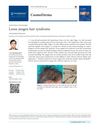 February 2023 in “Cosmoderma”
 Loose anagen hair syndrome causes easily shed hair but usually improves with time.
96 citations
,
February 2002 in “Journal of the American Academy of Dermatology” Pseudofolliculitis barbae is a chronic skin condition affecting mainly African American and Hispanic individuals, caused by shaving tightly curled hair, and managed by prevention and treatment but not curable.
50 citations
,
March 2001 in “Clinics in dermatology” Human hair is complex and grows in cycles starting from embryonic life.
36 citations
,
June 1988 in “Australian Journal of Biological Sciences” Mouse epidermal growth factor injections in sheep affected wool growth and skin, but saline did not.
19 citations
,
July 2024 in “Drug Delivery” Polymer-based nanocarriers can improve acne treatment by delivering drugs through hair follicles more effectively.
5 citations
,
September 2006 in “Natural medicines/Journal of natural medicines” Microscopic hair features can identify different Cauda Cervi species.
3 citations
,
December 2021 in “Proteins” Wool fiber curliness is linked to the presence of certain proteins and K38.
May 2026 in “International Journal of Creative and Open Research in Engineering and Management” Herbal hair oils should use effective carriers and advanced delivery systems for better results.
 December 2019 in “Ukrainian Journal of Veterinary and Agricultural Sciences”
 Donkey and horse hair have different microscopic structures, which can help tell them apart.
The keratin-based cream effectively repaired and improved damaged hair.
January 2017 in “Durham e-Theses (Durham University)” Chemical stressors damage hair structure but the skin's outer layer protects living cells.
99 citations
,
July 2005 in “Ultramicroscopy” The research improved understanding of hair and skin properties across different ethnicities and conditions.
 39 citations
,
April 2020 in “Clinical, Cosmetic and Investigational Dermatology”
39 citations
,
April 2020 in “Clinical, Cosmetic and Investigational Dermatology” Asian hair is generally straight and thick, with unique disorders and properties, and more research is needed to understand it fully.