1 citations
,
March 2017 in “Roczniki Naukowe Polskiego Towarzystwa Zootechnicznego” Domestic cat hair varies in thickness and length, with guard hairs being longest and thickest, and all hair types mainly contain keratin.
 October 2022 in “Chinese Journal of Dermatology”
 Dry skin does not mean the skin's protective barrier is broken; it's often due to a lack of natural skin moisturizers.
 August 2024 in “Biophysics Reviews”
 Mammal hairs have different internal structures.
July 2017 in “D-Scholarship@Pitt (University of Pittsburgh)” Notch signaling stops Merkel cell development, and hair follicles help maintain them after skin injury.
7 citations
,
January 1992 in “Acta Histochemica” Porcine and human pilosebaceous units are very similar.
13 citations
,
August 1999 in “Journal of Investigative Dermatology” Bikunin is found on the cell boundaries of certain skin layers and may help regulate skin and hair functions.
13 citations
,
September 2012 in “Cell & tissue research/Cell and tissue research” pCLCA2 protein may help maintain skin structure and function.
85 citations
,
January 1991 in “Journal of Investigative Dermatology”  7 citations
,
April 2012 in “Biomolecular concepts”
7 citations
,
April 2012 in “Biomolecular concepts” Keratin is crucial for keeping skin cells healthy and its changes can lead to diseases and affect cell behavior.
15 citations
,
January 1998 Frequent blow-drying causes cracks and breakage in hair cuticles.
 1039 citations
,
February 2009 in “Nature Reviews Molecular Cell Biology”
1039 citations
,
February 2009 in “Nature Reviews Molecular Cell Biology” Skin stem cells are crucial for maintaining and repairing the skin and hair, using a complex mix of signals to do so.
June 2026 in “Skin Appendage Disorders” Pili annulati may be more common than thought, so recognizing its features is important for diagnosis.
4 citations
,
April 1989 in “The Journal of Dermatology” Trichohyalin granules help inner root sheath cells in hair follicles harden by integrating with keratin filaments.
39 citations
,
January 1979 in “Journal of the Society of Cosmetic Scientists of Korea” Surfactants can protect or harm hair, skin, and nails, depending on their type and use.
5 citations
,
July 1999 in “Journal of Anatomy” Methylene blue staining effectively reveals detailed nerve structures in rat snouts.
 January 1994 in “Nihon Chikusan Gakkaiho”
 Collagen fibrils in mink skin change structure during hair growth, becoming looser and thicker in the active phase.
189 citations
,
July 2009 in “The Journal of clinical investigation/The journal of clinical investigation” Epidermolysis bullosa simplex causes easily blistered skin due to faulty skin cell proteins, leading to new treatment ideas.
January 2019 in “Journal of the American Leather Chemists Association” Improved mink skin processing can weaken hair attachment.
25 citations
,
May 2019 in “Cosmetics” 18-MEA and cationic surfactants can restore and maintain hair's hydrophobic nature, improving its beauty and feel.
 5 citations
,
March 2009 in “Pediatric Dermatology”
5 citations
,
March 2009 in “Pediatric Dermatology” The study found that pili bifurcati causes hair to intermittently split into two branches, each with its own outer layer.
139 citations
,
August 2006 in “Molecular and Cellular Biology” Rac1 is vital for hair follicle health but not needed for skin maintenance.
 5 citations
,
May 2020 in “Life science alliance”
5 citations
,
May 2020 in “Life science alliance” Removing integrin α3β1 from hair stem cells lowers skin tumor growth by affecting CCN2 protein levels.
11 citations
,
January 2005 in “Brazilian Journal of Medical and Biological Research” Hairless USP mice have enlarged skin cysts as they age.
48 citations
,
January 2002 in “Journal of Structural Biology” Trichocyte filaments have a low-density core and may include proteins for hair structure.
10 citations
,
December 2001 in “PubMed” The conclusion is that substances can penetrate hair fibers through multiple pathways, including both the cell membrane complex and the non-keratinous parts.
 4 citations
,
January 2017 in “Annals of Dermatology”
4 citations
,
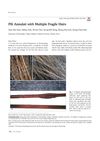
January 2017 in “Annals of Dermatology” Frequent hairdryer use may worsen hair fragility in people with Pili Annulati.
5 citations
,
August 2021 in “STAR Protocols” The protocol helps visualize detailed structures in mouse skin and cells using scanning electron microscopy.
42 citations
,
September 1990 in “Journal of Investigative Dermatology”  3 citations
,
December 2020
3 citations
,
December 2020 The interdigital gland in crossbred sheep is similar to skin and has specialized structures for secretion.
July 2026 in “Journal of Investigative Dermatology”