Search
for
Sort by
Research
60-90 / 1000+ results
research Reclassification of Botryococcus braunii chemical races into separate species based on a comparative genomics analysis
Botryococcus braunii's three chemical races should be reclassified as separate species.
research Increased dipicolinic acid production with an enhanced spoVF operon in Bacillus subtilis and medium optimization
Genetically modifying a bacteria and changing its growth conditions significantly increased the production of a chemical called dipicolinic acid.
research Bacillus subtilis promotes plant phosphorus (P) acquisition through P solubilization and stimulation of root and root hair growth
Bacillus subtilis helps plants get more phosphorus and grow better roots.

research Dandelion-DerivedCarbon Dots with pH-Responsive Chargeand Dual ROS Regulation for Anti-Infection and Accelerated Wound Repair
Dandelion-derived carbon dots effectively kill bacteria and speed up wound healing.
research Nosocomial Intravascular Catheter Infections with Extended-spectrum Beta-lactamase-producingEscherichia coliin Calves after Strain Introduction from a Commercial Herd
A hospital outbreak of catheter infections in calves was caused by a bacteria from a beef herd, leading to longer hospital stays, more drug use, and calf deaths.
research The Charnoly body as a universal biomarker of cell injury
Charnoly bodies could be a marker for cell damage, and certain nutrients and proteins might prevent them, potentially helping with brain diseases and cancer.

research Microalgal Biofactories: Sustainable Solutions for Nutrition and Cosmetics
Microalgae can sustainably improve nutrition and cosmetics with their diverse beneficial compounds.
research Algae a Potential Source in Cosmetics: Current Status, Challenges, and Economic Implications
research Pseudomonas aeruginosa heme metabolites biliverdin IXβ and IXδ are integral to lifestyle adaptations associated with chronic infection
Biliverdin IXβ and IXδ help Pseudomonas aeruginosa adapt to chronic infections.
research Uji Aktivitas Sitotoksik Ekstrak Etanol dan Metanol Spirulina platensis L. terhadap Sel WiDr
Ethanol and methanol extracts of Spirulina platensis do not kill WiDr colon cancer cells.
research CC-type glutaredoxins mediate plant response and signaling under nitrate starvation in Arabidopsis
ROXY proteins help plants respond to nitrate shortage by affecting nutrient sensing and growth.
research Booby Trap: Cancer gene spurs production of DNA-assaulting chemicals that alert and defuse rescue molecule (Cancer; Oxidative damage)
The cancer gene c-Myc increases harmful chemicals that damage DNA and can lead to cancer, but antioxidants can reduce this damage.
research CATALASE INTRINSIC EMISSIONS OF ELECTROMAGNETIC FIELDS AS PROBABLE CAUSE IN CANCEROGENESIS FROM CONSUMPTION OF RED AND PROCESSED MEAT
Catalase in processed meats may cause cancer by emitting electromagnetic fields.
research Identifikasi bakteri Resisten selenium (Se) berdasarkan gen 16s rRNA dari koleksi laboratorium mikrobiologi Universitas Islam Negeri (UIN) Maulana Malik Ibrahim Malang
Four bacteria from the lab were found to be resistant to selenium.
research Deciphering the influence of Bacillus subtilis strain Ydj3 colonization on the vitamin C contents and rhizosphere microbiomes of sweet peppers
Bacillus subtilis strain Ydj3 boosts sweet pepper growth, yield, and vitamin C by colonizing roots.
research Evaluation of Potential Toxicity of Calotropis gigantea Leaf Extract on Danio rerio: Bioactive Compounds, Oxidative Stress and Histological Toxicity Analysis
Calotropis gigantea leaf extract causes significant tissue damage and stress in fish.
research Dandelion-Derived Carbon Dots with pH-Responsive Charge and Dual ROS Regulation for Anti-Infection and Accelerated Wound Repair
Dandelion-derived carbon dots effectively kill bacteria and speed up wound healing.
research Metabolic Engineering of Microorganisms to Produce L-Aspartate and Its Derivatives
Scientists can use engineered microbes to make L-aspartate and related chemicals, but there's still room to improve their efficiency.
research Carbobenzoxy-capped Phe-Lys(BODIPY TMR-X-acyloxymethyl ketone(QSY7)
Near-infrared probes can safely and effectively image cysteine protease activity for disease diagnosis.
research Living microecological hydrogels for wound healing
The hydrogel speeds up healing of infected wounds by providing oxygen and fighting bacteria.
research Fucoidan-derived carbon dots against Enterococcus faecalis biofilm and infected dentinal tubules for the treatment of persistent endodontic infections
Fucoidan-derived carbon dots can effectively treat root canal infections by killing bacteria and are safer than traditional disinfectants.
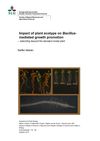
research Impact of plant ecotype on Bacillus-mediated growth promotion
Bacillus amyloliquefaciens can boost root hair growth in some Arabidopsis plants, potentially improving agriculture.

research Nanozymes expanding the boundaries of biocatalysis
Nanozymes greatly improve biocatalysis by being stable, efficient, and versatile.
research CATALASE INTRINSIC EMISSIONS OF ELECTROMAGNETIC FIELDS AS PROBABLE CAUSE IN CANCEROGENESIS FROM CONSUMPTION OF RED AND PROCESSED MEAT
Catalase in processed meats may increase cancer risk due to electromagnetic emissions.
research Physicochemical properties of wild and cultivated Saccharina latissima macroalgae harvested in the Canadian boreal-subarctic transition zone
Wild and cultivated Saccharina latissima differ in chemical makeup and color due to environmental factors.
research Assessment of Catalase Intrinsic Emissions of Electromagnetic Fields as Probable Cause in Cancerogenesis from Consumption of Red and Processed Meat
Catalase in processed meats may emit electromagnetic fields that increase cancer risk.
research Photo-Responsive Ascorbic Acid-Modified Ag2S–ZnS Heteronanostructure Dropping pH to Trigger Synergistic Antibacterial and Bohr Effects for Accelerating Infected Wound Healing
A new light-activated treatment speeds up healing of infected wounds without antibiotics.
research The reduction of selenium(IV) by boreal Pseudomonas sp. strain T5-6-I – Effects on selenium(IV) uptake in Brassica oleracea
Pseudomonas sp. T5-6-I bacteria increase selenium uptake in Brassica oleracea plants by 130%.
research Cordyceps militaris Grown on Germinated Rhynchosia nulubilis (GRC) Encapsulated in Chitosan Nanoparticle (GCN) Suppresses Particulate Matter (PM)-Induced Lung Inflammation in Mice
GCN reduces lung inflammation and damage from air pollution in mice.