September 2025 in “Genes” Certain gene variations in Jiangnan cashmere goats are linked to important traits like birth weight and fiber quality, useful for breeding.
4 citations
,
December 2021 in “Journal of clinical laboratory analysis” A new mutation in the DCAF17 gene was found to cause Woodhouse-Sakati syndrome in a large family.
140 citations
,
October 2008 in “Nature Genetics”  17 citations
,
August 2018 in “BMC Genomics”
17 citations
,
August 2018 in “BMC Genomics” The HOXC13 gene affects different hair proteins in cashmere goats in varied ways and is controlled by a feedback loop and other factors.
 195 citations
,
February 2005 in “Journal of biological chemistry/The Journal of biological chemistry”
195 citations
,
February 2005 in “Journal of biological chemistry/The Journal of biological chemistry” The ZIP7 gene helps control zinc levels in cells by moving zinc from the Golgi apparatus to the cytoplasm.
NCBP3, SDHA, and PTPRA are the best genes for normalizing goat skin experiments.
34 citations
,
September 2010 in “Clinical and Experimental Dermatology” A new gene mutation linked to KID syndrome was found, expanding genetic knowledge.
77 citations
,
March 2000 in “Journal of Investigative Dermatology” The research identified six functional hair keratin genes and four pseudogenes, providing insights into hair formation and gene organization.
8 citations
,
January 2015 in “Genetics and Molecular Research” Certain gene variations increase the risk of alopecia areata in Koreans.
22 citations
,
July 1998 in “Journal of Investigative Dermatology” The 4C32 gene may help in mouse skin development and differentiation.
29 citations
,
January 1996 in “The Journal of Clinical Endocrinology & Metabolism” A genetic mutation in a specific gene causes a salt-wasting condition in a Pakistani girl and her family.
 April 2023 in “Journal of Investigative Dermatology”
 Cyclosporin A, a drug, reduces TGF-β2 expression in skin cells, potentially causing excessive hair growth through a process involving the calcineurin/NFAT pathway.
29 citations
,
February 2001 in “Proceedings of the National Academy of Sciences” A specific DNA region controls skin cell gene expression by working with certain proteins.
9 citations
,
October 2017 in “Frontiers in plant science” The peach gene CTG134 helps control the interaction between auxin and ethylene, which could lead to new agricultural chemicals.
January 2002 in “Agritrop (Cirad)” The hr gene is linked to hair loss in Valle del Belice sheep.
12 citations
,
July 2004 in “Molecular genetics and genomics” A new mouse mutation causes skin and hair defects due to a gene change.
 September 2024 in “Genes”
 CRABP1 boosts hair cell growth in Hu sheep by affecting key genes.
 December 2024 in “Kırıkkale Üniversitesi Tıp Fakültesi Dergisi”
 Chromosomal microarray analysis is important for diagnosing rare genetic variations and guiding treatment.
29 citations
,
January 2021 in “G3 Genes Genomes Genetics” A 195 bp duplication in the HOXC10 gene causes crests in domestic chickens.
1 citations
,
November 2023 in “International Journal of Molecular Sciences” SOX18 helps sheep hair cells grow by activating a specific cell growth pathway.
 1 citations
,
August 2012 in “Journal der Deutschen Dermatologischen Gesellschaft”
1 citations
,
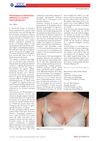
August 2012 in “Journal der Deutschen Dermatologischen Gesellschaft” A woman's hyperandrogenism was caused by a genetic mutation leading to non-classic adrenogenital syndrome.
 February 2023 in “Journal of dermatology”
 The first Japanese case of a genetic hair disorder caused by specific mutations in the LIPH gene was identified.
 4 citations
,
July 2012 in “Genesis”
4 citations
,
July 2012 in “Genesis” The Megsin-Cre transgene is a new tool for genetic manipulation in the skin and upper digestive tract.
3 citations
,
May 2025 in “Plant Cell & Environment” CLE14 peptide promotes root hair growth in Arabidopsis.
 May 2025 in “Frontiers in Genetics”
 A new genetic variant in the LIPH gene causes hair growth issues in a Chinese patient.
1 citations
,
September 2020 in “Journal of dermatology” Researchers found a new mutation in the LIPH gene of a woman with a rare hair condition.
43 citations
,
April 2010 in “Clinical genetics” Truncating mutations in the C2orf37 gene cause Woodhouse–Sakati syndrome.
3 citations
,
February 2018 in “Experimental and Molecular Medicine/Experimental and molecular medicine” A protein called PCBP2 controls the production of a hair growth protein by interacting with its genetic message and is linked to hair loss when this control is disrupted.
 124 citations
,
September 1992 in “Endocrinology”
124 citations
,
September 1992 in “Endocrinology” The human type II 5α-reductase gene, linked to certain male health conditions, has a specific structure and low similarity to other related genes.
September 2025 in “Science Advances” PADI4 enzyme slows down cell growth in developing hair follicles.