 8 citations
,
January 2022 in “Infectious diseases News Opinions Training”
8 citations
,
January 2022 in “Infectious diseases News Opinions Training” Genetic differences affect COVID-19 severity and treatment effectiveness.
 32 citations
,
April 1994 in “Journal of the American Academy of Dermatology”
32 citations
,
April 1994 in “Journal of the American Academy of Dermatology” High androgen levels and genetic factors likely cause Becker's nevus and related symptoms.
January 1983 in “Elsevier eBooks” Masculinization in affected individuals occurs gradually after puberty due to hormone changes.
 23 citations
,
January 2014 in “International Journal of Biological Sciences”
23 citations
,
January 2014 in “International Journal of Biological Sciences” African American men with prostate cancer have more androgen receptor mutations, which may lead to more aggressive cancer compared to Caucasian American men.
2 citations
,
April 2023 in “American Journal of Dermatopathology” CCCA may involve the PD1/PDL1 pathway and increased caspase 3, leading to permanent hair loss.
 February 2025 in “Journal of Investigative Dermatology”
 The ZIP13 variant is linked to abnormal hair quality.
June 2025 in “British Journal of Dermatology” Ruxolitinib helped a woman with a genetic mutation regrow her hair and improved her health.
 August 2010 in “Journal of Investigative Dermatology”
 New hair regrowth model introduced, imiquimod kills skin cancer cells, T-cadherin loss makes skin cancer more invasive, no strong link between PTCH1 gene and skin cancer after transplant, and male teens more likely to have hereditary hair loss.
September 2022 in “Research Square (Research Square)” 5% topical minoxidil improves hair density and quality in monilethrix patients.
174 citations
,
July 2003 in “The Journal of Clinical Endocrinology & Metabolism” Five new mutations in the androgen receptor gene were found, helping to understand androgen insensitivity syndrome better.
4 citations
,
July 2024 in “Animals” The KRTAP19-5 gene affects wool curvature in Chinese Tan sheep, with Variant B reducing curvature.
 April 2020 in “International journal of research in dermatology”
 An 8-year-old girl has a rare, irreversible hair loss condition caused by a genetic mutation.
74 citations
,
July 1995 in “PubMed” Lowering homocyst(e)ine levels can reverse skin and hair lightening by restoring enzyme activity needed for pigmentation.
76 citations
,
February 2007 in “Cancer Research” Protein Kinase Cε increases skin sensitivity to UV damage and skin cancer risk.
 June 2025 in “Academic Medical Journal”
 High homocysteine levels in lupus may increase inflammation and cardiovascular risk.
50 citations
,
February 2007 in “The Journal of Pathology” Somatic BHD mutations are rare in Japanese renal tumors.
53 citations
,
June 2005 in “The journal of investigative dermatology/Journal of investigative dermatology” KAP genes show significant genetic variability, but its impact on hair traits is unclear.
5 citations
,
April 1984 in “Archives of Dermatology” Porphyria cutanea tarda causes skin issues due to an enzyme deficiency.
6 citations
,
October 1998 in “Experimental Dermatology” Normal skin results from interactions between EGF and the Tabby mutation.
3 citations
,
January 2005 in “Photochemistry and Photobiology” Protein kinase C epsilon may promote skin cancer development after UV exposure by affecting nearby cells.
 1 citations
,
October 2021 in “Australasian Journal of Dermatology”
1 citations
,
October 2021 in “Australasian Journal of Dermatology” The document's conclusion cannot be provided because the document is not available or cannot be understood.
3 citations
,
October 2021 in “Turkish Journal Of Neurology” Genetic analysis is crucial for diagnosing and managing cerebral arteriopathy.
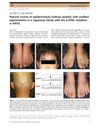 3 citations
,
January 2019 in “Journal of Dermatology”
3 citations
,
January 2019 in “Journal of Dermatology” The p.P25L mutation in the KRT5 gene causes a rare skin condition that worsens over time and may lead to hair loss starting in young adulthood.
19 citations
,
September 2013 in “Psychoneuroendocrinology” Blocking CYP17A1 enzyme may help improve certain brain function issues related to dopamine.
 25 citations
,
June 2018 in “Journal of The American Academy of Dermatology”
25 citations
,
June 2018 in “Journal of The American Academy of Dermatology” Genes linked to fibrosis are more active in people with central centrifugal cicatricial alopecia.
79 citations
,
February 2009 in “Human Genetics”  15 citations
,
January 2010 in “Reproduction, Fertility and Development”
15 citations
,
January 2010 in “Reproduction, Fertility and Development” A certain gene variant may increase the risk of polycystic ovary syndrome in Chinese women.
28 citations
,
January 2005 in “Photochemistry and Photobiology” Protein kinase C epsilon may increase skin cancer risk by affecting nearby cells.
37 citations
,
August 2011 in “Journal of Bone and Mineral Research” A girl had rickets due to a gene mutation affecting vitamin D response.
 November 2022 in “The journal of investigative dermatology/Journal of investigative dermatology”
 YAP1 is important for skin regeneration and may affect skin disorder treatments.