
The research developed a human hair keratin and silver ion hydrogel that could help heal wounds.
October 2021 in “Authorea (Authorea)” New hair perming method using tyrosine is gentler and can be done with a blow-dryer.

Plant roots respond to fungus smells by possibly using certain proteins and a plant hormone to change root growth, but more research is needed.
January 2018 in “ScholarWorks @UVM (University of Vermont)” Selenium in proteins helps prevent over-oxidation and supports chemical reversibility.
March 2016 in “The Korean Society of Beauty and Art” MSG-based hair hardener improves hair thickness, strength, and wave retention after perms.
May 2015 in “Cancer research” After chemotherapy for early breast cancer, 33.4% of patients had long-term significant hair loss, with some hair regrowth over time, but treatments for hair loss were largely ineffective.
 January 2014 in “Sen i Gakkaishi”
 Liposome-encapsulated thioglycolic acid improves hair perming effectiveness and durability.
 January 2013 in “Российский журнал кожных и венерических болезней”
 Androgenic alopecia, a common hair loss condition, is linked to changes in androgen metabolism and genetics, and can be treated with finasteride and minoxidil, but these treatments are only fully effective in 10% of patients.
Rosehip extract improves hair treatment and waving efficiency with cysteine but not with thioglycolate.
 January 2009 in “Nihon Keshouhin Gijutsushakaishi/Journal of S C C./Nihon Keshouhin Gijutsushakai kaishi”
 Curved human hair has different structures on each side, which might cause its shape and is similar to wool.
Culturing hair follicles at the air-liquid interface with minoxidil significantly boosts hair growth and preserves the root sheath.
 98 citations
,
October 2012 in “Dermatologic Clinics”
98 citations
,
October 2012 in “Dermatologic Clinics” Eating the right nutrients can improve hair health, but taking extra supplements usually doesn't help unless you have a deficiency.
74 citations
,
July 1995 in “PubMed” Lowering homocyst(e)ine levels can reverse skin and hair lightening by restoring enzyme activity needed for pigmentation.
 47 citations
,
December 2006 in “Therapy”
47 citations
,
December 2006 in “Therapy” The dietary supplement helped increase hair growth in women with hair loss.
37 citations
,
January 1975 in “Journal of Experimental Zoology” Epilation doesn't affect rat hair growth; thyroxine speeds it up, while estradiol slows it down.
23 citations
,
June 1993 in “PubMed” Medication 1 improved hair quality and growth more effectively than medication 2 and the placebo.
20 citations
,
December 2012 in “Journal of molecular structure” The study found that thioglycolic acid breaks down hair bonds more consistently than l-cysteine, which is less damaging to hair.
15 citations
,
December 2000 in “Der Hautarzt” Idiopathic chronic telogen effluvium in women causes sudden hair loss without a known cause, often linked to emotional distress.
 12 citations
,
August 1984 in “Genetics Research”
12 citations
,
August 1984 in “Genetics Research” The N gene affects the protein makeup of mouse hair.
10 citations
,
January 1997 in “Dermatology” Two siblings were diagnosed with Trichothiodystrophy, identified by brittle hair and low sulfur content.
1 citations
,
March 2023 in “Journal of Natural Fibers” A gentler, less damaging method for curling hair using tyrosine works well initially but fades after washing.
 1 citations
,
April 2015 in “Current problems in dermatology”
1 citations
,
April 2015 in “Current problems in dermatology” The document concludes that the trichogram is a useful tool for diagnosing hair loss and suggests semi-organ cultures for practical trichological research.
 1 citations
,
March 2014 in “Senses and Sciences”
1 citations
,
March 2014 in “Senses and Sciences” A supplement with Serenoa repens improved hair loss in a patient.
May 2026 in “Journal of Cosmetic Dermatology” The supplement improved hair growth and reduced hair loss effectively.
 February 2024 in “Scientific Reports”
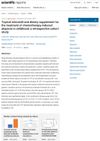
 Topical minoxidil and dietary supplements improved hair regrowth in children with hair loss from chemotherapy.
 January 2022 in “Journal of Skin and Stem Cell”
 Trichodynia is a painful scalp condition needing targeted treatments beyond symptom management.
The supplement improved hair density and overall hair beauty.
 April 2017 in “InTech eBooks”
 Many people with hair loss experience scalp pain known as trichodynia, but the causes are unclear and treatments vary.
Gushen Shengfa pills and Wuling capsules are more effective for hair growth and sleep quality than the control treatment.
Millet extract, wheat germ oil, L-cystine, and calcium pantothenate reduced hair loss and improved hair growth in women with diffuse alopecia.