6 citations
,
November 2018 in “Case reports in nephrology and dialysis” Rituximab may be an effective treatment for Cronkhite-Canada syndrome with kidney disease.
8 citations
,
July 2014 in “American Journal of Dermatopathology” Cutaneous keratocyst and steatocystoma should be called "sebaceous duct cyst" due to their similarities.
 October 2024 in “Journal of the Endocrine Society”
 Certain genetic variants reduce enzyme activity, contributing to non-classic congenital adrenal hyperplasia.
May 2010 in “Europe PMC (PubMed Central)” Near-infrared probes can safely and effectively image cysteine protease activity for disease diagnosis.
18 citations
,
February 2001 in “Der Hautarzt” A woman with myotonic dystrophy had multiple skin tumors on her scalp, suggesting a genetic link.
May 2020 in “International Journal of Dermatology and Venereology” Calcified epidermal cysts are rare, hard skin nodules that are best treated with surgical removal.
 3 citations
,
January 2012 in “Internal Medicine”
3 citations
,
January 2012 in “Internal Medicine” A Rathke's cleft cyst caused hormonal imbalances and symptoms in a 68-year-old woman.
 81 citations
,
November 2012 in “Journal of the National Cancer Institute”
81 citations
,
November 2012 in “Journal of the National Cancer Institute” The tumor suppressor gene FLCN affects mitochondrial function and energy use in cells.
July 2002 in “Science s STKE” Modified β-catenin causes different effects in hair and skin cells, leading to cysts or tumors.
 6 citations
,
August 2022 in “The Italian Journal of Pediatrics/Italian journal of pediatrics”
6 citations
,
August 2022 in “The Italian Journal of Pediatrics/Italian journal of pediatrics” New genetic mutations linked to rare skin disorders were found in three newborns.
22 citations
,
September 2003 in “Journal of Investigative Dermatology” New mutations in the EBP gene cause CDPX2, affecting bones, skin, eyes, and hair, with females generally less affected than males.
 November 2024 in “NeoReviews”
 Pallister-Killian Syndrome is a complex genetic disorder requiring coordinated care and genetic counseling.
November 2024 in “Journal of Investigative Dermatology” Genetic defects in the Wnt/PCP pathway may cause congenital yellow nail syndrome.
 October 2007 in “Clinical Biochemistry”
 New genotype linked to non-classical congenital adrenal hyperplasia found in Italian siblings.
 1 citations
,
December 2015 in “Balkan Journal of Medical Genetics”
1 citations
,
December 2015 in “Balkan Journal of Medical Genetics” Genetic screening can help diagnose and manage infertility in Slovenian couples.
5 citations
,
August 1998 in “PubMed” Intravenous cyclophosphamide effectively treated steroid-resistant lupus cystitis and peritonitis.
18 citations
,
January 2018 in “BMC dermatology” A new mutation in the PLEC gene causes a rare condition with skin blistering, muscle weakness, and hair loss.
 January 2024 in “Deleted Journal”
 Radiation cystitis patients need better monitoring and early treatment due to higher readmission rates.
7 citations
,
March 2022 in “The FASEB journal” Adult mice with CBS deficiency show minimal health issues and normal lifespan despite high homocysteine levels.
17 citations
,
January 2015 in “JOURNAL OF CLINICAL AND DIAGNOSTIC RESEARCH” Cronkhite-Canada syndrome is a rare, non-inherited condition causing various symptoms like polyps, hair loss, and weight loss.
November 2022 in “Frontiers in pediatrics” A girl with skin rashes and low zinc levels improved with zinc supplements and had new gene mutations linked to her condition.
2 citations
,
January 1989 Tay syndrome is a unique genetic disorder causing skin, hair, and developmental issues.
 3 citations
,
June 2022 in “European journal of human genetics”
3 citations
,
June 2022 in “European journal of human genetics” A new type of pachyonychia congenita linked to a specific keratin gene mutation was found in two Pakistani families.
19 citations
,
February 2001 in “Journal of paediatrics and child health” A new mutation in the mitochondrial DNA was found in a boy with MELAS, even though his family didn't show typical signs.
December 2019 in “The American Journal of Gastroenterology” Small bowel lesions in Cronkhite-Canada syndrome persist despite steroid treatment.
 13 citations
,
September 2011 in “Archives of dermatology”
13 citations
,
September 2011 in “Archives of dermatology” A patient with steroid sulfatase deficiency had a unique hair pattern and a brain malformation not previously linked to the condition.
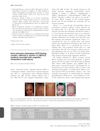 11 citations
,
September 2011 in “British Journal of Dermatology”
11 citations
,
September 2011 in “British Journal of Dermatology” New ABCA12 gene mutations were linked to a skin condition with scaling and hair loss, and a treatment helped with hair loss in a related case.
 2 citations
,
January 2008 in “International Journal of Neuroscience”
2 citations
,
January 2008 in “International Journal of Neuroscience” A 38-year-old man was diagnosed late with Kearns-Sayre syndrome after being wrongly treated for epilepsy.
January 2005 in “Journal of Cutaneous Pathology” A unique type of complex cyst was found on a man's scrotum.