 2 citations
,
January 2025 in “Pharmaceutical Research”
2 citations
,
January 2025 in “Pharmaceutical Research” Angelica gigas Nakai root extracts may help with cancer, pain, memory loss, and metabolic issues.
 1 citations
,
January 2025 in “OBM Geriatrics”
1 citations
,
January 2025 in “OBM Geriatrics” Platelets play a key role in the immune system and their lifespan and aging are important for developing new treatments.
 1 citations
,
January 2024 in “Annals of Dermatology”
1 citations
,
January 2024 in “Annals of Dermatology” COVID-19 may trigger alopecia areata, but more research is needed.
 1 citations
,
January 2024 in “American journal of clinical and experimental immunology.”
1 citations
,
January 2024 in “American journal of clinical and experimental immunology.” Skin symptoms like rashes and sores can indicate COVID-19 severity, especially in older people.
 1 citations
,
September 2023 in “Clinical, cosmetic and investigational dermatology”
1 citations
,
September 2023 in “Clinical, cosmetic and investigational dermatology” Certain genetic variants linked to immune response increase the risk of alopecia areata in Taiwanese people.
 1 citations
,
September 2022 in “TURKDERM”
1 citations
,
September 2022 in “TURKDERM” Systemic retinoids do not increase COVID-19 risk or severity.
 1 citations
,
January 2022 in “PLoS Pathogens”
1 citations
,
January 2022 in “PLoS Pathogens” A new method using human lung cells helps find drugs to block and reduce inflammation from SARS-CoV-2.
 1 citations
,
December 2020 in “Journal of Experimental Biology and Agricultural Sciences”
1 citations
,
December 2020 in “Journal of Experimental Biology and Agricultural Sciences” COVID-19 is caused by a virus from bats, and efforts focus on prevention and treatment research.
 1 citations
,
September 2020 in “Journal of the Endocrine Society”
1 citations
,
September 2020 in “Journal of the Endocrine Society” Men have worse COVID-19 outcomes than women due to genetic and hormonal differences.
 June 2026 in “International Journal of Ayurveda and Pharma Research”
 Ayurvedic treatment significantly improved psoriasis symptoms.
 April 2026 in “Signal Transduction and Targeted Therapy”
 Balancing testosterone may reduce COVID-19 severity.
 January 2026 in “Forum Dermatologicum”
 JAK inhibitors and combination therapies show promise for treating severe alopecia areata.
 August 2025 in “Majalah Obstetri & Ginekologi”
 Vaccination helps reduce long COVID symptoms in women with PCOS.

Certain plasma proteins and genes are linked to obstructive sleep apnea, suggesting potential new treatments.
 April 2025 in “Al-Rafidain Journal of Medical Sciences ( ISSN 2789-3219 )”
 Cuscuta reflexa extract may help treat benign prostatic hyperplasia by reducing inflammation and oxidative stress.
 April 2025 in “International Journal of General Medicine”
 The G allele of IFITM3 rs12252 is linked to more severe COVID-19.
 February 2025 in “International Journal of Research in Medical Sciences”
 Reinfection patients had more physical complications, while initial infection patients had more mental health issues.
COVID-19 pneumonia may cause lasting lung damage like fibrosis.
 July 2024 in “Dermatology Practical & Conceptual”
 COVID-19-related hair loss may have unique features compared to hair loss from other causes.
 June 2024 in “Archives of dermatological research”
 Dietary supplements might help prevent post-COVID hair loss, but serum ferritin is not a reliable indicator.
 May 2024 in “International Journal of Advanced Multidisciplinary Research and Studies”
 COVID-19 can cause various skin issues, like rashes and hair loss, which help in early diagnosis.
 April 2024 in “Journal of pharmacy & pharmacognosy research”
 A compound from Calophyllum inophyllum L. leaf may help treat non-small cell lung cancer.
 April 2024 in “REVISTA INTERDISCIPLINAR CIÊNCIAS MÉDICAS”
 COVID-19 increased hair loss, especially in women, linked to Azithromycin use and symptoms like fatigue and skin irritation.
 March 2024 in “Sudan Journal of Medical Sciences”
 Many doctors lack knowledge about COVID-19 skin symptoms and need better education and guidelines.
 December 2023 in “Health Information Jurnal Penelitian”
 Post-COVID syndrome causes long-lasting symptoms like fatigue, breathing issues, and anxiety.
 February 2023 in “Journal of clinical medicine research”
 Zinc acetate hydrate may help reduce fatigue and hair loss in post-COVID-19 patients.
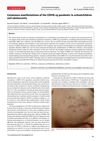 January 2023 in “Acta dermatovenerologica Alpina, Pannonica et Adriatica (Tiskana izd.)”
 The article concludes that schoolchildren and adolescents experienced various skin issues during the COVID-19 pandemic, including acne from masks and other skin reactions from the virus and vaccines.
 January 2023 in “Sibirskij medicinskij vestnik”
 Women with PCOS are more vulnerable to severe COVID-19 and related health issues.
Lower LDL-c levels predict higher COVID-19 mortality.
Social media data can help track and predict COVID-19 symptoms and trends.