 June 2021 in “International Journal of Ayurvedic Medicine”
 Phytoconstituents from Cyperus Rotundus may help treat hirsutism by interacting with the 5 α reductase enzyme.
 April 2021 in “Arab Journal of Nuclear Sciences and Applications/Arab Journal of Nuclear Sciences and Applications ”
 Repeated use of protein hair conditioner with heat or gamma irradiation can harm skin and hair health in rats.
 June 2020 in “Journal of Dermatological Treatment”
 Use telemedicine and strict hygiene for safe hair and scalp treatments during COVID-19.
 December 2019 in “University of Malaya Students Repository”
 Mimosine from Leucaena leucocephala can enhance biodiesel stability.
 January 2019 in “Springer eBooks”
 Modified HDL can better deliver drugs and genes, potentially improving treatments and reducing side effects.
 January 2018 in “Stem cells in clinical applications”
 Exosomes show promise for tissue repair and regeneration with advantages over traditional cell therapies.
 November 2016 in “Universiti Putra Malaysia Institutional Repository (Universiti Putra Malaysia)”
 Dendrobium sabin flower extract may help reduce skin aging from UV exposure.
 September 2016 in “Journal of Dermatological Science”
 A specific mutation known for causing cancer is also found to cause a skin condition in a young girl.
 September 2016 in “Journal of Dermatological Science”
 A gene mutation worsens skin irritation in mice due to a lack of certain fats.
 August 2015 in “Free Radical Biology and Medicine”
 The document concludes that the discussed biological mechanisms and potential therapies are not related to hair loss or hair growth.
 June 2015 in “Biomedical and biopharmaceutical research”
 The congress showed advancements in skin hydration, barrier function, and safe, effective new cosmetic formulations.
 December 2014 in “Endocrinología y nutrición”
 The woman's rare combination of diseases suggests an unknown factor may predispose individuals to multiple endocrine diseases.
 March 2014 in “Fertility and Sterility”
 The April 2014 issue of "Fertility and Sterility" discussed various reproductive health topics, including hormone therapy benefits, sperm and genetic factors in male infertility, and the link between PCOS and diabetes.

Chrysanthemum zawadskii extract may help treat hair loss by promoting hair growth and affecting growth factors.
 January 2014 in “Journal of Investigative Dermatology”
 Proteins like aPKC and PDGF-AA, substances like adenosine and ATP, and adipose-derived stem cells all play important roles in hair growth and health, and could potentially be used to treat hair loss and skin conditions.
Human scalp hair follicles have PGE2 and its receptors, which might affect hair growth.
 June 2010 in “Journal of Medicine and Life Science”
 Orostachys iwarenge Hara extract may help promote hair growth.
 February 2008 in “Experimental dermatology”
 Oxidative stress plays a significant role in vitiligo, and both skin and non-skin cells may be involved.
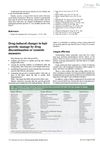 August 1994 in “Drugs & Therapy Perspectives”
 Some drugs can cause hair loss or growth, but hair usually returns to normal after stopping the drug.
 August 1994 in “Drugs & Therapy Perspectives”
 The document concludes that H2-antagonists and proton pump inhibitors are highly effective for ulcers, eradicating Helicobacter pylori is important to prevent recurrence, and misoprostol helps with NSAID-related ulcers.
 September 2016 in “Journal of Dermatological Science”
 The protein aPKCλ is crucial for keeping hair follicle stem cells inactive and for hair growth and regeneration.
October 2025 in “Journal of Drug Delivery Science and Technology” Resveratrol-loaded carriers may help reduce hair loss from chemotherapy when used with scalp cooling.
 19 citations
,
July 2015 in “Journal of Ginseng Research”
19 citations
,
July 2015 in “Journal of Ginseng Research” Korean Red Ginseng may protect against hair loss caused by chemotherapy.
38 citations
,
September 2017 in “Cancer Research” Boosting certain cell signals can prevent hair loss from cancer treatments.
 February 2020 in “Definitions”
 Botanical lotion CG428 may help regrow hair and reduce scalp inflammation in chemotherapy patients.
 1 citations
,
June 2023 in “Sciential - McMaster Undergraduate Science Journal”
1 citations
,
June 2023 in “Sciential - McMaster Undergraduate Science Journal” Scalp cooling effectively prevents hair loss in breast cancer patients undergoing chemotherapy.
 January 2023 in “Discovery medicine”
 Cepharanthine helps reduce cell aging caused by the cancer drug Doxorubicin by boosting cell cleanup processes.
January 2021 in “Annals of translational medicine” YH0618 helped reduce skin and nail problems and fatigue in chemotherapy patients.
 December 1989 in “Inpharma (Balgowlah)”
 Cyproterone helps women with hair loss caused by genetics. More research is needed to confirm the best dose.
October 2017 in “Our Dermatology Online” DCP in isopropanol is better tolerated for treating alopecia areata.