 62 citations
,
February 2011 in “Expert review of dermatology”
62 citations
,
February 2011 in “Expert review of dermatology” Scalp cooling can reduce chemotherapy-induced hair loss and should be available in all hospitals.
 61 citations
,
January 2013 in “Indian Journal of Dermatology, Venereology and Leprology”
61 citations
,
January 2013 in “Indian Journal of Dermatology, Venereology and Leprology” Hair usually grows back 1-3 months after treatment for anagen effluvium, and children with Loose Anagen Hair Syndrome often improve by adolescence.
 44 citations
,
August 1996 in “Drugs & Aging”
44 citations
,
August 1996 in “Drugs & Aging” Mitoxantrone is effective for treating acute leukemia, especially in older patients, with a lower risk of heart damage.
 39 citations
,
December 2001 in “JNCI: Journal of the National Cancer Institute”
39 citations
,
December 2001 in “JNCI: Journal of the National Cancer Institute” Using a gene therapy with the Sonic Hedgehog gene helps mice regrow hair faster after losing it from chemotherapy.
 38 citations
,
September 2017 in “Oncologist”
38 citations
,
September 2017 in “Oncologist” Scalp cooling can help prevent chemotherapy-induced hair loss with a 50-90% success rate and is safe for patients.
 34 citations
,
January 2018 in “International Journal of Dermatology”
34 citations
,
January 2018 in “International Journal of Dermatology” Scalp cooling is the most effective FDA-approved method to prevent chemotherapy-induced hair loss, but more research is needed for other treatments.
 26 citations
,
June 2005 in “Journal of The American Academy of Dermatology”
26 citations
,
June 2005 in “Journal of The American Academy of Dermatology” Some patients receiving pegylated interferon alfa injections developed skin necrosis, requiring treatment adjustments or discontinuation.
 20 citations
,
October 2018 in “American Journal of Clinical Dermatology”
20 citations
,
October 2018 in “American Journal of Clinical Dermatology” Some drugs can cause skin and hair color changes, often reversible when the drug is stopped.
 19 citations
,
October 2008 in “Journal der Deutschen Dermatologischen Gesellschaft”
19 citations
,
October 2008 in “Journal der Deutschen Dermatologischen Gesellschaft” Anti-cancer treatments can cause reversible hair loss, skin sensitivity, pigmentation changes, nail damage, and skin reactions, with a need for more research on managing these side effects.
 19 citations
,
March 2003 in “Journal of Investigative Dermatology”
19 citations
,
March 2003 in “Journal of Investigative Dermatology” Mechlorethamine treatment regrew hair in mice by killing immune cells causing hair loss without harming hair follicles.
 19 citations
,
October 1994 in “Tumori Journal”
19 citations
,
October 1994 in “Tumori Journal” As of 1994, treatments for liver cancer had not significantly improved patient survival.
 9 citations
,
February 2019 in “BMC cancer”
9 citations
,
February 2019 in “BMC cancer” M30 is a promising treatment for preventing hair loss during chemotherapy.
 7 citations
,
September 2006 in “Clinical lymphoma & myeloma”
7 citations
,
September 2006 in “Clinical lymphoma & myeloma” Balancing treatment effectiveness with side effects is crucial for relapsed follicular non-Hodgkin's lymphoma, especially in older patients.
 6 citations
,
January 2020 in “International Journal of Biological Sciences”
6 citations
,
January 2020 in “International Journal of Biological Sciences” Septin4 helps kill colon cancer cells by working with the protein BAX.
 5 citations
,
October 2018 in “American Journal of Clinical Dermatology”
5 citations
,
October 2018 in “American Journal of Clinical Dermatology” Skin problems are common after stem cell transplants, and early treatment by dermatologists can improve patient outcomes.
 2 citations
,
January 2021 in “Turkiye Klinikleri Journal of Internal Medicine”
2 citations
,
January 2021 in “Turkiye Klinikleri Journal of Internal Medicine” Cancer treatments often cause hair loss, and more research is needed to prevent and treat it.
 2 citations
,
January 2012 in “InTech eBooks”
2 citations
,
January 2012 in “InTech eBooks” Chemotherapy often causes hair loss, which usually grows back within 3 to 6 months, but there's no effective treatment to prevent it.
 1 citations
,
July 2012 in “Nasza Dermatologia Online”
1 citations
,
July 2012 in “Nasza Dermatologia Online” IL-1α levels are higher in alopecia areata patients, suggesting a role in the disease.
 1 citations
,
May 2006 in “Expert Opinion on Therapeutic Patents”
1 citations
,
May 2006 in “Expert Opinion on Therapeutic Patents” No FDA-approved treatments for chemotherapy-induced hair loss existed in 2006; more research was needed.
 December 2023 in “Malahayati International Journal of Nursing and Health Science”
 Chemotherapy in children often causes hair loss, nausea, vomiting, and mood swings.
 January 2019 in “Springer eBooks”
 Some chemicals and drugs can cause hair loss, which usually grows back after stopping the treatment.
 August 2018 in “SDÜ SAĞLIK BİLİMLERİ DERGİSİ”
 No method fully prevents hair loss from chemotherapy, but some methods can reduce it and improve quality of life.
 January 2018 in “Elsevier eBooks”
 The document concludes that alopecia has significant social and psychological effects, leading to a market for hair loss treatments.
 August 2016 in “Journal of Dermatology”
 A chemical called 5-Bromo-2′-deoxyuridine caused rapid hair loss in mice by killing certain skin cells through a specific cell death pathway.
 August 1994 in “Drugs & Therapy Perspectives”
 Psoriasis treatments range from topical creams to systemic medications with serious side effects, and while treatments can manage symptoms, there is no cure.
Treatments for acute leukaemia lead to high remission rates, but relapses occur, requiring ongoing advancements in care.
 January 1989 in “Side effects of drugs annual”
 Some cancer and immune system drugs can cause serious side effects, including heart, lung, nerve, and organ damage, which need careful monitoring and management.
 22 citations
,
November 2005 in “BMC Cancer”
22 citations
,
November 2005 in “BMC Cancer” Gemcitabine and paclitaxel are effective and safe as first-line treatment for metastatic breast cancer.
 2 citations
,
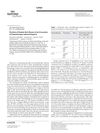
November 2019 in “Skin appendage disorders”
2 citations
,
November 2019 in “Skin appendage disorders” Platelet-rich plasma doesn't prevent hair loss from chemotherapy, and mononuclear cells only help against hair loss from one specific chemotherapy drug.
 165 citations
,
February 2014 in “Phytotherapy Research”
165 citations
,
February 2014 in “Phytotherapy Research” Myrtle has various health benefits and potential for medicine development.