 5 citations
,
January 1998 in “Clinical and experimental dermatology”
5 citations
,
January 1998 in “Clinical and experimental dermatology” Myotonic dystrophy should be considered in patients with hair thinning, and genetic counseling is important.

There is no cure for myotonic dystrophy type 1, so treatment focuses on managing symptoms and complications.
 4 citations
,
February 2014 in “Journal of the European Academy of Dermatology and Venereology”
4 citations
,
February 2014 in “Journal of the European Academy of Dermatology and Venereology” Early diagnosis of hair tourniquet syndrome saved a baby's toe from being lost.
 September 2021 in “Research Square (Research Square)”
 Not having enough or having too much of the protein Grainyhead-like 3 leads to various developmental problems.
November 2023 in “Вопросы современной педиатрии” Genetic testing can diagnose hair loss linked to DSG4 gene variants.
5 citations
,
December 2014 in “Molecular cytogenetics” A specific genetic change is linked to mental disorders, intellectual disability, and possibly autoimmune disease in a family.
27 citations
,
February 1988 in “Journal of the American Academy of Dermatology” The skin condition Ulerythema ophryogenes did not improve with treatment in a patient with other birth defects.
 January 2024 in “Clinical, cosmetic and investigational dermatology”
 A child with a rare vitamin D-resistant condition improved with treatment.
 February 2026 in “Orphanet Journal of Rare Diseases”
 Most genetic mutations causing hypohidrotic ectodermal dysplasia in Russian patients are found in the EDA gene.
 October 2022 in “Boletín médico del Hospital infantil de México/Boletín médico del Hospital Infantil de México”
 The patient has a rare skin condition that shows features of two known disorders.
2 citations
,
June 2013 in “Journal of Dermatological Case Reports” Olmsted syndrome is a rare skin disorder causing thickened skin and other symptoms.
1 citations
,
January 2018 in “Indian dermatology online journal” Early diagnosis and genetic evaluation of ADULT syndrome are crucial to reduce stress and medical costs.
50 citations
,
September 2009 in “Molecular Genetics and Metabolism” A new gene mutation causes vitamin D resistance and rickets, treatable with calcium therapy.
January 2013 in “International Journal of Trichology” Early diagnosis and a multidisciplinary approach are crucial for children with Trichothiodystrophy and hidden learning disorders.
5 citations
,
February 2022 in “Molecular genetics & genomic medicine” New gene variants linked to a rare inherited hair loss disorder were found in three Chinese families.
 January 2012 in “International Journal of Trichology”
 Two siblings have a rare genetic condition causing curly, coarse hair.
 November 2016 in “Elsevier eBooks”
 Genetic mutations can affect female sexual development, requiring personalized medical care.
 February 2010 in “Journal of the American Academy of Dermatology”
 Umbilical cord blood transplantation improved the boy's symptoms despite complications.
 February 2023 in “Cosmoderma”
 An infant with complete hair loss was diagnosed with a genetic disorder affecting hair growth.
694 citations
,
April 2000 in “Nature genetics” Msx2 deficiency in mice leads to bone growth and organ development problems.
April 2023 in “The Medical Journal of Australia” A five-year-old girl has a harmless, unchanging bald patch on her scalp.
 2 citations
,
January 2023 in “Annals of Dermatology”
2 citations
,
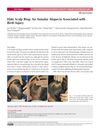
January 2023 in “Annals of Dermatology” A hairless patch on a boy's scalp from birth injury improved with minoxidil treatment.
50 citations
,
February 2004 in “Genomics” A gene mutation causes lanceolate hair in rats by disrupting hair shaft integrity.
9 citations
,
August 2002 in “British journal of ophthalmology” The document reports a rare case of ECCL with a new association with optic disc colobomas.
34 citations
,
September 2010 in “Clinical and Experimental Dermatology” A new gene mutation linked to KID syndrome was found, expanding genetic knowledge.
 July 2024 in “Journal of Rare Diseases”
 Woodhouse-Sakati syndrome shows varied symptoms and genetic differences within families.
 January 2017 in “Turkiye Klinikleri Journal of Dermatology”
 A 9-month-old baby had a rare, persistent ring-shaped hair loss condition.
 April 2016 in “Plastic and reconstructive surgery. Global open”
 Surgery may help infants with sagittal craniosynostosis develop more typical language processing.
 13 citations
,
July 2012 in “Pigment Cell & Melanoma Research”
13 citations
,
July 2012 in “Pigment Cell & Melanoma Research” A mutation in the Adam10 gene causes freckle-like spots on Hairless mice.
 April 2016 in “Journal of The American Academy of Dermatology”
 People with Down syndrome are more likely to experience hair loss, and using dermoscopy can help diagnose it.