475 citations
,
October 2006 in “Proceedings of the National Academy of Sciences” Folliculin helps regulate energy and nutrient sensing, impacting Birt–Hogg–Dubé syndrome.
 339 citations
,
February 2014 in “Journal of The American Academy of Dermatology”
339 citations
,
February 2014 in “Journal of The American Academy of Dermatology” Most patients with frontal fibrosing alopecia are postmenopausal women, and treatments like finasteride and dutasteride can improve or stabilize the condition.
January 2024 in “Updates in clinical dermatology” Frontal fibrosing alopecia is a scarring hair loss condition mainly affecting postmenopausal women, with unclear causes.
 May 2019 in “Anais brasileiros de dermatologia/Anais Brasileiros de Dermatologia”
 Frontal fibrosing alopecia mostly affects postmenopausal women, with diagnosis often delayed by 3 years.
 August 2015 in “Dermatología Argentina”
 Frontal fibrosing alopecia causes hairline recession and eyebrow loss in postmenopausal women.
 155 citations
,
September 2008 in “British journal of dermatology/British journal of dermatology, Supplement”
155 citations
,
September 2008 in “British journal of dermatology/British journal of dermatology, Supplement” FFA is more common in postmenopausal women, can affect younger women, and may stabilize over time.
2 citations
,
June 2021 in “Sultan Qaboos University medical journal” Familial frontal fibrosing alopecia is rare, mostly affects women, and often occurs between sisters or mother-daughter pairs.
14 citations
,
January 2014 in “Indian Journal of Dermatology Venereology and Leprology” Frontal fibrosing alopecia can affect men's beards and leads to permanent hair loss.
5 citations
,
April 2019 in “DOAJ (DOAJ: Directory of Open Access Journals)” Stopping shaving or removing hair follicles usually resolves Pseudofolliculitis barbae.
 8 citations
,
November 2018 in “Australasian Journal of Dermatology”
8 citations
,
November 2018 in “Australasian Journal of Dermatology” Frontal fibrosing alopecia in families shows similar signs to individual cases and may have a genetic link.
9 citations
,
April 2006 in “International Journal of Dermatology” DFMO may help control hair growth and treat cancer.
 6 citations
,
January 2019 in “Medical Hypotheses”
6 citations
,
January 2019 in “Medical Hypotheses” Frontal Fibrosing Alopecia might be an autoimmune disease.
 October 2020 in “International Journal of Research in Dermatology”
 The review suggests more research is needed to understand Frontal fibrosing alopecia, a condition causing hairline recession in postmenopausal women.
1 citations
,
May 2024 in “Communications Biology” Dab2 protein is crucial for hair follicle stem cell renewal and preventing early aging.
March 2005 in “Journal of the American Academy of Dermatology” Cosmetic treatments can replenish key amino acids in damaged hair, improving its strength and appearance.
Early diagnosis and treatment of frontal fibrosing alopecia are crucial to prevent permanent hair loss.
 64 citations
,
June 2009 in “Journal of The American Academy of Dermatology”
64 citations
,
June 2009 in “Journal of The American Academy of Dermatology” Oral dutasteride can potentially treat frontal fibrosing alopecia in postmenopausal women, with some patients showing disease arrest and hair regrowth.
 1 citations
,
May 2024 in “Dermatology and Therapy”
1 citations
,
May 2024 in “Dermatology and Therapy” Frontal Fibrosing Alopecia needs better diagnostics and treatments, with dutasteride showing promise.
 April 2024 in “International Journal of Women’s Dermatology”
 Laser hair reduction can sometimes cause a rare skin condition called Fox-Fordyce disease.
9 citations
,
January 2023 in “Journal of Clinical Medicine” The FFA-QLI is a reliable tool for assessing quality of life in women with severe Frontal Fibrosing Alopecia.
 April 2023 in “Tikrit Journal of Pharmaceutical Sciences”
 Deferasirox effectively reduces iron overload in ß-thalassemia patients but may cause some manageable side effects.
 33 citations
,
January 2010 in “Case reports in dermatology”
33 citations
,
January 2010 in “Case reports in dermatology” Dermoscopy helps diagnose frontal fibrosing alopecia by distinguishing it from other hair loss conditions.
2 citations
,
January 2019 in “Skin appendage disorders” Early diagnosis and quick treatment improve life quality for FFA patients.
 39 citations
,
July 2015 in “British Journal of Dermatology”
39 citations
,
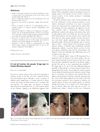
July 2015 in “British Journal of Dermatology” The pseudo 'fringe sign' can also appear in frontal fibrosing alopecia, not just in traction alopecia, showing that this condition may be more common than thought.
April 2019 in “Journal of Investigative Dermatology” Frontal Fibrosing Alopecia involves disrupted cholesterol pathways, fibrosis, and increased mast cells.
 July 2018 in “Elsevier eBooks”
 Frontal Fibrosing Alopecia is a type of hair loss affecting mostly older women, with no agreed best treatment.
January 2016 in “Indian dermatology online journal” The patient has frontal fibrosing alopecia (FFA).
5 citations
,
February 2016 in “Sultan Qaboos University medical journal” The patient had a severe itchy rash and hair loss in the armpits.
December 2016 in “Anales del sistema sanitario de Navarra” Frontal fibrosing alopecia is increasing, especially in postmenopausal women, and treatment with finasteride can improve it.
61 citations
,
July 2022 in “Journal of Nanobiotechnology” Fucoidan-derived carbon dots can effectively treat root canal infections by killing bacteria and are safer than traditional disinfectants.