 7 citations
,
March 2022 in “Scientific reports”
7 citations
,
March 2022 in “Scientific reports” Removing anthrax toxin receptor 1 in pigs prevents Senecavirus A infection and causes a rare disease similar to GAPO syndrome.
6 citations
,
August 2024 in “BMC Ophthalmology” New genetic variants linked to albinism were found in Pakistani families.
 2 citations
,
April 2025 in “Frontiers in Genetics”
2 citations
,
April 2025 in “Frontiers in Genetics” The ASIP gene is crucial for determining cattle coat color.

Inhibiting AP-1 changes skin tumor types and affects tumor cell identity.

Inhibiting AP-1 changes skin tumor types and affects tumor cell identity.

The document concludes that the development of certain tumors is influenced by genetic background and that a specific gene modification can lead to tumor regression and reduced growth.
May 2017 in “The journal of immunology/The Journal of immunology” Patients with certain FoxN1 gene mutations have severe immune issues but normal skin and hair.
Deleting the MAD2L1 gene is tolerated in certain mouse cancer models.
Deleting the MAD2L1 gene in mice led to rapid tumor growth despite chromosomal instability.
 July 2004 in “British Journal of Dermatology”
 The document concludes that accurate diagnosis and treatment are crucial in dermatology, and it presents various findings on skin conditions and treatments.
 December 2024 in “Kırıkkale Üniversitesi Tıp Fakültesi Dergisi”
 Chromosomal microarray analysis is important for diagnosing rare genetic variations and guiding treatment.
 240 citations
,
April 2011 in “Pigment Cell & Melanoma Research”
240 citations
,
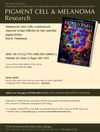
April 2011 in “Pigment Cell & Melanoma Research” Melanocyte stem cells in hair follicles are key for hair color and could help treat greying and pigment disorders.
31 citations
,
November 2015 in “PloS one” Reducing Tyrosinase prevents mature color pigment cells from forming in mouse hair.
4 citations
,
July 2022 in “The Journal of Clinical Endocrinology & Metabolism” A specific genetic mutation causes POMC deficiency, leading to symptoms like weight gain and red hair.
 1 citations
,
January 2020 in “Recent Research in Genetics and Genomics/Recent Research in Genetics and Genomics ”
1 citations
,
January 2020 in “Recent Research in Genetics and Genomics/Recent Research in Genetics and Genomics ” High doses of Lepidium sativum seed extract are toxic and should be used with caution.
A new mutation in the CYP11B1 gene was found in a woman with mild hyperandrogenemia, a rare cause of non-classic congenital adrenal hyperplasia.
 January 2000 in “BioScience”
 The document concludes that understanding hair biology is key to treating hair disorders, with gene therapy showing potential as a future treatment.
Reducing iron levels didn't improve heart health or metabolism in women with certain ovarian issues.
35 citations
,
April 2008 in “Journal of Biological Chemistry” Hirosaki hairless rats lack hair due to missing DNA with key keratin genes.
578 citations
,
April 1993 in “Cell” TGFα gene mutation in mice causes abnormal skin, wavy hair, curly whiskers, and sometimes eye inflammation.
 20 citations
,
January 2015 in “Current problems in dermatology”
20 citations
,
January 2015 in “Current problems in dermatology” Graying hair happens due to aging and might be delayed by new treatments.
 16 citations
,
March 2016 in “The journal of investigative dermatology/Journal of investigative dermatology”
16 citations
,
March 2016 in “The journal of investigative dermatology/Journal of investigative dermatology” The Notch signaling pathway helps in mouse hair development through a noncanonical mechanism that does not rely on RBPj or transcription.
14 citations
,
May 2022 in “Cell Reports” Basal cell carcinomas need extra mutations to grow from small to large tumors.
 11 citations
,
January 2012 in “Journal of cell science”
11 citations
,
January 2012 in “Journal of cell science” Rac1 is essential for proper hair structure and color.
10 citations
,
November 2008 in “Veterinary Dermatology” The mouse hairy ears mutation causes longer ear hair due to changes in gene expression.
7 citations
,
February 2019 in “Veterinary medicine and science” An American Bully with a genetic skin condition improved significantly with specific topical treatments.
4 citations
,
October 2021 in “Journal of Clinical Medicine” Carriers of a specific gene mutation have subtle skin changes without visible symptoms.
1 citations
,
July 2025 in “Journal of Human Immunity” Minoxidil helps restore thymus size in 22q11.2 deletion syndrome.

Finasteride may increase stroke risk in people with clotting tendencies.
 139 citations
,
February 2010 in “The journal of allergy and clinical immunology/Journal of allergy and clinical immunology/The journal of allergy and clinical immunology”
139 citations
,
February 2010 in “The journal of allergy and clinical immunology/Journal of allergy and clinical immunology/The journal of allergy and clinical immunology” Transplant success has improved with better immunosuppressive drugs and donor matching.