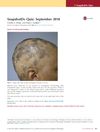
 August 2018 in “Journal of Investigative Dermatology”
 Tofacitinib may help regrow hair in alopecia areata patients.
January 2019 in “Lung India” A 68-year-old woman with lupus and blood disorders improved after increased steroids and immunoglobulin treatment.
3 citations
,
January 2018 in “Archives of Disease in Childhood” Switching to generic tacrolimus was safe, effective, and saved money.
A rare skin reaction occurred when a man took paracetamol, causing a new rash in an area already affected by hair loss.
October 2025 in “Zenodo (CERN European Organization for Nuclear Research)” Intralesional corticosteroids work better than topical ones for hair regrowth in alopecia areata.
February 2018 in “Biophysical Journal” Cyclosporine A slowly changes cell membranes, explaining some of its effects and side effects.
 39 citations
,
November 2015 in “Pediatric Nephrology”
39 citations
,
November 2015 in “Pediatric Nephrology” Rituximab leads to longer remission and fewer side effects than cyclophosphamide.
49 citations
,
January 2005 in “Dermatology” Systemic retinoids may effectively treat erosive pustular dermatosis of the scalp.
 January 2007 in “Acta Veterinaria Brno”
 Trilostane treatment successfully restored hair growth in a dog with alopecia X.
 January 2025 in “International Journal of Dermatology Venereology and Leprosy Sciences”
 Tofacitinib improved hair regrowth and quality of life in children with alopecia areata, with mild side effects.
September 2010 in “Reactions weekly” The combination of tretinoin, minoxidil, and betamethasone valerate may cause severe scalp inflammation.
 1 citations
,
January 2018 in “Side effects of drugs annual”
1 citations
,
January 2018 in “Side effects of drugs annual” Diuretics can cause serious side effects and should be used carefully.
8 citations
,
July 2020 in “Dermatologic Therapy” Tofacitinib may effectively treat folliculitis decalvans.
 20 citations
,
December 2016 in “Neurodegenerative disease management”
20 citations
,
December 2016 in “Neurodegenerative disease management” Teriflunomide effectively reduces relapses and disability in MS and has a manageable safety profile.
17 citations
,
December 1951 in “Experimental biology and medicine” Vitamin B12 and aureomycin can reverse or reduce cortisone's negative effects on body and hair growth in rats.
6 citations
,
March 2005 in “The Journal of Dermatology” Radiation therapy can worsen Discoid Lupus Erythematosus.
 January 2023 in “Indian Dermatology Online Journal”
 Bimatoprost and clobetasol are both effective for scalp hair loss, but bimatoprost works faster, has fewer side effects, and grows more colored hair.
 23 citations
,
January 2012 in “International Food Research Journal”
23 citations
,
January 2012 in “International Food Research Journal” Tofacitinib effectively treated a woman's severe symptoms from a rare autoimmune condition.
January 2018 in “Indian Dermatology Online Journal” DM and AA may share a common cause.
The dog fully recovered and regrew hair after a combination of topical and oral treatments.
 6 citations
,
November 1993 in “Contact dermatitis”
6 citations
,
November 1993 in “Contact dermatitis” Spironolactone in anti-acne cream can cause allergic skin reactions in some people.
October 2025 in “Archives of Dermatological Research” Topical metformin gel is as effective and safe as steroids for treating alopecia areata.
 49 citations
,
November 1992 in “Archives of dermatology”
49 citations
,
November 1992 in “Archives of dermatology” Different treatments for alopecia areata have varying success rates and side effects; intralesional steroids are most effective.
 4 citations
,
January 2019 in “Einstein (São Paulo)”
4 citations
,
January 2019 in “Einstein (São Paulo)” Dupilumab improved severe atopic dermatitis in a patient who didn't respond to other treatments.
8 citations
,
October 2016 in “Journal of Investigative Dermatology” MR antagonists may improve skin health and wound healing, especially in aging.
37 citations
,
September 2002 in “Acta pædiatrica” A cystic fibrosis patient developed Cushing's syndrome from a drug interaction between itraconazole and budesonide, which improved after stopping the medications.
 July 2021 in “Clinical case reports and studies”
 Topical diphencyprone effectively treated a 9-year-old boy's alopecia areata with fewer side effects.
 1 citations
,
July 2019 in “Clinical Rheumatology”
1 citations
,
July 2019 in “Clinical Rheumatology” Leflunomide is more likely to help treat alopecia areata than cause it.
5 citations
,
January 2016 in “European Journal of Dermatology” Suplatast tosilate successfully treated a woman's systemic sclerosis symptoms.
3 citations
,
December 2019 in “Lupus” Hydroxychloroquine effectively treated a woman's lupus skin issues and hair loss.