Search
for
Sort by
Research
900-930 / 1000+ results
research 083 Linear morphea with evidence of hair regrowth
Topical treatments led to hair regrowth in a man with linear morphea.
research Folliculitis Decalvans: An Uncommon Case Report with Review of Literature
Effective treatment of folliculitis decalvans requires accurate diagnosis and more research for better therapies.
research Congenital Hypotrichosis with Hair and Dental Ectodermal Features Responsive to Sublingual Minoxidil
Sublingual minoxidil improved hair growth in a 10-year-old boy without side effects.
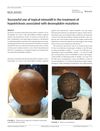
research Successful use of topical minoxidil in the treatment of hypotrichosis associated with desmoplakin mutations
Topical minoxidil helped an 8-year-old boy with a genetic hair disorder grow hair.
research Clinical Differential Diagnosis of Scalp Infection
Diagnosing scalp fungal infections is difficult due to similar symptoms with other conditions, requiring careful examination and specific tests.
research Desmoplastic melanoma presenting as primary alopecia neoplastica: a report of two cases
Two women were diagnosed with a rare melanoma that looked like hair loss but was actually a type of skin cancer.

research Plica polonica: Trichoscopic findings with a brief literature review
Plica polonica is a rare condition where hair becomes irreversibly tangled, and the treatment is to cut the matted hair.
research Gross morphology and ultrastructural characterization of the skin in Yuyi hairless mice(Mus musculus)
Yuyi hairless mice lose hair after birth, develop thick, loose skin with folds, and show disorganized skin structure as they age.
research Alopecia areata after mogamulizumab treatment
Mogamulizumab can cause hair loss and skin rashes.

research The effects of topical diazoxide on hair follicular growth and physiology of the stumptailed macaque
Diazoxide applied to the skin can increase hair growth without harmful side effects.
research Madarosis, milphosis, eyelash trichomegaly, and dermatochalasis
The document concludes that changes in eyelashes and eyelid skin can indicate various local and systemic diseases.

research Animal models for male pattern (androgenetic) alopecia.
The stump-tailed macaque is a good model for studying human hair loss, but it's expensive and hard to find, while rodent models are promising for understanding hair growth and finding new treatments.
research Fox-Fordyce Disease
The patient had a severe itchy rash and hair loss in the armpits.
research Effects of the Pineal Gland Upon the Hair Cycles in Mice

research Therapeutic Approach to Vaccine-Induced Ischemic Dermatopathy in a Pomeranian Dog with Refractory Alopecia
A tailored treatment improved a Pomeranian dog's skin and hair issues caused by a vaccine.

research Erosive Pustular Dermatosis of the Scalp: Clinicopathological Correlation Leading to a Definition of Diagnostic Criteria
Chronic scalp lesions with crusts and pus that heal with strong topical steroids suggest Erosive Pustular Dermatosis, confirmed by biopsy showing specific immune cells.
research Proopiomelanocortin expression in the skin during induced hair growth in mice
research Diffuse face and ear hypertrichosis caused by 5% topical minoxidil in an adult woman with spontaneous resolution
Facial hair growth from minoxidil stopped after she quit using it.
research Modern Approaches to Treatment of Alopecia X in Dogs: Review of Research
Microneedling, oral melatonin, trilostane, and deslorelin acetate implants are the best treatments for alopecia X in dogs.
research Scalp Fungus Infections in the Eastern ProvinceOf Saudi Arabia
Tinea capitis is common in the Eastern Province of Saudi Arabia and can be effectively treated.
research Weathering of hair in trichoteiromania
Her hair grew back normally after she stopped rubbing it.
research Tinea capitis in adults.
Tinea capitis in adults is best treated with oral terbinafine, but other medications may be needed for resistant infections, and family and pets should be checked to prevent reinfection.
research Whole-genome bisulfite sequencing of goat skins identifies signatures associated with hair cycling
DNA methylation changes are linked to hair growth cycles in goats.

research Sequential cyclic changes of hair roots revealed by dermoscopy demonstrate a progressive mechanism of diffuse alopecia areata over time
Dermoscopy shows that diffuse alopecia areata progresses through specific hair growth stages.
research Atypical pediatric presentation of alopecic and aseptic nodules of the scalp with features of dissecting cellulitis
A 9-year-old boy had a rare scalp condition usually seen in young men.
research Hyperadrenocorticism in Ferrets
Hyperadrenocorticism in ferrets is linked to neutering and indoor housing, and is best treated with surgery and a deslorelin implant.
research A rare hair loss in children: Monilethrix
Monilethrix is a rare, inherited condition causing fragile hair and hair loss, with no cure but some treatments may help.

research Ayurvedic Management of Seborrheic Dermatitis
Ayurveda offers a safer and effective way to manage Seborrheic dermatitis without severe side effects.
research Feline pemphigus foliaceus: a retrospective analysis of 57 cases
Triamcinolone is more effective and safer for treating feline pemphigus foliaceus than prednisone.