September 2023 in “International Journal of Trichology” Early treatment of Folliculitis Decalvans in children can improve inflammation and partially regrow hair.
 January 2023 in “Pesquisa Veterinária Brasileira”
 A KRT71 mutation in Hereford cattle in Uruguay causes thin, curly hair and scaly skin.
 2 citations
,
December 2021 in “Journal of Veterinary Medical Science”
2 citations
,
December 2021 in “Journal of Veterinary Medical Science” Lokivetmab reduced itching in a dog with skin lymphoma.
 October 2021 in “Journal of Investigative Dermatology”
 COVID-19 infection rates were low in patients with immune diseases, regardless of their treatment type.
5 citations
,
June 1993 in “Pediatric dermatology” Monilethrix Syndrome causes fragile, beaded hair that breaks easily and needs early diagnosis for better care.
3 citations
,
January 2016 in “CES Medicina Veterinaria y Zootecnia” Nutritional deficiencies in small animals can cause skin issues like allergies and hair loss.
1 citations
,
September 1993 in “Archives of Disease in Childhood” Biotinidase deficiency can be easily diagnosed and treated with biotin to prevent serious harm.
April 2021 in “Cermin Dunia Kedokteran” Two siblings with tinea capitis improved after treatment with ketoconazole.
 August 2023 in “Acta Scientific Paediatrics”
 A baby from an Indian family had a rare genetic disorder causing no scalp or body hair due to a specific gene deletion.
39 citations
,
September 2018 in “American Journal of Medical Genetics Part A” A new genetic mutation in the ODC1 gene causes developmental delay and other symptoms in a young girl.
6 citations
,
May 2000 in “Pediatric Dermatology” KID syndrome should be reclassified as an ectodermal dysplasia.
13 citations
,
September 1997 in “Archives of Dermatology” The boy likely has a fungal infection causing hair loss.
 April 2012 in “Journal of the American Academy of Dermatology”
 Dermoscopy can help diagnose tinea capitis in children by looking for comma hairs, black dots, and broken hairs with white bands.
71 citations
,
May 1996 in “Journal of Investigative Dermatology” Ornithine decarboxylase is crucial for hair growth regulation in mice.
83 citations
,
January 1980 in “Veterinary Pathology” Canine leishmaniasis is present in Oklahoma, USA.
3 citations
,
January 2017 in “Dermatology online journal” Dermoscopy helped diagnose a rare hair disorder in a 2-year-old boy.
 4 citations
,
January 2025 in “Clinical Cosmetic and Investigational Dermatology”
4 citations
,
January 2025 in “Clinical Cosmetic and Investigational Dermatology” Papular acantholytic dyskeratosis of the vulva is a rare, benign skin condition that can be managed conservatively.
 6 citations
,
July 2009 in “Veterinary dermatology”
6 citations
,
July 2009 in “Veterinary dermatology” Vesiculobullous lesions should be considered part of canine cutaneous epitheliotropic T-cell lymphoma.
 December 2011 in “Korean journal of veterinary research”
 A Miniature Pinscher dog with hair loss and scaling was diagnosed with pattern alopecia and improved with melatonin treatment.
3 citations
,
March 2002 in “Linchuang pifuke zazhi” Most patients with dermatomyositis had skin rash, itching, and muscle weakness, treated mainly with prednisolone and hydroxychloroquine.
87 citations
,
July 2009 in “Journal of Cell Science” Deleting the CDSN gene causes severe skin and hair problems, leading to death.
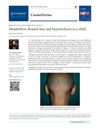 January 2026 in “Cosmoderma”
 A 9-year-old girl has a rare hair disorder causing beaded, sparse hair.
Urtica dioica L. extract may help treat skin fungus but is less effective than standard treatment.
10 citations
,
June 1999 in “Veterinary Dermatology” Two cows had a rare hair disorder causing hair loss but were otherwise healthy.
8 citations
,
January 2019 in “JAAD Case Reports” EPDS can cause recurring scalp sores and hair loss if not treated.

A rapid screening method using trichoscopy and clinical data can improve diagnosis and treatment of tinea capitis.
 13 citations
,
December 2008 in “Veterinary dermatology”
13 citations
,
December 2008 in “Veterinary dermatology” A rabbit with sebaceous adenitis was effectively treated with ciclosporin and medium-chain triglycerides.
 June 2024 in “Australasian Journal of Dermatology”
 A 13-year-old boy with a rare scalp condition improved significantly with isotretinoin, minoxidil, oral steroids, and antiseptic shampoo.
 March 2005 in “Journal of The American Academy of Dermatology”
 Diphencyprone treatment protocols could be simplified as no harm occurred despite not fully following them.
 January 2016 in “Experimental Dermatology”
 New findings suggest potential treatments for melanoma, hyperpigmentation, hair defects, and multiple sclerosis, and show skin microbiome changes don't cause atopic dermatitis.