 April 2016 in “Journal of The American Academy of Dermatology”
 The study found that Temporal Triangular Alopecia often starts in early childhood, while Folliculitis Decalvans is characterized by tufted hairs and redness around hair follicles.
 March 2021 in “CRC Press eBooks”
 Hair loss can cause and be caused by psychological issues.
 17 citations
,
January 2015 in “International Journal of Trichology”
17 citations
,
January 2015 in “International Journal of Trichology” Frontal fibrosing alopecia may affect nails and could be a type of lichen planus, treatable with certain medications.
 July 2023 in “Regenerative Therapy”
 Stem cell and platelet-rich plasma therapies show promise for COVID-19 related hair loss, but more research is needed.
 August 2023 in “JAAD Case Reports”
 A woman with lupus experienced hair regrowth after treatment, but hair transplantation is not advised for her condition.
 4 citations
,
January 2019 in “PubMed”
4 citations
,
January 2019 in “PubMed” Patterned hair loss in women is linked to hormonal imbalances and biochemical changes, and should be evaluated for underlying health issues.
Most severe COVID-19 patients had hair loss, suggesting a possible link.
 8 citations
,
July 2014 in “Anais Brasileiros de Dermatologia”
8 citations
,
July 2014 in “Anais Brasileiros de Dermatologia” A man's scalp condition was misidentified as hair loss dots but was actually a common follicular disorder.
 6 citations
,
September 2020 in “Journal of The American Academy of Dermatology”
6 citations
,
September 2020 in “Journal of The American Academy of Dermatology” Severe male balding may increase the risk of serious COVID-19, and treatments that reduce androgens or block a specific enzyme might help protect these individuals.
December 2025 in “Journal of Paediatrics and Child Health” Tick-bite alopecia can be identified by a bite-centered mark and treated with topical steroids, while SENLAT needs doxycycline.
 8 citations
,
December 2013 in “Journal of Investigative Dermatology Symposium Proceedings”
8 citations
,
December 2013 in “Journal of Investigative Dermatology Symposium Proceedings” Hepatitis C treatment may trigger complete hair loss, especially in those with a history of patchy hair loss, but hair usually grows back within a year.
2 citations
,
July 2018 in “PubMed” Low vitamin D levels might cause hair loss that can be treated with vitamin D supplements.
 May 2024 in “World Journal Of Advanced Research and Reviews”
 Low iron levels are strongly linked to chronic hair loss in women.
January 1976 in “Revista de Estudios Agrosociales” Frontal fibrosing alopecia and vitiligo might be linked by similar immune issues.
 58 citations
,
October 2001 in “Dermatologic Clinics”
58 citations
,
October 2001 in “Dermatologic Clinics” Hair loss can indicate underlying systemic diseases and addressing these can sometimes reverse the hair loss.
 3 citations
,
January 2017 in “Indian journal of health sciences and biomedical research KLEU”
3 citations
,
January 2017 in “Indian journal of health sciences and biomedical research KLEU” Low iron levels are significantly linked to hair loss in women.
January 2016 in “Indian dermatology online journal” Frontal fibrosing alopecia causes hair loss at the front hairline, and no effective treatment exists.
 December 2020 in “Vestnik dermatologii i venerologii”
 Combining iron supplements with physiotherapy could better treat women's hair loss linked to iron deficiency.
 September 2017 in “Pediatric Dermatology”
 A 14-year-old boy was diagnosed with a rare hair condition that may lead to hair thinning and has no known effective treatments.
 1 citations
,
July 2022 in “Clinical and Experimental Dermatology”
1 citations
,
July 2022 in “Clinical and Experimental Dermatology” Amino acid supplements may not be necessary for all women with chronic hair loss.
 July 2016 in “Journal of Investigative Dermatology”
 Balding scalps show different gene expressions affecting hair growth compared to non-balding scalps.
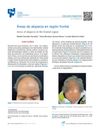 January 2025 in “Revista del Centro Dermatológico Pascua”
 Early diagnosis and treatment can help manage fibrosing alopecia in older women.
 March 2026 in “Frontiers in Pediatrics”
 COVID-19 may trigger hair loss conditions like alopecia areata.
 June 2023 in “British journal of dermatology/British journal of dermatology, Supplement”
 A woman's rare hair loss condition improved on its own, suggesting this type might recover like common cases.
 6 citations
,
June 2004 in “Dermatologic Surgery”
6 citations
,
June 2004 in “Dermatologic Surgery” A woman had temporary hair loss after a facelift, which improved on its own within a year.

Teledermatology effectively diagnoses and manages non-scarring alopecia remotely.
March 2025 in “Revista Foco” Early diagnosis of Alopecia Frontal Fibrosante is crucial for effective treatment.
Alopecia areata is an autoimmune disease that targets hair follicles.
 August 2015 in “Dermatología Argentina”
 Frontal fibrosing alopecia causes hairline recession and eyebrow loss in postmenopausal women.