Search
for
Sort by
Research
60-90 / 1000+ resultsresearch Novel de novo pathogenic variant in the ODC1 gene in a girl with developmental delay, alopecia, and dysmorphic features
A new genetic mutation in the ODC1 gene causes developmental delay and other symptoms in a young girl.
research Next-generation Sequencing Identified a Novel EDA Mutation in a Chinese Pedigree of Hypohidrotic Ectodermal Dysplasia with Hyperplasia of the Sebaceous Glands
A new EDA gene mutation was found in a Chinese family with a specific skin disorder.
research CRISPR/Cas9-Mediated Generation of COL7A1-Deficient Keratinocyte Model of Recessive Dystrophic Epidermolysis Bullosa.
Scientists created a cell model to study and find treatments for a skin disease called RDEB.
research INNOVATIVE THERAPIES IN REGENERATIVE MEDICINE AND TRANSPLANTATION
DEC cells show promise as a safe and effective treatment for Duchenne muscular dystrophy.

research Ectodysplasin research—Where to next?
Future research on ectodysplasin should explore its role in diseases, stem cells, and evolution, and continue developing treatments for genetic disorders like hypohidrotic ectodermal dysplasia.
research A Scandinavian case of skin fragility, alopecia and cardiomyopathy caused byDSPmutations
A child with skin and heart issues had rare genetic mutations affecting skin and heart cell cohesion.
research cDermo-1 misexpression induces dense dermis, feathers, and scales
cDermo-1 causes dense skin, feathers, and scales in chickens.

research Ectodysplasin-A (EDA) Signaling Cross-Talk in Skeletogenesis
The EDA pathway plays a key role in bone development by interacting with other signaling pathways.
research Identification of dkk4 as a target of Eda-A1/Edar pathway reveals an unexpected role of ectodysplasin as inhibitor of Wnt signalling in ectodermal placodes
Ectodysplasin inhibits Wnt signaling to help form hair follicles.
research Association of Human Beta – Defensin 1 Gene Polymorphisms with Alopecia Areata Patients
Certain gene variations may increase the risk and severity of alopecia areata.
research Epidermal cell proliferation and modulation of the protective potency of dexamethasone against phorbol ester-induced ornithine decarboxylase activity
Dexamethasone reduces inflammation and delays skin cell changes caused by TPA.
research Mandibulofacial dysostosis with alopecia results from ETAR gain-of-function mutations via allosteric effects on ligand binding
Specific mutations in a receptor cause facial abnormalities and hair loss.
research Mutations in γ-secretase subunit–encoding PSENEN underlie Dowling-Degos disease associated with acne inversa
PSENEN gene mutations can cause both Dowling-Degos disease and acne inversa.
research CRISPR/Cas9-mediated Generation ofCOL7A1-deficient Keratinocyte Model of Recessive Dystrophic Epidermolysis Bullosa
Scientists created cell lines to study a genetic skin disorder using CRISPR technology.
research 6874 A Rare Case Of Hereditary 1,25 (OH)2D Resistant Rickets
A rare genetic mutation causes resistance to vitamin D, leading to severe rickets and requiring high doses of calcium and vitamin D for treatment.
research Ectodermal Dysplasia: Variable Expressions
Early diagnosis and multidisciplinary care are crucial for improving the quality of life in patients with ectodermal dysplasia.
research Wnt10a Is a Candidate as a Non-Cellular Agent for Induction of Dental Pulp Regeneration with Dentine-Inducing Capacity.
Wnt10a may help regenerate dental pulp and form dentine.
research Ectodysplasin-A2 induces dickkopf 1 expression in human balding dermal papilla cells overexpressing the ectodysplasin A2 receptor
A protein called ectodysplasin-A2 increases a hair growth inhibitor in balding cells, which could be a target for hair loss treatment.
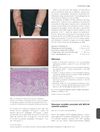
research Phenotypic variability associated withWNT10Anonsense mutations
WNT10A mutations cause varied symptoms in patients with odonto-onycho-dermal dysplasia.
research Edar/Eda interactions regulate enamel knot formation in tooth morphogenesis
Edar and Eda proteins are crucial for proper tooth development.
research A new mutation resulting in the truncation of the TRAF6-interacting domain of XEDAR: a possible novel cause of hypohidrotic ectodermal dysplasia: Figure 1
A new mutation in the XEDAR gene might cause a rare skin condition called hypohidrotic ectodermal dysplasia.

research WNT10A , dermatology and dentistry
Mutations in the WNT10A gene can cause skin, hair, teeth, and other disorders, and may also affect other areas like kidney and cancer, with potential for targeted treatments.

research TERT/BMI1-transgenic human dermal papilla cells enhance murine hair follicle formation in vivo
Adding TERT and BMI1 to certain skin cells can improve their ability to create hair follicles in mice.
research 09-P004 Two populations of endochondral osteoblasts with differential sensitivity to Hedgehog signaling
research Mutational spectrum in 101 patients with hypohidrotic ectodermal dysplasia and breakpoint mapping in independent cases of rare genomic rearrangements
Researchers found genetic mutations causing hypohidrotic ectodermal dysplasia in 88% of studied patients and identified new mutations and genetic variations affecting the disease.
research A rare LMNA missense mutation causing a severe phenotype of mandibuloacral dysplasia type A: a case report
A rare genetic mutation caused severe symptoms in a 6-year-old girl with mandibuloacral dysplasia type A.
research MULTIPLE DEFECTS OF THE HAIR SHAFT IN NETHERTON'S DISEASE.
Netherton's disease causes multiple hair defects.
research Identification of Ectodysplasin Target Genes Reveals the Involvement of Chemokines in Hair Development
Chemokine signaling is important for hair development.

research Mutational spectrum of EDA, EDAR, EDARADD, and WNT10A genes in the largest cohort of Russian patients with hypohidrotic ectodermal dysplasia
Most genetic mutations causing hypohidrotic ectodermal dysplasia in Russian patients are found in the EDA gene.