1 citations
,
April 2025 in “Clinical Cosmetic and Investigational Dermatology” A rare skin lesion in a 64-year-old woman was successfully treated with a laser, showing minimal redness and no return after one month.
 May 2026 in “International Journal of Drug Delivery Technology”
 Accurate diagnosis of EFFC is crucial for effective counseling and cosmetic care.
January 1991 in “Linchuang pifuke zazhi” February 2013 in “Journal of the American Academy of Dermatology” Follicular red dots can appear where alopecia areata and vitiligo overlap.
 36 citations
,
April 1990 in “Dermatologic Clinics”
36 citations
,
April 1990 in “Dermatologic Clinics” Most pregnant women experience skin changes like darkening and stretch marks, and some may have skin conditions that usually get better after giving birth.
2 citations
,
January 1973 in “ACTA HISTOCHEMICA ET CYTOCHEMICA” Brown skin in guinea pigs has more ascorbic acid and related enzymes, black skin uses ascorbic acid well, and white skin has the most protein.
January 2026 in “Indian Journal of Paediatric Dermatology” A 14-year-old boy has a skin condition called nevus comedonicus, treated with tretinoin cream.
1 citations
,
November 2003 in “Annals of saudi medicine/Annals of Saudi medicine” A 17-year-old in Saudi Arabia was diagnosed with a rare skin condition causing red-brown facial patches.
12 citations
,
August 1988 in “Histopathology” The tumor likely shows dual neural crest differentiation.
 October 2017 in “Journal of medical science and clinical research”
 Obese people are more likely to have certain skin conditions like dark patches, stretch marks, skin tags, and bumpy skin.
July 2024 in “Journal of Investigative Dermatology”  64 citations
,
June 1992 in “International Journal of Dermatology”
64 citations
,
June 1992 in “International Journal of Dermatology” Pregnancy often causes skin changes like darkening, stretch marks, and hair growth, which may improve after childbirth.
9 citations
,
March 1996 in “Pediatric dermatology” People of African or Asian descent have unique skin issues that need special care.
 April 2018 in “Journal of Investigative Dermatology”
 BMP signaling is important for skin color, affecting melanin production, pigment spread, and cell movement.
October 1991 in “Archives of Dermatology” The woman has a skin condition involving nodules, scars, and hair loss.
 September 2022 in “bioRxiv (Cold Spring Harbor Laboratory)”
 A new staining method shows a special area in the hair's skin layer with lots of proteoglycans.
1 citations
,
June 2025 in “Pigment Cell & Melanoma Research” SASH1 gene mutations are linked to various inherited skin pigmentation disorders.
 5 citations
,
September 2015 in “Nepalese journal of ophthalmology”
5 citations
,
September 2015 in “Nepalese journal of ophthalmology” An 11-year-old girl with a rare skin disorder also had cornea issues and dry eye, needing careful management.
 1 citations
,
May 2017 in “Journal of Stem Cell Research & Therapeutics”
1 citations
,
May 2017 in “Journal of Stem Cell Research & Therapeutics” Pluripotent stem cells show promise for treating skin color loss disorders like vitiligo.
 28 citations
,
January 2021 in “Parkinsonism & related disorders (Online)/Parkinsonism & related disorders”
28 citations
,
January 2021 in “Parkinsonism & related disorders (Online)/Parkinsonism & related disorders” Parkinson's disease is linked to skin disorders and skin cells help in studying the disease.
September 2023 in “Journal of the American Academy of Dermatology” Patients often overestimate their skin type, affecting sun protection and treatment plans.
 96 citations
,
January 1997 in “Clinics in Dermatology”
96 citations
,
January 1997 in “Clinics in Dermatology” Pregnancy can cause skin pigmentation, stretch marks, and changes in hair, nails, and sweat glands, with most resolving after birth.
 3 citations
,
January 2019 in “Journal of Dermatology”
3 citations
,
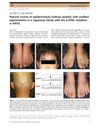
January 2019 in “Journal of Dermatology” The p.P25L mutation in the KRT5 gene causes a rare skin condition that worsens over time and may lead to hair loss starting in young adulthood.
 3 citations
,
May 2022 in “The journal of investigative dermatology/Journal of investigative dermatology”
3 citations
,
May 2022 in “The journal of investigative dermatology/Journal of investigative dermatology” Skin lesions in Carney Complex are caused by a gene change in some skin cells that leads to increased pigmentation and may lead to tumors.
303 citations
,
August 1971 in “The American Journal of Medicine” Melanocytes are destroyed by factors needed for melanin production, causing vitiligo and gray hair.
 November 2023 in “BMJ case reports”
 A man in his 30s had patchy hair loss on his leg due to primary follicular mucinosis.
8 citations
,
January 2019 in “Journal of cosmetic dermatology” Modified phenol peels effectively reduced stubborn skin pigmentation in patients with Lichen Planus Pigmentosus.
19 citations
,
November 1985 in “Archives of Dermatology” The newborn's skin blisters healed without scarring, leaving some light spots, and stopped forming after four months.
February 2022 in “Brazilian Journal of Health Review” Most cases were lichen planus pigmentosus, highlighting the need for accurate diagnosis for proper treatment.
July 2019 in “Indian dermatology online journal” Alopecia areata can show unusual red-dotted vessels and dithranol treatment may mask typical patterns.