 1 citations
,
January 2021 in “Journal of Dermatology and Dermatologic Surgery”
1 citations
,
January 2021 in “Journal of Dermatology and Dermatologic Surgery” Taking Vitamin D supplements may increase the risk of skin darkening after laser hair removal.
25 citations
,
January 2013 in “Colloids and surfaces. B, Biointerfaces” Hair dye colors mainly target melanin granules in black hair.
December 2004 in “Differentiation”  August 2023 in “International Journal of Molecular Sciences”
 The human scalp hair bulb contains different types of melanocytes with varying abilities to produce melanin.
6 citations
,
October 2003 in “Journal of applied polymer science” A new method using poly(ethylene imine) improves hair dyeing at lower temperatures with better color retention.
 October 2025 in “International Journal of Research in Dermatology”
 New laser technologies and methods are safer and more effective for hair removal on darker skin tones.
1 citations
,
December 2023 in “Skin Research and Technology” Combining hair follicle transplantation and a 308 nm excimer laser effectively treats perioral vitiligo without unwanted hair growth.
August 2022 in “Dermatological Reviews” Vitiligo transplantation surgery is now more efficient, cost-effective, and successful.
27 citations
,
May 2004 in “Journal of Investigative Dermatology” 7 citations
,
December 2010 in “대한의생명과학회지” Hair growth after depilation increases skin thickness, mast cell counts, and cell activity.
 63 citations
,
December 1988 in “International Journal of Dermatology”
63 citations
,
December 1988 in “International Journal of Dermatology” Vitiligo causes white skin patches and is linked to autoimmune issues.
November 2025 in “Journal of Cosmetic Dermatology” Exosome therapy can safely and effectively restore color to gray hair.
 1 citations
,
September 2024 in “Frontiers in Cell and Developmental Biology”
1 citations
,
September 2024 in “Frontiers in Cell and Developmental Biology” Pigs are a good model for studying human hair growth and disorders.
June 2025 in “Albus Scientia” MC1R gene variations affect skin, hair color, UV sensitivity, and melanoma risk.
82 citations
,
November 1985 in “Archives of Dermatology” The newborn's skin condition improved over time, leaving only lighter skin patches.
4 citations
,
January 1982 in “Neuroendocrinology” Dopamine affects coat color changes in agouti mice.
 15 citations
,
January 2019 in “Experimental Dermatology”
15 citations
,
January 2019 in “Experimental Dermatology” Lanyu pigs show that partial-thickness wounds can partially regenerate important skin structures, which may help improve human skin healing.
2 citations
,
June 2009 in “Journal of the American Academy of Dermatology” The treatment didn't work for the woman's hair loss and skin darkening.
 51 citations
,
August 2013 in “Journal of Investigative Dermatology”
51 citations
,
August 2013 in “Journal of Investigative Dermatology” Human skin cells can create new hair follicles when transplanted into mice.
10 citations
,
January 2012 in “Case reports in medicine” Diphencyprone can cause unexpected and possibly permanent vitiligo.
 7 citations
,
June 2019 in “Fayoum University Medical Journal/Fayoum University Medical Journal ”
7 citations
,
June 2019 in “Fayoum University Medical Journal/Fayoum University Medical Journal ” PRP combined with vitamin D improves vitiligo more effectively than vitamin D alone.
 5 citations
,
October 2015 in “The American journal of pathology”
5 citations
,
October 2015 in “The American journal of pathology” Mice with a mutated Dsg3 gene showed severe symptoms but not the typical blistering of pemphigus vulgaris.
 October 2023 in “European journal of dermatology/EJD. European journal of dermatology”
 Injectable platelet-rich fibrin can safely and effectively treat melasma.
13 citations
,
January 2001 in “Pediatric dermatology” A dark-haired Chinese girl had hair that looked banded under certain light but was normal under a microscope.
3 citations
,
January 2016 in “Dermatology online journal” Some people with lichen planus pigmentosus might later develop frontal fibrosing alopecia.
 January 2017 in “Archives of clinical and biomedical research”
 Enhancing melanin's energy generation may help treat alopecia areata.
November 2024 in “Journal of Investigative Dermatology” Blocking the JAK/STAT pathway may help reduce skin sensitivity in Xeroderma pigmentosum.
1 citations
,
August 1998 in “Pediatrics in review” Understanding cultural practices and skin reactions is crucial for diagnosing and treating skin conditions in children with dark skin.
 10 citations
,
January 2010 in “Acta dermato-venereologica”
10 citations
,
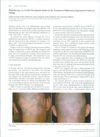
January 2010 in “Acta dermato-venereologica” Light therapy can effectively treat vitiligo and hair loss caused by a specific medication.
1 citations
,
May 2012 in “Clinical and Experimental Dermatology” Iron can be present in hair color changes without overall iron deficiency.