 6 citations
,
August 2006 in “Journal of Cutaneous Pathology”
6 citations
,
August 2006 in “Journal of Cutaneous Pathology” Two teenage brothers had a rare, treatment-resistant form of female-pattern hair loss with unusual scalp changes.
 1 citations
,
October 2024 in “Dermatology Practical & Conceptual”
1 citations
,
October 2024 in “Dermatology Practical & Conceptual” Reflectance confocal microscopy is a promising non-invasive tool for diagnosing alopecia areata incognita.
 1113 citations
,
August 1999 in “The New England Journal of Medicine”
1113 citations
,
August 1999 in “The New England Journal of Medicine” Hair follicle biology advancements may lead to better hair growth disorder treatments.
 466 citations
,
August 2004 in “Journal of the American Academy of Dermatology”
466 citations
,
August 2004 in “Journal of the American Academy of Dermatology” Rosacea is a skin condition with unclear causes, classified into four subtypes.
 306 citations
,
April 2019 in “International Journal of Molecular Sciences”
306 citations
,
April 2019 in “International Journal of Molecular Sciences” The skin has a complex immune system that is essential for protection and healing, requiring more research for better wound treatment.
 148 citations
,
December 2018 in “Journal of autoimmunity”
148 citations
,
December 2018 in “Journal of autoimmunity” Alopecia areata is an autoimmune disease causing patchy hair loss, often with other autoimmune disorders, but its exact causes are unknown.
 126 citations
,
January 2009 in “International Journal of Trichology”
126 citations
,
January 2009 in “International Journal of Trichology” Oxidative stress contributes to hair graying and loss as we age.
 97 citations
,
March 2002 in “Molecular and cellular biology”
97 citations
,
March 2002 in “Molecular and cellular biology” Mutant CDP/Cux protein causes hair defects and reduced male fertility in mice.
 77 citations
,
March 2014 in “Cold Spring Harbor Perspectives in Medicine”
77 citations
,
March 2014 in “Cold Spring Harbor Perspectives in Medicine” Fat cells are important for healthy skin, hair growth, and healing, and changes in these cells can affect skin conditions and aging.
 76 citations
,
June 2008 in “Journal of the American Academy of Dermatology”
76 citations
,
June 2008 in “Journal of the American Academy of Dermatology” The conclusion is that certain scalp tissue changes are characteristic of lichen planopilaris, with mucinous perifollicular fibroplasia being a new feature for diagnosis.
 70 citations
,
February 2017 in “Dermatologic Surgery”
70 citations
,
February 2017 in “Dermatologic Surgery” Treatment with plasma rich in growth factors improved hair density and thickness for hair loss patients.
 69 citations
,
April 2019 in “Biomedicines”
69 citations
,
April 2019 in “Biomedicines” PRP and HF-MSCs treatment improves hair growth, thickness, and density in androgenetic alopecia.
 65 citations
,
January 2017 in “Postępy Dermatologii i Alergologii”
65 citations
,
January 2017 in “Postępy Dermatologii i Alergologii” High-frequency ultrasonography is a useful but underused tool in dermatology for assessing skin cancers, monitoring diseases, and evaluating treatments.
 56 citations
,
March 2015 in “Cell death and differentiation”
56 citations
,
March 2015 in “Cell death and differentiation” Older skin has higher cancer risk due to inflammation and stem cell issues.
47 citations
,
August 2016 in “American Journal Of Pathology” Fibroblast changes in systemic sclerosis may help understand disease severity and treatment.
 29 citations
,
January 2021 in “Journal of Investigative Dermatology”
29 citations
,
January 2021 in “Journal of Investigative Dermatology” Fat under the skin releases HGF which helps hair grow and gain color.
 22 citations
,
June 2013 in “Australasian Journal of Dermatology”
22 citations
,
June 2013 in “Australasian Journal of Dermatology” Early stage bald spots are linked to skin inflammation and damage to the upper part of the hair follicle.
 19 citations
,
December 2001 in “Dermatologic Therapy”
19 citations
,
December 2001 in “Dermatologic Therapy” Horizontal scalp biopsy sections are better for diagnosing alopecia areata, showing fewer hair follicles and more miniaturized hairs.
 13 citations
,
February 2015 in “Actas Dermo-Sifiliográficas”
13 citations
,
February 2015 in “Actas Dermo-Sifiliográficas” The document concludes that recognizing specific histological features of different nonscarring alopecias is crucial for accurate diagnosis and understanding hair loss progression.
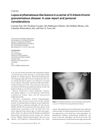 12 citations
,
March 2004 in “International Journal of Dermatology”
12 citations
,
March 2004 in “International Journal of Dermatology” A woman with X-linked chronic granulomatous disease developed lupus-like skin lesions, improved with treatment, suggesting a unique skin condition in carriers.
11 citations
,
August 2021 in “Aging” Collagen and TGF-β2 help maintain hair cell shape and youthfulness.
 9 citations
,
November 2020 in “Journal of Inflammation Research”
9 citations
,
November 2020 in “Journal of Inflammation Research” Inflammation affects hair loss; anti-inflammatory treatments may help.
 9 citations
,
January 2010 in “International Journal of Trichology”
9 citations
,
January 2010 in “International Journal of Trichology” The study found that the cause of alopecia areata can be identified through tissue analysis, and vertical sections are enough for diagnosis.
 8 citations
,
January 2013 in “BioMed Research International”
8 citations
,
January 2013 in “BioMed Research International” Age, gender, and hair loss affect scalp characteristics differently in young Caucasian adults.
 7 citations
,
October 2000 in “Allergo Journal”
7 citations
,
October 2000 in “Allergo Journal” Stress may affect hair growth by influencing hair follicle development and could contribute to hair loss.
3 citations
,
April 2019 in “Stem cells international” Markers CRABP1, Nestin, and Ephrin B2 are present in skin cancer environments and may influence their development.
 2 citations
,
August 2016 in “Lasers in Surgery and Medicine”
2 citations
,
August 2016 in “Lasers in Surgery and Medicine” Photodynamic therapy can remove nonpigmented hair in mice and might work for humans.
1 citations
,
January 2025 in “Genes & Diseases” Understanding T cells and signaling pathways can lead to better treatments for hair loss.
1 citations
,
January 2024 in “Fibrosis” Hydrogels show promise for scarless wound healing by reducing skin fibrosis.
 1 citations
,
May 2017 in “InTech eBooks”
1 citations
,
May 2017 in “InTech eBooks” Hair loss in Androgenetic alopecia (AGA) is due to altered cell sensitivity to hormones, not increased hormone levels. Hair growth periods shorten over time, causing hair to become thinner and shorter. This is linked to miscommunication between cell pathways in hair follicles. There's also a change in gene expression related to blood vessels and cell growth in balding hair follicles. The exact molecular causes of AGA are still unclear.