 April 2016 in “The journal of investigative dermatology/Journal of investigative dermatology”
 RPGRIP1L helps skin cells stick together by blocking PKCβII, which can prevent skin blistering like in pemphigus.
 28 citations
,
October 2004 in “Differentiation”
28 citations
,
October 2004 in “Differentiation” A gene deletion causes the "hairless" trait in Iffa Credo rats.
 August 2023 in “Acta Scientific Paediatrics”
 A baby from an Indian family had a rare genetic disorder causing no scalp or body hair due to a specific gene deletion.
 3 citations
,
September 2022 in “Frontiers in veterinary science”
3 citations
,
September 2022 in “Frontiers in veterinary science” Melatonin affects cashmere growth in goats by influencing stem cell and certain signaling pathways.
 1 citations
,
May 2025 in “Animal Bioscience”
1 citations
,
May 2025 in “Animal Bioscience” Four genes affect hair follicle density in goats.
 August 2022 in “Frontiers in genetics”
 A new genetic change in the DSC3 gene is linked to a rare condition causing hair loss and skin blisters in a child.
 October 2018 in “InTech eBooks”
 The gene Foxn1 is important for hair growth, and understanding it may lead to new alopecia treatments.
 August 2019 in “Journal of Investigative Dermatology”
 Frog skin cells need the protein desmoplakin for proper development and cell layer formation.
 24 citations
,
January 2016 in “Lasers in Medical Science”
24 citations
,
January 2016 in “Lasers in Medical Science” Erbium glass laser treatment may help with skin remodeling, reduce inflammation, and improve skin cell maturation.
 20 citations
,
August 2017 in “PLoS ONE”
20 citations
,
August 2017 in “PLoS ONE” 61 functional keratin genes were identified in dogs and horses, leading to updated gene annotations.
 19 citations
,
August 2012 in “Cell death and differentiation”
19 citations
,
August 2012 in “Cell death and differentiation” Intu gene is crucial for hair follicle formation by helping keratinocytes differentiate through primary cilia.
 2 citations
,
April 2025 in “Frontiers in Genetics”
2 citations
,
April 2025 in “Frontiers in Genetics” The ASIP gene is crucial for determining cattle coat color.
 74 citations
,
January 2006 in “The journal of investigative dermatology/Journal of investigative dermatology”
74 citations
,
January 2006 in “The journal of investigative dermatology/Journal of investigative dermatology” Mutations in the DSG4 gene can cause a rare hair disorder similar to monilethrix.
 40 citations
,
November 1998 in “The journal of investigative dermatology/Journal of investigative dermatology”
40 citations
,
November 1998 in “The journal of investigative dermatology/Journal of investigative dermatology” S100A3 protein is crucial for hair shaft formation in mice.
 32 citations
,
December 2014 in “Cold Spring Harbor Perspectives in Medicine”
32 citations
,
December 2014 in “Cold Spring Harbor Perspectives in Medicine” Disruptions in epidermal polarity genes can lead to skin diseases.
 20 citations
,
October 2021 in “PLoS ONE”
20 citations
,
October 2021 in “PLoS ONE” Newborn skin is uniquely prepared to adapt to new environments compared to adult skin.
 4 citations
,
November 2017 in “Scientific Reports”
4 citations
,
November 2017 in “Scientific Reports” The research provides a gene-based framework for hair biology, highlighting the Hippo pathway's importance and suggesting links between hair disorders, cancer pathways, and the immune system.
 2 citations
,
July 2011 in “AFRICAN JOURNAL OF BIOTECHNOLOGY”
2 citations
,
July 2011 in “AFRICAN JOURNAL OF BIOTECHNOLOGY” Seven genetic variations in sheep's DSG4 gene are linked and affect wool traits.
 1 citations
,
November 2020 in “Biochemical Society transactions”
1 citations
,
November 2020 in “Biochemical Society transactions” Different types of skin stem cells can change and adapt, which is important for developing new treatments.
 42 citations
,
October 2009 in “The journal of investigative dermatology/Journal of investigative dermatology”
42 citations
,
October 2009 in “The journal of investigative dermatology/Journal of investigative dermatology” Mutations in the KRT85 gene cause hair and nail problems.
 1 citations
,
July 2023 in “Nature communications”
1 citations
,
July 2023 in “Nature communications” MOF controls key genes for skin development by regulating mitochondrial and ciliary functions.
 November 2022 in “bioRxiv (Cold Spring Harbor Laboratory)”
 MOF controls skin development by regulating genes for mitochondria and cilia.
 72 citations
,
November 2012 in “PloS one”
72 citations
,
November 2012 in “PloS one” The protein folliculin, involved in a rare disease, works with another protein to control how cells stick together and their organization, and changes in this interaction can lead to disease symptoms.
 1 citations
,
August 2019 in “Pediatric dermatology”
1 citations
,
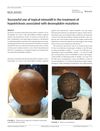
August 2019 in “Pediatric dermatology” Topical minoxidil helped an 8-year-old boy with a genetic hair disorder grow hair.
70 citations
,
January 2014 in “International review of cell and molecular biology” Keratin proteins are crucial for healthy skin, but mutations can cause skin disorders with no effective treatments yet.
26 citations
,
December 1999 in “Journal of Investigative Dermatology” Certain genes are linked to wool follicle structure and function, but not hair cycle regulation.
 April 2018 in “Journal of Investigative Dermatology”
 Dsg1 is essential for maintaining a healthy skin barrier in mice.
138 citations
,
June 2004 in “Journal of Investigative Dermatology” Involucrin gene expression is controlled by specific proteins and signaling pathways.
50 citations
,
February 2004 in “Genomics” A gene mutation causes lanceolate hair in rats by disrupting hair shaft integrity.
 19 citations
,
May 2012 in “The journal of investigative dermatology/Journal of investigative dermatology”
19 citations
,
May 2012 in “The journal of investigative dermatology/Journal of investigative dermatology” The type 3 IP3 receptor is important for controlling hair loss and growth.