 81 citations
,
July 2008 in “The Journal of Clinical Endocrinology and Metabolism”
81 citations
,
July 2008 in “The Journal of Clinical Endocrinology and Metabolism” Certain mutations in the H6PD gene cause Cortisone Reductase Deficiency by affecting hormone production.
 104 citations
,
January 2005 in “Climacteric”
104 citations
,
January 2005 in “Climacteric” Drospirenone is a unique progestin with anti-water retention and potential blood pressure benefits, used in birth control and hormone therapy.
 3 citations
,
January 2016 in “Elsevier eBooks”
3 citations
,
January 2016 in “Elsevier eBooks” Steroid hormones are crucial for body functions and have various medical uses, but their misuse can lead to dependence.
 20 citations
,
October 2003 in “The Journal of Dermatology”
20 citations
,
October 2003 in “The Journal of Dermatology” DCP therapy causes side effects like weakness, flushing, headaches, and taste changes, but less frequently causes hypertension and diabetes.
43 citations
,
July 2017 in “International journal of pharmaceutics” Using β-cyclodextrin derivatives improves the solubility and bioavailability of steroidal drugs.
 January 2007 in “Inpharma Weekly”
 Dutasteride is more effective for male pattern baldness than finasteride, and black cohosh extract BNO 1055 is as effective as conjugated estrogens in treating postmenopausal symptoms, with added benefits in reducing sweating and mental symptoms.
 57 citations
,
May 1986 in “Clinics in endocrinology and metabolism”
57 citations
,
May 1986 in “Clinics in endocrinology and metabolism” Androstanediol glucuronide is a reliable marker for hirsutism in women.
 28 citations
,
May 1986 in “Clinics in endocrinology and metabolism”
28 citations
,
May 1986 in “Clinics in endocrinology and metabolism” New compounds may soon be tested to treat excessive hair growth in women.
 12 citations
,
April 1995 in “Journal of Medicinal Chemistry”
12 citations
,
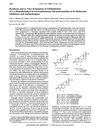
April 1995 in “Journal of Medicinal Chemistry” The new compounds moderately block a specific enzyme and strongly counteract a male hormone, suggesting potential for treating certain male-related health conditions.
 7 citations
,
April 2009 in “Bioorganic & Medicinal Chemistry Letters”
7 citations
,
April 2009 in “Bioorganic & Medicinal Chemistry Letters” Diphenyl ethers can potentially reduce excess oil production when applied on the skin, helping treat conditions like acne.
25 citations
,
September 1977 in “Journal of Toxicology and Environmental Health” High doses of some contraceptive steroids cause health issues in dogs, but their relevance to humans is unclear.
354 citations
,
August 1991 in “Molecular Endocrinology” Human adrenals and gonads have a unique enzyme for steroid hormone production.
3 citations
,
June 2018 in “Bioorganic & medicinal chemistry” Compounds 4, 4b, and 4c effectively inhibit an enzyme linked to testosterone conversion without significant toxicity.
 October 2024 in “International Journal For Multidisciplinary Research”
 Wedelolactone may help treat chronic diseases due to its strong antioxidant properties.
115 citations
,
March 2001 in “Baillière's best practice and research in clinical endocrinology and metabolism/Baillière's best practice & research. Clinical endocrinology & metabolism” Key enzymes control androgen levels, affecting hormone activity and potential treatments.
66 citations
,
October 1987 in “The Journal of clinical endocrinology and metabolism/Journal of clinical endocrinology & metabolism” Measuring androstanediol glucuronide in blood is useful for assessing and tracking treatment in women with excessive hair growth.
58 citations
,
July 1974 in “The Journal of clinical endocrinology and metabolism/Journal of clinical endocrinology & metabolism” Cyproterone acetate combined with ethinyl estradiol significantly reduced hirsutism in women.
 4 citations
,
September 2011 in “American Journal of Clinical Dermatology”
4 citations
,
September 2011 in “American Journal of Clinical Dermatology” Ethinylestradiol/chlormadinone acetate may be an effective and well-tolerated treatment for skin conditions caused by excess androgens.
100 citations
,
April 1990 in “The Journal of Clinical Endocrinology & Metabolism” The ovary mainly causes high testosterone in PCO, while the adrenal gland is the main source in IH.
8 citations
,
May 1991 in “PubMed” Hirsutism requires identifying the cause to choose the right treatment, which may include medications like oral contraceptives or dexamethasone.
 5 citations
,
September 2020 in “Journal of Cosmetic Dermatology”
5 citations
,
September 2020 in “Journal of Cosmetic Dermatology” Dexpanthenol improves hair growth and satisfaction in women without side effects.
 7 citations
,
August 2000 in “Journal of Pediatric and Adolescent Gynecology”
7 citations
,
August 2000 in “Journal of Pediatric and Adolescent Gynecology” To improve use of the contraceptive DMPA among adolescents, effectively manage side effects like menstrual changes and weight gain through counseling and guidance.
 1 citations
,
October 2020 in “Current Drug Discovery Technologies”
1 citations
,
October 2020 in “Current Drug Discovery Technologies” The research found that compound 6, a newly created steroid, is more effective at inhibiting 5α-reductase (an enzyme) than current treatments, suggesting it could be a better option for treating urinary tract symptoms in men.
7 citations
,
January 1971 in “Archives of Dermatological Research”  49 citations
,
April 1997 in “Human reproduction”
49 citations
,
April 1997 in “Human reproduction” Hormone therapy for excessive hair growth is as good with GnRHa as with high-dose CPA, but GnRHa has longer-lasting results.
2 citations
,
September 1992 in “Steroids” New A-homo-B, 19-dinor steroids showed strong antiandrogenic activity without affecting the enzyme 5α-reductase or androgen receptor binding.
27 citations
,
December 2012 in “The Journal of Steroid Biochemistry and Molecular Biology” Dexamethasone may cause hair loss by stopping cell growth.
 January 2022 in “Asian journal of Current Research in Clinical Cancer”
 Some dibenzo compounds might help treat cancer with fewer side effects.
 4 citations
,
October 1988 in “Clinics in Dermatology”
4 citations
,
October 1988 in “Clinics in Dermatology” Dihydrotestosterone (DHT) is crucial for conditions like male-pattern baldness and acne, and measuring a byproduct, androstanediol glucuronide, is a better way to assess DHT's effects than DHT blood levels.
 20 citations
,
March 2005 in “Current Medicinal Chemistry”
20 citations
,
March 2005 in “Current Medicinal Chemistry” New compounds show promise for treating hair loss, enlarged prostate, and prostate cancer, with some being more effective and having different side effects than current treatments.