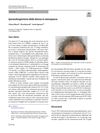
 July 2022 in “L Endocrinologo”
 A 77-year-old woman with hair loss had high testosterone and 17OH-progesterone levels, but no significant findings on imaging.
Isotretinoin may cause temporary, reversible facial hair growth in some women.
 October 2021 in “Turkderm”
 Hormonal imbalances, not insulin resistance or dyslipidemia, may be more important in causing acne in women over 25.
 September 2021 in “International Journal of Biomedicine”
 Certain gene variations are linked to a higher risk of severe acne, suggesting a genetic influence on the condition.
 May 2021 in “Journal of the Endocrine Society”
 A woman's severe hormone imbalance after menopause led to finding a rare ovarian tumor, treated by surgery.
 January 2021 in “Revista Dermatológica Centro Uraga”
 Endocrinological evaluation is crucial for properly diagnosing and treating acne.
 April 2020 in “Journal of the Endocrine Society”
 A woman's severe hirsutism was caused by Leydig cell tumors in her ovaries, which improved after surgery.
 January 2020 in “Journal of South Asian Federation of Obstetrics and Gynaecology”
 Removing the ovaries can help treat hair loss caused by high androgen levels in postmenopausal women.
 January 2019 in “ARC journal of pharmaceutical sciences”
 Acne can be managed with various treatments and requires psychological support due to its emotional impact.
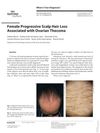 January 2019 in “Skin appendage disorders”
 A woman's hair loss was linked to a rare hormone-secreting ovarian tumor, treated with surgery and hair loss medication.
Early NAS level changes affect alcohol consumption vulnerability.
 January 2018 in “Springer eBooks”
 The document says that early treatment of Acne Vulgaris is important to prevent scarring and that adult onset acne is common in women, often due to hormonal imbalances.
 October 2017 in “Iranian Journal of Dermatology”
 Clinical exams are good for diagnosing some women's hair loss, but lab tests aren't always needed.
Effective treatment for midlife women's hair loss is limited, with 5% minoxidil foam being the only proven option for the most common type.
 April 2017 in “Journal of evolution of medical and dental sciences”
 Most women with excess hair growth had Polycystic Ovary Syndrome, and severity wasn't linked to hormone levels.
 December 2016 in “Springer eBooks”
 Chrousos Syndrome is caused by mutations that make the body less sensitive to glucocorticoids, leading to various symptoms and requiring high-dose treatment.
Female hair loss is often hereditary and can be treated with medication, hair transplants, and lasers.
 January 2016 in “Springer eBooks”
 Pubertal acne is linked to hormonal changes, affects quality of life, and is treated similarly to adult acne.
The article concludes that understanding the causes of hair loss and using continuous treatments like minoxidil and finasteride can help manage it, despite potential side effects.
 November 2014 in “John Wiley & Sons, Ltd eBooks”
 Eating high-glycemic and dairy foods can increase hormones that may cause acne and other health issues.
 October 2014 in “Aktuelle Dermatologie”
 A 19-year-old with MRKHS developed complete hair loss, and treatment options were discussed.
 January 2013 in “Revista Clínica Española”
 A postmenopausal woman's increased male hormone levels were successfully treated with surgery.
 March 2012 in “Journal of Pediatric and Adolescent Gynecology”
 Androgen levels do not determine the type of PCOS symptoms in young females.
 March 2012 in “Journal of Pediatric and Adolescent Gynecology”
 Teens with PCOS have a higher risk of type 2 diabetes and need regular glucose checks.
 October 2011 in “Iranian Journal of Dermatology”
 Men with male pattern baldness may have a higher risk of heart disease due to increased levels of a specific lipid in their blood.
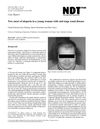
A young woman with kidney failure had hair loss due to a common hormonal disorder, which improved with hormone therapy.
 October 2007 in “Postgraduate obstetrics & gynecology”
 Testosterone therapy can help with androgen deficiency in women but should be used with caution and monitoring due to potential risks.
 October 2007 in “Postgraduate obstetrics & gynecology”
 Testosterone therapy can help postmenopausal women with low sexual desire but needs more safety research and should be used with estrogen therapy.
 April 2006 in “Current Opinion in Endocrinology & Diabetes”
 Testosterone therapy can help improve sexual function, mood, and bone density in women with low androgen levels, but more research is needed on long-term safety.
 December 1997 in “Journal of The European Academy of Dermatology and Venereology”
 Most women with excessive hair growth have a hormonal cause.