 2 citations
,
July 2020 in “International Journal for Research in Applied Science and Engineering Technology”
2 citations
,
July 2020 in “International Journal for Research in Applied Science and Engineering Technology” Pseudomonas DL17 can completely break down the harmful dye Sunset Yellow FCF in 48 hours.
 5 citations
,
February 2019 in “Journal of oceanology and limnology (Online)”
5 citations
,
February 2019 in “Journal of oceanology and limnology (Online)” Ecklonia cava extract can reduce the damage and stress caused by hair dye.
6 citations
,
December 2019 in “International Journal of Cosmetic Science” White hair has weaker tryptophan fluorescence than other unpigmented fibers, possibly due to UV exposure or unknown substances.
1 citations
,
January 2010 in “LA Referencia (Red Federada de Repositorios Institucionales de Publicaciones Científicas)” Conditioners improved hair protein retention and combing ease, with some providing thermal protection.
6 citations
,
January 2020 in “Elsevier eBooks” Nanoparticles could make hair dyes safer by reducing harmful effects.
6 citations
,
January 2016 in “Indian Journal of Dermatology Venereology and Leprology” Most hair dyes can cause allergic reactions, so test before use.

"Bider" markings in Dun Mongolian horses are caused by a complex network of genes and pathways.
 3 citations
,
January 2004 in “Sen i Gakkaishi”
3 citations
,
January 2004 in “Sen i Gakkaishi” DTDG in hair treatments reduces damage and preserves hair structure.
 January 2023 in “IntechOpen eBooks”
 The document concludes that specific methods for making diazine-based drugs can lead to high yields and are important for creating effective treatments for various diseases.
 April 2026 in “Biomolecules”
 Squid ink melanin nanoparticles create a safe, long-lasting black hair dye that protects hair and offers UV protection.
April 2021 in “Journal of Investigative Dermatology” A deep learning model was developed to help diagnose trichothiodystrophy by analyzing hair patterns.
 May 2026 in “Zenodo (CERN European Organization for Nuclear Research)”
 Natural hair dyes are safer but have limited shades and may fade with washing.
10 citations
,
March 2016 in “Toxicology and applied pharmacology” Using A132 hair dye with sunlight can cause skin damage and hair loss.
 September 2013 in “Metal Powder Report”
 Dynamet Technology won an award for its advanced titanium technology.
 1 citations
,
March 2017 in “Archives of Plastic Surgery”
1 citations
,
March 2017 in “Archives of Plastic Surgery” A new method using gentian violet dye makes it easier to see and work with white hair in hair transplant surgeries.
 April 2026 in “Cosmetics”
 The shampoo effectively covers gray hair gradually and maintains color after multiple washes.
 98 citations
,
November 2002 in “Contact Dermatitis”
98 citations
,
November 2002 in “Contact Dermatitis” Many people had severe allergic reactions to a common hair dye ingredient, causing them to seek medical care and miss work.
 9 citations
,
January 2010
9 citations
,
January 2010 The herbal hair dye is a safe and eco-friendly alternative to conventional dyes.
 May 2026 in “Zenodo (CERN European Organization for Nuclear Research)”
 Natural hair dyes like henna and beetroot are safer but have limited colors and may fade easily.
1 citations
,
January 2021 in “Springer Proceedings in Materials” Researchers developed a new method to clearly see and label hair proteins with minimal errors using advanced freezing and microscopy techniques.
 2 citations
,
July 2011 in “AFRICAN JOURNAL OF BIOTECHNOLOGY”
2 citations
,
July 2011 in “AFRICAN JOURNAL OF BIOTECHNOLOGY” Seven genetic variations in sheep's DSG4 gene are linked and affect wool traits.
January 1991 in “Acta Dermato Venereologica” A new method effectively visualizes keratin in hair without harsh chemicals.
 1 citations
,
January 2022 in “Electronic Imaging”
1 citations
,
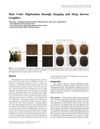
January 2022 in “Electronic Imaging” A new method accurately captures and renders hair color for virtual reality and hair dye use.
Dark hair with a red beard likely evolved for camouflage, not attraction.
 November 2025 in “Zenodo (CERN European Organization for Nuclear Research)”
 Polyherbal hair dye creams are safer, effective, eco-friendly, and economical alternatives to synthetic dyes.
November 2024 in “Majalah Farmasetika” The natural hair dye gel with 12% Eleutherine bulbosa extract effectively colors bleached hair dark brown and is stable and non-irritating.
13 citations
,
February 2008 The new natural sindoor is safe, non-toxic, and eco-friendly.
23 citations
,
October 2007 in “International journal of cancer” X-ray diffraction of hair might help detect breast cancer non-invasively.
1 citations
,
January 2017 in “Science” A new method was developed to create complex molecular knots using iron ions.
 November 2025 in “Zenodo (CERN European Organization for Nuclear Research)”
 Polyherbal hair dye cream is safe, effective, and eco-friendly, offering better color and no side effects.