January 2006 in “东华大学学报:英文版” Microwave plasma treatment improves yak hair dyeing.
24 citations
,
January 2001 in “International Journal of Cancer” Permanent hair dye use may increase bladder cancer risk, especially in female smokers with certain genetic traits.
13 citations
,
March 2010 in “International Journal of Cosmetic Science” Hair coloring increases copper and calcium uptake, damaging hair and reducing shine.
1 citations
,
April 2013 in “Journal of Investigative Dermatology”  January 2014 in “Sen'i Gakkaishi”
 Researchers developed a method to identify animal fibers in textiles, which works on processed and blended materials.
14 citations
,
May 2019 in “Chemosphere” Females have higher Dechlorane Plus in hair, while males have more in dorm dust.
2 citations
,
January 1987 in “Acta Agriculturae Scandinavica” Certain chelators lighten mink skin and hair, increase skin elasticity, and disrupt hair growth without affecting fur quality.
 August 2024 in “Journal of the Korean Society of Cosmetology”
 Wild peach leaf extract improves hair strength, thickness, and shine after dyeing.
6 citations
,
December 2018 in “International Journal of Cosmetic Science” CARB is a strong barrier in human hair that prevents dye penetration.
45 citations
,
March 1997 in “Journal of Investigative Dermatology”  10 citations
,
June 2018 in “Journal of visualized experiments”
10 citations
,
June 2018 in “Journal of visualized experiments” The document concludes that the technique allows for the detection of LDH activity in various tissues, showing where cells are actively metabolizing glucose.
 1 citations
,
January 2014 in “Sen'i Gakkaishi”
1 citations
,
January 2014 in “Sen'i Gakkaishi” The new method reliably identifies and measures different animal hair fibers in textiles.
January 2019 in “Dermatologic Surgery” Pulsed Dye Laser effectively treats skin lesions in Rosai–Dorfman Disease.
 4 citations
,
December 2018 in “Macedonian Journal of Chemistry and Chemical Engineering”
4 citations
,
December 2018 in “Macedonian Journal of Chemistry and Chemical Engineering” A new method accurately measures amino acids in treated hair, showing bleaching reduces amino acids while protein treatments increase them.
May 2023 in “Sokoto journal of medical laboratory science” Commercial hair dyes can harm the skin and liver.
 54 citations
,
July 1967 in “Science”
54 citations
,
July 1967 in “Science” Decomposed tritiated thymidine is less accurate for DNA tracing, and hair changes can indicate malnutrition.
December 2021 in “2021 International Conference on Electronic Information Technology and Smart Agriculture (ICEITSA)” Chemical dyes damage hair's internal structure more than perming, as shown by a special imaging technique.
 January 2024 in “Authorea (Authorea)”
 Using laccase to add poly(tyrosine) to wool makes it less likely to shrink and stronger.
2 citations
,
January 1990 Herbal hair dyes using plants like henna and beetroot are safer and can produce varied colors, with two-stage applications giving darker shades.
7 citations
,
March 2004 in “Journal of the American Academy of Dermatology” Tiger tail banding and hair abnormalities are reliable indicators for diagnosing trichothiodystrophy.
 1 citations
,
November 2021 in “Drug Testing and Analysis”
1 citations
,
November 2021 in “Drug Testing and Analysis” The 39th Manfred Donike Workshop discussed methods for detecting misuse of steroids, gene doping, and the complexity of identifying drug residues in urine, highlighting the ongoing efforts to improve global anti-doping work.
26 citations
,
June 2010 in “Electrophoresis” New techniques helped identify rare wool proteins by reducing dominant ones.
1 citations
,
October 2019 in “International Journal of Dermatology and Venereology” Zebrafish help understand genetic causes of skin pigment disorders like albinism.
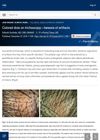
August 2000 in “Microscopy and Microanalysis” The method successfully visualizes iodine in biological tissues.
 5 citations
,
December 2018 in “Journal of The American Academy of Dermatology”
5 citations
,
December 2018 in “Journal of The American Academy of Dermatology” Some hair products can create false signs on scalp examinations, leading to wrong diagnoses.
99 citations
,
March 2013 in “Journal of Investigative Dermatology” Mutations in the ABCB6 gene cause Dyschromatosis Universalis Hereditaria.
 15 citations
,
June 2018 in “Life Sciences”
15 citations
,
June 2018 in “Life Sciences” Diabetex improves diabetic wound healing better than metformin.
3 citations
,
February 2013 in “Actas dermo-sifiliográficas/Actas dermo-sifiliográficas” A 6-year-old boy developed excessive hair growth after taking diazoxide for low blood sugar.