 1 citations
,
July 1965 in “Postgraduate medicine”
1 citations
,
July 1965 in “Postgraduate medicine” Most skin conditions can be managed with general medical knowledge.
 November 2021 in “Open Forum Infectious Diseases”
 Some COVID-19 pneumonia patients in Veracruz, Mexico had rare skin issues like temporary hair loss linked to disease severity.
 December 2020 in “Dermatology archives”
 Some COVID-19 pneumonia patients in Veracruz, Mexico, had skin issues, with reversible hair loss linked to disease severity.
May 2022 in “International Journal of Dermatology” A woman experienced sudden hair graying and loss after a COVID-19 vaccine, which improved with treatment.
 March 2026 in “Frontiers in Medicine”
 Diffuse unpatterned alopecia can affect donor areas, but treatment with finasteride and minoxidil can improve hair density.
 June 2022 in “Plastic and Reconstructive Surgery – Global Open”
 Stem cell serum effectively treated hair loss caused by COVID-19.
 7 citations
,
October 2019 in “Klinická onkologie”
7 citations
,
October 2019 in “Klinická onkologie” Cancer treatments often cause hair loss and damage, affecting patients' mental health.
 March 2018 in “Dermatología Argentina”
 The study found that the average age of women diagnosed with Frontal Fibrosing Alopecia in Argentina is higher than in other countries, but their symptoms are similar.
11 citations
,
October 2007 in “International Journal of Dermatology” Alopecia in Burkina Faso mostly affects young people, often students, with common causes being tinea and alopecia areata.
 1 citations
,
January 2014 in “International Journal of Trichology”
1 citations
,
January 2014 in “International Journal of Trichology” A patient with a rare hair condition and skin disorder showed hair improvement after treatment.
 3 citations
,
December 2011 in “Pediatric Dermatology”
3 citations
,
December 2011 in “Pediatric Dermatology” The patient's long-term hair loss was caused by leukemia treatments and low estrogen levels, worsened by her genetic tendency for hair loss.
 8 citations
,
January 2015 in “International journal of trichology”
8 citations
,
January 2015 in “International journal of trichology” A woman's total hair loss was linked to a Borrelia infection and was reversed with appropriate treatment.
18 citations
,
January 2018 in “BMC dermatology” A new mutation in the PLEC gene causes a rare condition with skin blistering, muscle weakness, and hair loss.
 7 citations
,
May 1978 in “International Journal of Dermatology”
7 citations
,
May 1978 in “International Journal of Dermatology” Recent hair loss research shows some progress, especially in understanding male pattern baldness, but effective treatments for many types of hair loss are still lacking.
 February 2026 in “Ciencia Latina Revista Científica Multidisciplinar”
 Early recognition and thyroid evaluation are crucial for managing diffuse alopecia areata linked to autoimmune thyroid disease.

Integrative hair therapy improved hair loss and regrowth.
 40 citations
,
May 1999 in “Journal of The European Academy of Dermatology and Venereology”
40 citations
,
May 1999 in “Journal of The European Academy of Dermatology and Venereology” Treat hair loss with finasteride, minoxidil, or surgery; consider side effects and severity.
 25 citations
,
June 2003 in “Journal of Investigative Dermatology Symposium Proceedings”
25 citations
,
June 2003 in “Journal of Investigative Dermatology Symposium Proceedings” Phototrichogram and hair diameter measurements are effective, noninvasive ways to assess hair growth and detect early hair loss, with the most common pattern being reduced hair density.
 14 citations
,
July 1987 in “Dermatologic Clinics”
14 citations
,
July 1987 in “Dermatologic Clinics” The document concludes that treating female hair loss should target reducing excess androgen and blocking its effects on hair follicles, with the best treatments being hormonal therapy, adrenal suppression, and topical minoxidil.
 6 citations
,
October 2019 in “Case Reports in Dermatology”
6 citations
,
October 2019 in “Case Reports in Dermatology” The document concludes that treatment can improve hair growth and symptoms in Fibrosing Alopecia in a Pattern Distribution.
 2 citations
,
January 2011 in “Dermatologica Sinica”
2 citations
,
January 2011 in “Dermatologica Sinica” Taiwan reported its first case of a rare scalp condition with no clear cause or treatment.
 1 citations
,
February 1993 in “Nursing Standard”
1 citations
,
February 1993 in “Nursing Standard” Many drugs, not just chemotherapy, can cause reversible hair loss.
 May 2014 in “JAMA Dermatology”
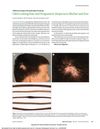
 Mother and son diagnosed with a rare genetic hair loss condition with no effective treatment.
 14 citations
,
January 2012 in “International Journal of Trichology”
14 citations
,
January 2012 in “International Journal of Trichology” Hodgkin's lymphoma can show up as hair loss.
 34 citations
,
June 2007 in “The Journal of Dermatology”
34 citations
,
June 2007 in “The Journal of Dermatology” Most Korean systemic lupus erythematosus patients experienced hair loss, often as non-scarring diffuse hair loss, with non-scarring patch alopecia also common.
 16 citations
,
May 2013 in “Australasian Journal of Dermatology”
16 citations
,
May 2013 in “Australasian Journal of Dermatology” Hair loss in Cronkhite-Canada syndrome is reversible by treating the gut issues and doesn't need steroid treatment for the hair itself.
 September 1998 in “JEADV. Journal of the European Academy of Dermatology and Venereology/Journal of the European Academy of Dermatology and Venereology”
 The document concludes that individualized treatments for hair issues are effective, certain hair changes can indicate neurocutaneous diseases, specific lotions improve skin health, laser hair removal works but needs more study on long-term effects, men's cosmetics are diverse, peeling is effective but can have side effects, and facial pigmentation is often due to overactive skin cells.
 72 citations
,
September 1997 in “Dermatologic Surgery”
72 citations
,
September 1997 in “Dermatologic Surgery” Careful planning and patient counseling can lead to excellent hair transplant results, often in one or two sessions.
 June 2017 in “Reactions Weekly”
 Some breast cancer treatments caused long-term hair loss in women, similar to a condition called alopecia areata.
 May 2009 in “Medical and surgical dermatology/Medical & surgical dermatology”
 Hair and nail conditions can stabilize or improve over time, and new treatments show promise.