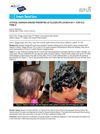
 May 2021 in “Journal of the American College of Cardiology”
 An 11-year-old girl with Kawasaki disease experienced hair loss that improved after treatment.
 September 2016 in “Más dermatología”
 Postpartum hair loss usually stops within 4-6 months.
 2 citations
,
July 2017 in “Skin appendage disorders”
2 citations
,
July 2017 in “Skin appendage disorders” Alfredo Rebora suggests a simpler classification for hair loss and a new test for easier diagnosis.
January 2022 in “مجلة جامعة المجمعه للعلوم الصحية” A woman was misdiagnosed with hair loss for years, but actually had a rare type of alopecia.
 January 2010 in “Journal of The American Academy of Dermatology”
 The document provided instructions for completing a CME exam on diagnosing and managing hair loss.
 September 1997 in “Journal of The European Academy of Dermatology and Venereology”
 Alopecia linked to higher anxiety and personality disorders.
 February 2017 in “International Journal of Research in Dermatology”
 A six-year-old girl unusually had a hair loss condition common in middle-aged women.
 9 citations
,
December 2014 in “British Journal of Dermatology”
9 citations
,
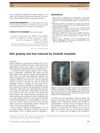
December 2014 in “British Journal of Dermatology” Hedgehog pathway inhibitors used for skin cancer can cause significant hair loss, which may improve after stopping the medication.
 7 citations
,
December 2013 in “The Journal of Dermatology”
7 citations
,
December 2013 in “The Journal of Dermatology” A woman's hair turned gray and fell out after starting a cancer drug called imatinib mesylate.
 3 citations
,
June 2006 in “Expert Review of Dermatology”
3 citations
,
June 2006 in “Expert Review of Dermatology” The document concludes that hair loss is complex, affects many people, has limited treatments, and requires more research on its causes and psychological impact.
 1 citations
,
September 2013 in “Mayo Clinic Proceedings”
1 citations
,
September 2013 in “Mayo Clinic Proceedings” A woman's hair loss was treated successfully with iron supplements for her iron deficiency.
Integrative hair therapy improved hair loss and regrowth.
 January 2020 in “Nihon rinsho hifukaikai zasshi”
 A woman's temporary hair loss was caused by high prolactin levels from her medication.

Early treatment is important for better hair regrowth in elderly women with hair loss.
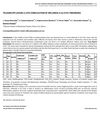
Hair loss can happen after severe H1N1 flu but usually grows back in 4 months.

A man had temporary hair loss after a spinal cord injury, with some permanent thinning remaining.
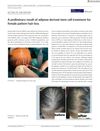 April 2021 in “Journal of Cosmetic Dermatology”
 Stem cell treatment improved hair density in female hair loss patient.
 24 citations
,
July 1987 in “Dermatologic Clinics”
24 citations
,
July 1987 in “Dermatologic Clinics” Systemic diseases can cause hair loss, which is often reversible with treatment.
Loose anagen syndrome causes easy hair shedding in children, often resolving on its own.
 10 citations
,
August 2011 in “Clinics”
10 citations
,
August 2011 in “Clinics” The author clarified that Alopecia Areata Incognita (AAI) and diffuse Alopecia Areata (AA) are different conditions and the case discussed was actually AA, not AAI.
 April 2024 in “Benha Medical Journal”
 H. pylori infection may be linked to the hair shedding condition Telogen Effluvium.
 September 2022 in “Journal of The American Academy of Dermatology”
 A woman's COVID-19 related hair loss improved after using a specific hair care routine for 30 days.
 March 2023 in “International Journal of Biomedicine”
 Hair loss from Telogen Effluvium can be managed by treating the underlying cause and may improve with treatments like minoxidil.
 January 2025 in “TURKDERM”
 Alopecia areata incognito in children can be effectively treated with triamcinolone acetonide and supplements, leading to full hair regrowth.
15 citations
,
December 2000 in “Der Hautarzt” Idiopathic chronic telogen effluvium in women causes sudden hair loss without a known cause, often linked to emotional distress.
 3 citations
,
May 2016 in “Dermatology Online Journal”
3 citations
,
May 2016 in “Dermatology Online Journal” Changing estrogen levels during menopause might affect genes related to body rhythms and cause increased hair loss.
January 2005 in “NEJM Journal Watch” Antiandrogens like spironolactone can help treat female-pattern hair loss.
 1 citations
,
March 2014 in “Senses and Sciences”
1 citations
,
March 2014 in “Senses and Sciences” A supplement with Serenoa repens improved hair loss in a patient.
2 citations
,
July 2019 in “Indian dermatology online journal” A 17-year-old girl and her brothers have a rare hair condition with long eyelashes, thick eyebrows, and easily pluckable hair.
20 citations
,
September 1995 in “PubMed” Many drugs can cause temporary hair loss, which usually stops when the drug is discontinued.