January 2016 in “Indian Dermatology Online Journal” A rare skin condition called Eruptive Vellus Hair Cyst can cause itchy papules on the face.
January 2009 in “China Practical Medicine” Certain genes help dermal papillae cells in hair follicles grow and group together.
 21 citations
,
April 2019 in “Clinical, cosmetic and investigational dermatology”
21 citations
,
April 2019 in “Clinical, cosmetic and investigational dermatology” The document concludes that stopping shaving or removing affected hair can alleviate Pseudofolliculitis barbae (PFB).
September 2024 in “Journal of the American Academy of Dermatology” 21 citations
,
January 2009 in “Indian journal of dermatology, venereology, and leprology” A new method can better diagnose eruptive vellus hair cysts.
1 citations
,
March 2013 in “Journal of Dermatological Case Reports” A rare skin condition affected only the facial hair of a 46-year-old man.
 August 2023 in “British journal of dermatology/British journal of dermatology, Supplement”
 Rubbing or pressing on the face can cause small bumps, and changing posture along with certain creams can improve them.
 March 2019 in “Nasza Dermatologia Online”
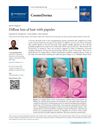
 A rare scalp condition with hair loss was correctly diagnosed and treated, leading to hair regrowth.
 September 2024 in “Cosmoderma”
 The young man has complete hair loss and skin bumps, with no other health issues or family history.
 September 2009 in “International Journal of Dermatology and Venereology”
 Dermal papilla cells play a key role in hair growth and health.
56 citations
,
July 2004 in “Mechanisms of Development” Pax9 is crucial for proper tongue surface development and preventing skin-like changes.
5 citations
,
April 2019 in “DOAJ (DOAJ: Directory of Open Access Journals)” Stopping shaving or removing hair follicles usually resolves Pseudofolliculitis barbae.
2 citations
,
May 2018 in “Dermatologic Surgery” 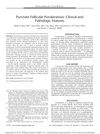 8 citations
,
November 2015 in “The American journal of dermatopathology/American journal of dermatopathology”
8 citations
,
November 2015 in “The American journal of dermatopathology/American journal of dermatopathology” Punctate follicular porokeratosis is a skin condition with specific features seen in hair follicles.

Melanocytes can regenerate around hair follicles in bullous pemphigoid, especially in patients with darker skin.
8 citations
,
January 2013 in “Australasian journal of dermatology” Trichodysplasia spinulosa is a rare skin condition caused by a virus, treatable with antiviral medication.
38 citations
,
September 1997 in “The journal of investigative dermatology/Journal of investigative dermatology” A mutation in mice causes hair loss and skin issues due to a defect in a gene affecting cell adhesion.

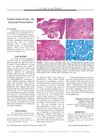
The document showed detailed images of skin structures and discussed skin diseases and their diagnosis.
 8 citations
,
September 2016 in “The American Journal of Dermatopathology”
8 citations
,
September 2016 in “The American Journal of Dermatopathology” Enlarged sweat gland ducts may indicate scarring hair loss.
10 citations
,
January 2018 in “International journal of trichology” Eruptive vellus hair cysts are rare and often misdiagnosed, requiring biopsy for accurate diagnosis.
January 2026 in “Indian Journal of Paediatric Dermatology” A 14-year-old boy has a skin condition called nevus comedonicus, treated with tretinoin cream.
 40 citations
,
June 2013 in “Biomaterials”
40 citations
,
June 2013 in “Biomaterials” Scientists created 3D hair-like structures that could help study hair growth and test treatments.
44 citations
,
March 2012 in “Molecular Carcinogenesis” Keratin 15 cells from hair follicles help develop and maintain skin tumors in mice.
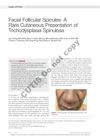
Trichodysplasia spinulosa can occur after a heart transplant due to immunosuppressive drugs.
 December 2024 in “Indian Journal of Dermatology”
 Dermoscopy is useful for diagnosing Atrichia with Papular Lesions in children without needing a biopsy.
January 2024 in “Skin Appendage Disorders”  4 citations
,
June 2021 in “Wounds-a Compendium of Clinical Research and Practice”
4 citations
,
June 2021 in “Wounds-a Compendium of Clinical Research and Practice” Chronic scalp lesions with crusts and pus that heal with strong topical steroids suggest Erosive Pustular Dermatosis, confirmed by biopsy showing specific immune cells.
January 2006 in “International water power & dam construction” Nevus comedonicus can appear later in life and affect both eyelids.
38 citations
,
June 2005 in “International Journal of Dermatology” A man with nevus comedonicus syndrome had multiple skin issues, including basal cell carcinomas, which improved with treatment.
3 citations
,
April 2011 in “Journal of the American Academy of Dermatology” A 19-year-old man had a rare skin condition on one side of his face that looked like another skin disease.