 July 2024 in “Biological and Pharmaceutical Bulletin”
 Licorice extract helps hair growth and may treat hair loss.
 4 citations
,
October 1988 in “Clinics in Dermatology”
4 citations
,
October 1988 in “Clinics in Dermatology” Dihydrotestosterone (DHT) is crucial for conditions like male-pattern baldness and acne, and measuring a byproduct, androstanediol glucuronide, is a better way to assess DHT's effects than DHT blood levels.
 50 citations
,
February 2013 in “Annals of Clinical Biochemistry”
50 citations
,
February 2013 in “Annals of Clinical Biochemistry” Understanding how DHT works is important for diagnosing and treating hormone-related disorders.
 16 citations
,
October 2007 in “Andrologia”
16 citations
,
October 2007 in “Andrologia” DHT is a strong androgen that may pose less risk to the prostate compared to testosterone.
2 citations
,
September 1992 in “Steroids” New A-homo-B, 19-dinor steroids showed strong antiandrogenic activity without affecting the enzyme 5α-reductase or androgen receptor binding.
 36 citations
,
October 2009 in “Journal of Investigative Dermatology”
36 citations
,
October 2009 in “Journal of Investigative Dermatology” Dihydrotestosterone can be made from dehydroepiandrosterone in skin cells without needing testosterone.
 12 citations
,
April 1995 in “Journal of Medicinal Chemistry”
12 citations
,
April 1995 in “Journal of Medicinal Chemistry” The new compounds moderately block a specific enzyme and strongly counteract a male hormone, suggesting potential for treating certain male-related health conditions.
179 citations
,
May 1982 in “The Journal of clinical investigation/The journal of clinical investigation” High levels of 3 alpha-diol glucuronide in the blood are a marker of increased androgen action in women with excessive hair growth of unknown cause.
 57 citations
,
May 1986 in “Clinics in endocrinology and metabolism”
57 citations
,
May 1986 in “Clinics in endocrinology and metabolism” Androstanediol glucuronide is a reliable marker for hirsutism in women.
January 2004 in “Elsevier eBooks” Anti-androgen drugs can treat conditions like prostate cancer and male pattern baldness by blocking effects of testosterone and DHT.
227 citations
,
January 1998 in “Journal of biological chemistry/The Journal of biological chemistry” Mutations at Val-889 and Arg-752 disrupt key interactions in the androgen receptor, affecting its function.
 31 citations
,
January 1995 in “The American journal of medicine”
31 citations
,
January 1995 in “The American journal of medicine” Testosterone and dihydrotestosterone play a role in women's health issues like excess hair and baldness, and treatments blocking these hormones may help.
22 citations
,
April 1972 in “Journal of Steroid Biochemistry” Beard hair follicles convert testosterone to 5α-dihydrotestosterone most intensively.
Antiandrogens and finasteride may help treat excess hair and hair loss in women.
 4 citations
,
June 2017 in “Endocrine Reviews”
4 citations
,
June 2017 in “Endocrine Reviews” Dihydrotestosterone (DHT) mainly affects nearby cells, doesn't significantly change prostate hormonal environment or cancer risk, and doesn't play a main role in causing hair loss or acne. More research is needed on its effects on heart health, sexual function, and bone health.
2 citations
,
July 2021 in “UNC Libraries” Mutations at Val-889 and Arg-752 disrupt key interactions in androgen receptor dimerization.
 April 2019 in “Journal of Investigative Dermatology”
 Testosterone affects androgen receptors and lipid storage in cells, while DHEA does not convert to testosterone or affect these receptors in the same way.
56 citations
,
November 2007 in “Molecular and cellular endocrinology” Two enzymes regulate androgen receptor activity, affecting treatments for androgen insufficiency and benign prostatic hyperplasia.
24 citations
,
September 2002 in “Der Urologe” A stronger dual 5α-reductase inhibitor could improve treatment for benign prostatic hyperplasia by further reducing DHT levels.
 5 citations
,
January 2001 in “Advances in protein chemistry”
5 citations
,
January 2001 in “Advances in protein chemistry” 5α-reductase inhibitors help treat disorders caused by DHT and have potential for future therapies.
8 citations
,
June 2017 in “Steroids” New chemical compounds were made that effectively block an enzyme linked to prostate growth.
 42 citations
,
May 2003 in “Mini-reviews in Medicinal Chemistry”
42 citations
,
May 2003 in “Mini-reviews in Medicinal Chemistry” New steroidal compounds could be effective for treating conditions related to 5α-reductase enzyme activity.
 December 1998 in “Acta Crystallographica Section C-crystal Structure Communications”
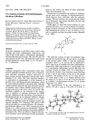
 A new compound with strong antiandrogenic effects was found, potentially useful for treating conditions like acne and prostate cancer.
14 citations
,
June 2011 in “Steroids” New compounds may help treat prostate issues without affecting androgen receptors.
209 citations
,
March 1998 in “Biochemical and biophysical research communications” Scientists found new nonsteroidal compounds that can act like natural male hormones and might help treat male fertility and hormone issues.
 14 citations
,
September 2007 in “Steroids”
14 citations
,
September 2007 in “Steroids” The study concluded that androstendione and DHEA are important for diagnosing high male hormone levels in women with excessive hair growth.
 11 citations
,
August 2000 in “Journal of Endocrinology”
11 citations
,
August 2000 in “Journal of Endocrinology” DHEA acts like a male hormone on rat skin glands and doesn't turn into female hormones there.
 403 citations
,
November 2005 in “Journal of Endocrinology”
403 citations
,
November 2005 in “Journal of Endocrinology” Dehydroepiandrosterone (DHEA) is a prohormone important for producing sex steroids and has potential health benefits.
16 citations
,
March 2022 in “Clinica Chimica Acta” Idiopathic hirsutism may be linked to increased enzyme activity.
 57 citations
,
February 1983 in “The Journal of clinical endocrinology and metabolism/Journal of clinical endocrinology & metabolism”
57 citations
,
February 1983 in “The Journal of clinical endocrinology and metabolism/Journal of clinical endocrinology & metabolism” Dihydrotestosterone increases the activity of an enzyme in pubic skin cells that converts testosterone to dihydrotestosterone.