July 2025 in “Dermatology Reports” Dermatologists should recognize diverse discoid lupus signs to avoid misdiagnosis.
14 citations
,
May 2022 in “Animals” Female goslings have darker feathers than males due to more melanin.
Onychomatricoma is a unique nail tumor, not related to other hair-related tumors.
 July 2021 in “Research Square (Research Square)”
 Semecarpus anacardium leaf extract fights breast cancer and extends survival in mice.
1 citations
,
November 2022 in “Indian Journal of Dermatology/Indian journal of dermatology” Dermoscopy helps accurately diagnose and treat benign skin cysts.
Sensory neuron and Merkel-cell changes in the skin happen independently during normal skin maintenance.
January 2025 in “Advances in experimental medicine and biology” 11 citations
,
May 1957 in “Journal of the American Medical Association” Emollient creams prevent skin dryness and benefit from shared knowledge between cosmetic makers and doctors.
 June 2023 in “Journal of biological chemistry/The Journal of biological chemistry”
 Sdr16c5 and Sdr16c6 genes regulate a key point in lipid production that affects eye and skin gland function.
25 citations
,
August 2015 in “Molecules” Mimosine dipeptides are promising for treating hyperpigmentation and inflammation.
 27 citations
,
April 2011 in “Folia Histochemica et Cytobiologica”
27 citations
,
April 2011 in “Folia Histochemica et Cytobiologica” DHT deficiency can disrupt cell connections in rat testes, possibly affecting fertility.
Sensory neuron remodeling and Merkel-cell changes in the skin happen independently.
3 citations
,
July 2015 in “Biotechnic & histochemistry” Bim and Puma proteins are found in developing mouse hair follicles and are involved in more than just cell death.
 June 2024 in “British Journal of Dermatology”
 Scalp disease in dermatomyositis causes significant symptoms and has unique features.
January 1996 in “대한피부과학회지” High Demodex mite density may be linked to sebaceous hyperplasia.
3 citations
,
July 2017 in “Journal of Investigative Dermatology” SSEA-4 can distinguish between eccrine and apocrine sweat gland ducts.
15 citations
,
November 2020 in “Development” Stem cells in the eye have different roles and behaviors, helping maintain and repair the eye's surface.
August 1993 in “Journal of Dermatological Science”  September 2025 in “Indian Dermatology Online Journal”
 Using baked goods as visual aids helps people understand skin conditions better.
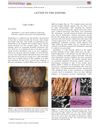 1 citations
,
February 2018 in “Australasian journal of dermatology”
1 citations
,
February 2018 in “Australasian journal of dermatology” Advanced imaging techniques are crucial for accurately diagnosing Monilethrix, a rare hair disorder.
9 citations
,
May 2020 in “bioRxiv (Cold Spring Harbor Laboratory)” Human melanocytes have unique traits that affect melanoma development and prognosis.
7 citations
,
February 2012 in “Journal of cutaneous pathology” The document describes previously unreported unique skin changes in a rare genetic disorder called Hereditary mucoepithelial dysplasia.
 April 2023 in “Journal of Investigative Dermatology”
 The improved EczemaNet more reliably and clearly identifies and assesses the severity of atopic dermatitis from photos.
5 citations
,
August 2012 in “Experimental Dermatology” Artemis phosphorylation at Ser516 may help regulate skin and hair structures.
16 citations
,
March 2021 in “EvoDevo” Different species use the same genes for tooth regeneration.
January 2022 in “International Journal of Pharmacognosy and Pharmaceutical Sciences” Semecarpus anacardium Linn. has multiple medicinal benefits, including anti-inflammatory and antioxidant effects.
Daily use of emollients from birth may reduce atopic dermatitis in infants, but results are mixed.
 1 citations
,
August 2017 in “Semiotica”
1 citations
,
August 2017 in “Semiotica” The paper concludes that breast cancer treatment involves complex interactions between medical symptoms, patient experiences, and commercial influences, requiring a holistic approach.
 50 citations
,
April 2014 in “Nature Communications”
50 citations
,
April 2014 in “Nature Communications” The research identified new skin traits in mice, some linked to human skin conditions.
6 citations
,
January 2020 in “Open Journal of Psychiatry” The Greek DCQ is a reliable and valid tool for assessing dysmorphic concern.