 2 citations
,
January 2019 in “Annals of Dermatology”
2 citations
,
January 2019 in “Annals of Dermatology” Melandrium firmum extract helps mice grow hair by blocking a hair loss enzyme and changing hair growth genes.
2 citations
,
October 2010 in “BMB Reports” L-threonate may help prevent balding by blocking a key hair loss factor.
 1 citations
,
December 2020
1 citations
,
December 2020 Malva verticillata seed extracts, specifically linoleic acid, can help reduce hair loss and promote hair growth by activating certain cell signals.
June 2026 in “Integrative Medicine Research” Connarus semidecandrus extract may safely help regrow hair in androgenetic alopecia.
 June 2025 in “Current Issues in Molecular Biology”
 Meloside A may help protect hair cells from damage linked to hair loss.
 April 2025 in “Antioxidants”
 Rhus semialata gall extract and Penta-O-Galloyl-β-D-Glucose may effectively reduce hair loss.
 May 2024 in “Archives of dermatological research”
 Enz_MoriL from mulberry leaves helps hair growth by affecting specific cell pathways.
 October 2022 in “Benha Journal of Applied Sciences”
 People with non-scarring hair loss have higher levels of DKK-1, a protein linked to hair growth, than those with scarring hair loss or no hair loss.
 January 2022 in “Food Science and Technology”
 The herbal mixture could potentially improve hair loss.
Malva verticillata seed extracts, specifically linoleic acid, can help reduce hair loss and promote hair growth by activating a specific pathway in hair cells.
January 2023 in “Iranian Journal of Pharmaceutical Research” Stauntonia hexaphylla extract can help treat hair loss by blocking certain hormones.
October 2021 in “QJM: An International Journal of Medicine” ADSC injections improve hair density, thickness, and reduce inflammation in female pattern hair loss.
26 citations
,
October 2018 in “Cancer Management and Research” High DKK1 levels predict worse survival in head and neck cancer.
220 citations
,
August 2007 in “Journal of Bone and Mineral Research” Wnt signaling is crucial for bone regeneration.
 3 citations
,
January 2023 in “Journal of Hard Tissue Biology”
3 citations
,
January 2023 in “Journal of Hard Tissue Biology” Wnt10a may help regenerate dental pulp and form dentine.
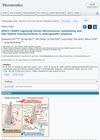 May 2026 in “Theranostics”
 Targeting DKK3–CKAP4 can help reverse hair loss in androgenetic alopecia.
March 2026 in “World Rabbit Science” DKK4 can be used to improve wool quality in Zhexi Angora rabbits.
 April 2023 in “Journal of Investigative Dermatology”
 Dkk4 protein helps control how hair grows and its arrangement.
 April 2021 in “Journal of Investigative Dermatology”
 The research found genes that may protect certain scalp cells from hair loss.
 April 2023 in “The journal of investigative dermatology/Journal of investigative dermatology”
 DKK2 and SOSTDC1 together are necessary for the normal timing of the first regression phase in the hair growth cycle.
 25 citations
,
September 2018 in “Scientific Reports”
25 citations
,
September 2018 in “Scientific Reports” Morroniside may help hair grow and stay in its growth phase by affecting certain cell signals.
 July 2022 in “Journal of Investigative Dermatology”
 Dkk4 is necessary for the initial development and arrangement of hair follicles.
July 2024 in “Journal of Investigative Dermatology” DS-2325a is safe and well-tolerated, supporting further development for Netherton Syndrome treatment.
117 citations
,
April 2008 in “Developmental biology” Ectodysplasin inhibits Wnt signaling to help form hair follicles.
 100 citations
,
September 2017 in “Molecular and Cellular Endocrinology”
100 citations
,
September 2017 in “Molecular and Cellular Endocrinology” Male hormones and their receptors play a key role in hair loss and skin health, with potential new treatments being explored.
 12 citations
,
August 2020 in “Frontiers in Genetics”
12 citations
,
August 2020 in “Frontiers in Genetics” H19 boosts hair growth potential by activating Wnt signaling, possibly helping treat hair loss.
 8 citations
,
June 2019 in “Scientific Reports”
8 citations
,
June 2019 in “Scientific Reports” Increased PPARGC1α relates to hair thinning in common baldness.
 7 citations
,
January 2015 in “Current problems in dermatology”
7 citations
,
January 2015 in “Current problems in dermatology” Hair loss can be caused by stress, infections, drugs, and various diseases, with treatment depending on accurate diagnosis.
 6 citations
,
January 2024 in “Annals of Dermatology”
6 citations
,
January 2024 in “Annals of Dermatology” Dickkopf-related Protein 2 can help hair grow by activating a specific cell pathway.
 5 citations
,
January 2016 in “Journal of Molecular Histology”
5 citations
,
January 2016 in “Journal of Molecular Histology” Both main and alternative Wnt signaling are important for regrowing rodent whisker follicles.