Search
for
Sort by
Research
90-120 / 1000+ resultsresearch 092 Novel biallelic RIPK4 mutations cause ectodermal dysplasia with cutaneous syndactyly
New RIPK4 gene mutations were found to cause a type of skin and limb birth defect.
research Novel D323G mutation of DSG4 gene in a girl with localized autosomal recessive hypotrichosis clinically overlapped with monilethrix
A new DSG4 gene mutation causes hair defects in a young girl.

research Cyclin‐dependent kinase 4 expression alters the number of keratinocyte stem cells in the mouse hair follicle
Changing CDK4 levels affects the number of stem cells in mouse hair follicles.

research Combinatorial expression of cell cycle regulators is more suitable for immortalization than oncogenic methods in dermal papilla cells
Using a combination of specific cell cycle regulators is better for safely keeping hair root cells alive indefinitely compared to cancer-related methods.
research Desmoglein 4 is regulated by transcription factors implicated in hair shaft differentiation
Desmoglein 4 is controlled by specific proteins that affect hair growth.
research Inhibition of 5α-reductase of de novo Generation of Short Anti-oxidant Peptides
DK peptides can reduce hair loss by inhibiting the 5α-reductase enzyme and have antioxidant effects.
research Serum Dicckopf-1 Level in Patients of Cicatricial and Non- Cicatricial Alopecia
People with non-scarring hair loss have higher levels of DKK-1, a protein linked to hair growth, than those with scarring hair loss or no hair loss.
research Expression patterns of programmed cell death 4 protein in normal human skin and some representative skin lesions
Increasing PDCD4 protein may help prevent or treat some skin cancers.
research Desmoglein 4 Mutations Underlie Localized Autosomal Recessive Hypotrichosis in Humans, Mice, and Rats
Mutations in the DSG4 gene cause fragile, sparse hair in humans, mice, and rats.

research Expression of Kruppel-Like Factor KLF4 in Mouse Hair Follicle Stem Cells Contributes to Cutaneous Wound Healing
KLF4 is important for maintaining skin stem cells and helps heal wounds.
research 267 Single- and multiple-ascending dose studies of DS-2325a, a KLK5 inhibitor for the treatment of Netherton syndrome
DS-2325a is safe and well-tolerated, supporting further development for Netherton Syndrome treatment.
research LB1256 TRIV-509, a dual inhibitor of KLK5 and KLK7, rapidly improves barrier integrity and markers of epidermal differentiation in atopic dermatitis skin explants
TRIV-509 quickly improves skin barrier and cell health in atopic dermatitis.
research KF19418, a new compound for hair growth promotion in vitro and in vivo mouse models
KF19418 promotes hair growth similarly to minoxidil but is not better in live mice.
research 396 A novel investigator global assessment score for the evaluation of keratosis pilaris
The document's conclusion cannot be provided because the content is not accessible.
research 362 Not just a cell marker: DPP4 modulates regeneration of hair follicles in large wounds
DPP4, a molecule in skin, helps heal large wounds and regrow hair follicles when its levels are reduced.

research CD4 expression controls epidermal stem cell balance
CD4 is crucial for maintaining skin stem cell balance and aiding wound healing.
research Promotion of Skin Carcinogenesis by Dimethylarsinic Acid in Keratin (K6)/ODC Transgenic Mice
Dimethylarsinic acid speeds up skin tumor growth in certain mice.
research Panax ginseng extract antagonizes the effect of DKK-1-induced catagen-ike changes of hair follicles
Panax ginseng extract may help prevent hair loss caused by DKK-1.

research 1428 DKK2 and SOSTDC1 cooperate to initiate the first catagen phase of the hair follicle growth cycle
DKK2 and SOSTDC1 together are necessary for the normal timing of the first regression phase in the hair growth cycle.
research Cyclin-Dependent Kinase 4/6 Inhibitors and Dermatologic Adverse Events: Results from the EADV Task Force “Dermatology for Cancer Patients” International Study
Skin side effects from CDK4/6 inhibitors in breast cancer patients are generally mild and treatable, allowing most patients to continue treatment.
research USING THE FROG EPIDERMIS TO UNCOVER DESMOSOME FUNCTION AND REGULATION IN THE DEVELOPING EMBRYO
Desmosomes are crucial for skin and heart development, and JNK may help regulate them.
research Retrospective cohort study of CDK4/6-inhibitor-induced alopecia in patients with breast cancer.
CDK4/6 inhibitors may cause hair loss in breast cancer patients.
research 446 Protective effect of DA-9401 in finasteride-induced apoptosis in rat testis: inositol requiring kinase 1 and c-Jun N-terminal kinase pathway
Finasteride helps female-pattern hair loss.
research I‐Ascorbic acid 2‐phosphate represses the dihydrotestosterone‐induced dickkopf‐1 expression in human balding dermal papilla cells
Vitamin C derivative reduces hair loss-related protein in cells.
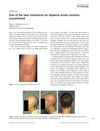
research One of the best treatments for alopecia areata remains unpublished
DNCB is highly effective for treating alopecia areata with minimal long-term side effects.
research A case of monilethrix caused by novel compound heterozygous mutations in the desmoglein 4 (DSG4) gene
New mutations in the DSG4 gene cause a rare hair condition.
research 1434 Role of fibroblast DPP4 in wound healing, scarring and regeneration
DPP4 is important for scarring and skin regeneration, and managing its activity could improve skin healing treatments.
research Isolation and Characterization of a Putative Keratin-Associated Protein Gene Expressed in Embryonic Skin of Mice
The 4C32 gene may help in mouse skin development and differentiation.
research Transgenic Kallikrein 14 Mice Display Major Hair Shaft Defects Associated with Desmoglein 3 and 4 Degradation, Abnormal Epidermal Differentiation, and IL-36 Signature
Mice with extra human KLK14 had hair and skin problems, including weaker cell bonds and inflammation, linked to Netherton syndrome.