 27 citations
,
April 2011 in “International journal of legal medicine”
27 citations
,
April 2011 in “International journal of legal medicine” In situ DNA labeling in hair can help predict forensic DNA analysis success.
 37 citations
,
March 2012 in “International Journal of Radiation Biology”
37 citations
,
March 2012 in “International Journal of Radiation Biology” Mobile phone radiation can cause DNA damage in human hair root cells.
July 2017 in “Cancer Research” Polyamines help repair DNA breaks and may influence cancer development.
 42 citations
,
December 2016 in “Cell Death & Differentiation”
42 citations
,
December 2016 in “Cell Death & Differentiation” Damaging mitochondrial DNA in mice speeds up aging due to increased reactive oxygen species, not through the p53/p21 pathway.
 47 citations
,
January 2019 in “Nature communications”
47 citations
,
January 2019 in “Nature communications” Polyamines help fix DNA damage accurately in cells.
 April 2023 in “The journal of investigative dermatology/Journal of investigative dermatology”
 Damaged hair follicle stem cells may leave the skin to help maintain youthfulness.
July 2021 in “Plastic and reconstructive surgery. Global open” Radiation therapy in breast cancer patients changes gene expression related to DNA damage, fibroblast growth, and hair follicle development, which could help improve treatment for radiation-induced fibrosis.
8 citations
,
September 2015 in “Radiotherapy and oncology” Scalp cooling does not stop hair loss from radiotherapy.
 April 2023 in “Journal of Investigative Dermatology”
 Aging changes skin cells, leading to different DNA methylation and gene activity, affecting cell metabolism and aging signs.

Melatonin may protect hair follicle stem cells from damage caused by chemotherapy.
 April 2023 in “Journal of Investigative Dermatology”
 Melatonin may help prevent hair loss caused by the chemotherapy drug paclitaxel.
 242 citations
,
February 2016 in “Science”
242 citations
,
February 2016 in “Science” Hair loss and aging are caused by the breakdown of a key protein in hair stem cells.
16 citations
,
November 2017 in “British Journal of Dermatology” Cells in hair die by breaking down their DNA and mitochondria as they form keratin.
8 citations
,
April 2017 in “Journal of Dermatological Science” Hair loss is caused by the breakdown of a protein called COL17A1 in hair follicle stem cells.
42 citations
,
February 2019 in “Circulation” Targeting ATM could help manage heart cell enlargement due to pressure overload.
 70 citations
,
March 2008 in “Mechanisms of Ageing and Development”
70 citations
,
March 2008 in “Mechanisms of Ageing and Development” Maintaining DNA health in stem cells is key to preventing aging and tissue breakdown.
June 2002 in “Science of aging knowledge environment” The cancer gene c-Myc increases harmful chemicals that damage DNA and can lead to cancer, but antioxidants can reduce this damage.
1 citations
,
November 2024 in “European Journal of Endocrinology” Higher childhood DHEAS levels are linked to advanced puberty and DNA changes.
8 citations
,
June 2001 in “Journal of Biological Chemistry” A truncated protein linked to breast cancer may change cell adhesion.
 February 2024 in “PloS one”
 Nutraceuticals that promote hair growth do not reduce tamoxifen's effectiveness in breast cancer treatment.
 February 2022 in “Research Square (Research Square)”
 Certain nutraceuticals may enhance hair growth without affecting the cancer-fighting properties of tamoxifen.
 December 2021 in “Research Square (Research Square)”
 Hair growth-promoting nutraceuticals do not block the cancer-fighting effects of tamoxifen and may enhance its action.
56 citations
,
December 1990 in “Differentiation” Growth factors can either promote or inhibit hair follicle cell growth and collagen breakdown.
6 citations
,
April 2024 in “Journal of Investigative Dermatology” CRISPR-based tools improve understanding and treatment of skin development and conditions.
75 citations
,
June 2007 in “Journal of Biological Chemistry” MT-DADMe-ImmA can selectively kill head and neck cancer cells without harming normal cells.
 December 2023 in “Farmateka”
 Minoxidil is an effective and safe treatment for common hair loss when applied to the skin, but more research is needed for optimal use.
 September 2017 in “Journal of Investigative Dermatology”
 The new scalp treatment preserves hair color, reduces hair loss, and maintains hair strength.
 1 citations
,
January 2025 in “Frontiers in Oncology”
1 citations
,
January 2025 in “Frontiers in Oncology” REV7 is crucial for genome stability and cancer treatment, making it a potential target for therapy.
41 citations
,
February 2021 in “Translational research” Non-coding RNAs could help detect and treat radiation damage.
 42 citations
,
February 2016 in “Science”
42 citations
,
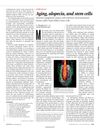
February 2016 in “Science” The document concludes that both internal stem cell factors and external influences like the environment and hormones affect hair loss and aging, with potential treatments focusing on these areas.