6 citations
,
November 2018 in “American journal of transplantation” UV light helped human hair transplants survive in mice without broad immunosuppression.
 9 citations
,
March 2020 in “Dermatologic Surgery”
9 citations
,
March 2020 in “Dermatologic Surgery” Both Follicular Unit Transplantation (FUT) and Follicular Unit Excision (FUE) are effective hair transplant methods; the best choice depends on the patient's needs and the surgeon's preference.
 August 1998 in “Dermatologic Surgery”
 Dr. George A. Farber recommends using follicular unit transplantation for hair restoration because it gives a more natural look and has fewer problems compared to the older miniflap technique.
 24 citations
,
August 2013 in “Facial Plastic Surgery Clinics of North America”
24 citations
,
August 2013 in “Facial Plastic Surgery Clinics of North America” Hair restoration surgery can have complications; success depends on patient education, careful planning, and proper execution.
 3 citations
,
November 2018 in “PubMed”
3 citations
,
November 2018 in “PubMed” SMT effectively treats advanced baldness with high satisfaction.
 13 citations
,
January 2013 in “Dermatologic Surgery”
13 citations
,
January 2013 in “Dermatologic Surgery” Experienced hair transplant surgeons suggest a limited number of hair follicles can be used for transplants, and recommend conservative methods to avoid scarring and depletion.

Proper planning and careful extraction are crucial for successful and sustainable hair transplants.
 October 2023 in “Facial Plastic Surgery”
 The FUE-LE technique combines two hair transplant methods to improve graft yield without needing a large team or extra costs.
Genetic mutations linked to ectodermal dysplasias and hair loss were identified in Pakistani families.
 April 2021 in “Advances in Cosmetic Surgery”
 Hair restoration can be achieved through non-surgical treatments like minoxidil, antiandrogens, phototherapy, and PRP procedures, or through surgical methods like hair transplantation. Continued treatment is needed to maintain results, and full results are visible after 12-18 months.
 August 1998 in “Dermatologic Surgery”
 Follicular unit hair transplantation is better than Miniflap Hair Restoration due to less scarring and more natural results.
 August 1998 in “Dermatologic Surgery”
 Use steroid creams without parabens and educate on hair transplant techniques to improve cosmetic surgery outcomes.
 6 citations
,
September 1997 in “Dermatologic Surgery”
6 citations
,
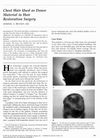
September 1997 in “Dermatologic Surgery” Chest hair can be used for scalp hair transplants when there's not enough scalp hair.
 25 citations
,
May 2011 in “Annals of Plastic Surgery”
25 citations
,
May 2011 in “Annals of Plastic Surgery” Nonhead hair transplantation is effective for patients with limited head donor hair, but more research is needed.
 14 citations
,
October 2020 in “Scientific reports”
14 citations
,
October 2020 in “Scientific reports” Hair greying is linked to reduced ATM protein in hair cells, which protects against stress and damage.
2 citations
,
March 2010 in “Plastic & Reconstructive Surgery” A simple, safe, and cost-effective method using adhesive drapes effectively removes hair from scalp grafts, reducing infection risk.
 February 2002 in “Dermatologic Surgery”
 Best hair transplant results happen when tissues are least damaged.
 75 citations
,
March 2014 in “Journal of Investigative Dermatology”
75 citations
,
March 2014 in “Journal of Investigative Dermatology” Aging mice have slower hair regeneration due to changes in signal balance, but the environment, not stem cell loss, controls this, suggesting treatments could focus on environmental factors.
 20 citations
,
December 2010 in “Burns”
20 citations
,
December 2010 in “Burns” PL-FUT is an effective hair restoration method for burn victims with minimal scarring and high patient satisfaction.
 17 citations
,
October 2002 in “Dermatologic Surgery”
17 citations
,
October 2002 in “Dermatologic Surgery” Successful surgical hair restoration requires careful planning, precise execution, and proper aftercare, using techniques like follicular unit transplantation and correct hair angling for best cosmetic results.
 13 citations
,
September 2002 in “Dermatologic Surgery”
13 citations
,
September 2002 in “Dermatologic Surgery” Effective repair of bad hair transplants requires skilled techniques and careful use of donor hair, with strategies like reimplantation and camouflage, and new methods to minimize scarring.
 10 citations
,
December 1997 in “Plastic and Reconstructive Surgery”
10 citations
,
December 1997 in “Plastic and Reconstructive Surgery” Hair restoration surgery has improved with better techniques for natural looks and managing patient expectations, but it remains labor-intensive and requires careful consideration of potential complications.
 5 citations
,
July 1999 in “Plastic and Reconstructive Surgery”
5 citations
,
July 1999 in “Plastic and Reconstructive Surgery” Unsatisfactory hair restoration results can be significantly improved with strategic hair redistribution and new donor hair placement, despite previous surgery challenges.
 4 citations
,
November 2006 in “Dermatologic Surgery”
4 citations
,
November 2006 in “Dermatologic Surgery” Transplanted transected hair follicles can survive but grow at unsatisfactory rates and are thinner, suggesting limited potential for unlimited donor hair supply.
 2 citations
,
September 2007
2 citations
,
September 2007 Surgical hair restoration involves moving hair from a non-balding area to a balding area, with the transplanted hair not subject to male pattern baldness. Medications can slow hair loss and regrow some hair, but successful treatment needs careful planning, skill, and ethical responsibility due to progressive hair loss and limited donor hair.
 1 citations
,
June 2016 in “Aesthetic Surgery Journal”
1 citations
,
June 2016 in “Aesthetic Surgery Journal” Body hair is a safe and effective option for hair transplants when scalp hair is limited.
 October 2002 in “Dermatologic Surgery”
 The document concludes that careful planning, efficient use of every hair graft, and setting surgical priorities are crucial for successful hair restoration surgery.
 20 citations
,
January 2015 in “Current problems in dermatology”
20 citations
,
January 2015 in “Current problems in dermatology” Graying hair happens due to aging and might be delayed by new treatments.
 13 citations
,
August 2016 in “Journal of Cosmetic Dermatology”
13 citations
,
August 2016 in “Journal of Cosmetic Dermatology” Using normal saline in vertical extraction for hair transplants reduces donor area injury more than acute extraction.
 32 citations
,
November 2012 in “Aesthetic Surgery Journal”
32 citations
,
November 2012 in “Aesthetic Surgery Journal” Hair restoration surgery has advanced, focusing on natural results and may improve further with new techniques and therapies.