December 2024 in “Tissue and Cell” A new method helps detect androgen receptor movement in cells, aiding research on hair loss treatments.
78 citations
,
November 2005 in “Endocrinology” Hairless protein can block vitamin D activation in skin cells.
5 citations
,
October 2023 in “Phytotherapy Research” Dauricine may help treat certain brain cancers by reducing cancer cell growth and promoting cell death.
 81 citations
,
July 2012 in “Translational Psychiatry”
81 citations
,
July 2012 in “Translational Psychiatry” Memantine may slightly improve memory in people with Down syndrome, but more research is needed.
 6 citations
,
August 1989 in “European journal of pediatrics”
6 citations
,
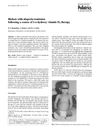
August 1989 in “European journal of pediatrics” Child with rickets improved with a specific vitamin D therapy, but alopecia did not change.
69 citations
,
October 2014 in “Stem Cells” PDGF-D boosts stem cell growth and movement, enhancing hair regeneration.
 11 citations
,
June 1996 in “Nutrition”
11 citations
,
June 1996 in “Nutrition” Vitamin D3 may prevent hair loss from chemotherapy, but side effects and cancer cell protection are concerns.
 2 citations
,
May 2023 in “International Journal of Molecular Sciences”
2 citations
,
May 2023 in “International Journal of Molecular Sciences” The TRPV3 ion channel is important for skin and hair health and could be a target for treating skin conditions.
 83 citations
,
December 2001 in “Journal of Investigative Dermatology”
83 citations
,
December 2001 in “Journal of Investigative Dermatology” Minoxidil boosts hair growth by targeting adenosine and possibly sulfonylurea receptor 2B.
7 citations
,
September 2003 in “Journal of Investigative Dermatology” PAR-1 may play a role in hair growth regulation in human hair follicles.
 11 citations
,
August 2010 in “Developmental neurobiology”
11 citations
,
August 2010 in “Developmental neurobiology” Ptprq has multiple forms that change during inner ear development.
April 2023 in “Journal of Investigative Dermatology” PRP can improve hair growth in people with hair loss, but more research is needed.
 2 citations
,
January 2001 in “Biomedical Research”
2 citations
,
January 2001 in “Biomedical Research” Trichohyalin and peptidylarginine deiminase type III are found together in rat hair follicles, with trichohyalin being modified after expression.
 March 2025 in “Institutional Repositories DataBase (IRDB)”
 The testes significantly contribute to vitamin D metabolism and may affect male reproductive health and conditions like hair loss.
January 2003 in “Zhonghua shiyan waike zazhi” Androgen, especially DHT, is crucial for erectile function in rats by affecting specific brain neurons.
February 2009 in “RePub (Erasmus University Rotterdam)” Androgen receptor activity is influenced by hormones, co-factors, modifications, and mutations.
18 citations
,
November 2009 in “Calcified tissue international” A genetic mutation caused severe rickets and alopecia in an Indian patient, but high-dose calcium and phosphate treatment improved their condition.
![Verification of the Major Metabolic Oxidation Path for the Naphthoyl Group in Chemoattractant Receptor-Homologous Molecule Expressed on Th2 Cells (CRTh2) Antagonist 2-(2-(1-Naphthoyl)-8-fluoro-3,4-dihydro-1H-pyrido[4,3-b]indol-5(2H)-yl)acetic Acid (Setipiprant/ACT-129968)](/images/assets/d743d32f-3115-48ff-9697-2f2d56130701/small/14175.jpg) 6 citations
,
September 2015 in “Journal of Medicinal Chemistry”
6 citations
,
September 2015 in “Journal of Medicinal Chemistry” The document confirms the structures of major metabolites of the CRTh2 antagonist Setipiprant and identifies minor metabolites.
23 citations
,
July 2016 in “JAMA Ophthalmology” CDH3-related disease causes worsening eye and hair issues.
 1 citations
,
January 2019 in “Annals of dermatology/Annals of Dermatology”
1 citations
,
January 2019 in “Annals of dermatology/Annals of Dermatology” STAT5 is crucial for hair growth in 3D cultured human dermal papilla cells.
 6 citations
,
January 2024 in “Annals of Dermatology”
6 citations
,
January 2024 in “Annals of Dermatology” Dickkopf-related Protein 2 can help hair grow by activating a specific cell pathway.
 7 citations
,
August 2013 in “Experimental and Therapeutic Medicine”
7 citations
,
August 2013 in “Experimental and Therapeutic Medicine” 1,25-dihydroxyvitamin D3 helps melanocyte precursors from hair follicles grow and produce melanin, aiding vitiligo treatment understanding.
 April 2016 in “Journal of Investigative Dermatology”
 A peptide known for reducing wrinkles also effectively inhibits an enzyme linked to skin inflammation and acne.
 January 2021 in “Medical Research Archives”
 Genetically modified rats help reveal how vitamin D affects bone and skin health.
6 citations
,
October 2021 in “Brain Sciences” Dutasteride may help reduce brain inflammation and improve cognition.
March 2026 in “World Rabbit Science” DKK4 can be used to improve wool quality in Zhexi Angora rabbits.
83 citations
,
July 2004 in “Pharmacology Biochemistry and Behavior” Higher 3α,5α-THP levels in the brain may reduce depression in pregnant rats.
114 citations
,
June 2000 in “Endocrinology” Alopecia in VDR knockout mice is due to a defect in hair cycle initiation, not keratinocyte issues.
 47 citations
,
June 2019 in “Nature Communications”
47 citations
,
June 2019 in “Nature Communications” Noncoding dsRNA boosts hair growth by activating TLR3 and increasing retinoic acid.
November 2024 in “Journal of Investigative Dermatology” Skin and hair cells release serotonin and histamine naturally, which could help improve skin health.