 1 citations
,
October 2023 in “British journal of dermatology/British journal of dermatology, Supplement”
1 citations
,
October 2023 in “British journal of dermatology/British journal of dermatology, Supplement” In Germany, alopecia areata is common and often occurs with skin conditions like eczema and psoriasis, affecting women slightly more and varying by region.
1 citations
,
January 2010 in “LA Referencia (Red Federada de Repositorios Institucionales de Publicaciones Científicas)” Conditioners improved hair protein retention and combing ease, with some providing thermal protection.
September 2022 in “Journal of The American Academy of Dermatology” Combining dutasteride mesotherapy with oral minoxidil is more effective for hair loss than using oral minoxidil alone.
 August 2023 in “Cell Proliferation”
 Human cells in plasma-derived gels can potentially mimic hair follicle environments, improving hair regeneration therapies.
July 2024 in “Journal of Investigative Dermatology” Pediatric patients with dystrophic epidermolysis bullosa face more hospital admissions, procedures, and complications than others.
AnnoPharma effectively identifies substances causing adverse drug reactions in medical abstracts.
 April 2023 in “The journal of investigative dermatology/Journal of investigative dermatology”
 Dermal papilla cell-derived exosomes can help stem cells grow hair.
January 2026 in “Journal of Aesthetic Nursing” Polynucleotides improve skin quality and are safe and effective for rejuvenation.
 43 citations
,
July 2016 in “European journal of pharmaceutical sciences”
43 citations
,
July 2016 in “European journal of pharmaceutical sciences” Scientists created tiny particles that release medicine on the skin and in hair, working better at certain pH levels and being safe for skin cells.
 December 2000 in “British Journal of Dermatology”
 The document corrected previous errors and announced future dermatology events.
 May 2025 in “The Journal of Rheumatology”
 Middle-aged women with dilated cardiomyopathy should be screened for antiphospholipid syndrome.
Genetic testing can help diagnose skin conditions but needs more research for full effectiveness.
 April 2023 in “Journal of Investigative Dermatology”
 Higher PD-1 levels are linked to fewer immune cells in hair follicles in alopecia areata.
 April 2016 in “The Journal of Sexual Medicine”
  June 2023 in “International Journal of Clinical Research and Reports”
 Method B with propylene glycol is better for stable low-concentration DPCP solutions for alopecia areata.
 29 citations
,
December 2011 in “British Journal of Dermatology”
29 citations
,
December 2011 in “British Journal of Dermatology” A new hair treatment with caffeine and other ingredients makes hair thicker and less likely to break.
 40 citations
,
February 2002 in “International Journal of Dermatology”
40 citations
,
February 2002 in “International Journal of Dermatology” Permanent hair dye damages hair but it mostly recovers after 8 weeks; using certain hair care products can help repair it.
 2 citations
,
December 2006 in “Lancet Oncology”
2 citations
,
December 2006 in “Lancet Oncology” Finasteride significantly reduces PSA levels in men, and doctors should adjust PSA readings for those taking the drug.
January 2013 in “프로그램북(구 초록집)” Adipose stem cell-conditioned media improved hair density and thickness in women with hair loss.
1 citations
,
June 2024 in “Plastic & Reconstructive Surgery Global Open” A super thin DIEP flap can effectively reconstruct scalp defects with good skin coverage and contour.
September 2024 in “Journal of the American Academy of Dermatology” ChatGPT-4 can help with allergic contact dermatitis but shouldn't replace expert doctors.
 9 citations
,
November 2008 in “Journal of Womens Health”
9 citations
,
November 2008 in “Journal of Womens Health” Researchers had trouble finding enough participants for a trial on DHEA's effects on postmenopausal women's sexual desire.
 171 citations
,
July 2007 in “Journal of Investigative Dermatology”
171 citations
,
July 2007 in “Journal of Investigative Dermatology” A substance called DKK-1 increases in balding areas and causes hair cells to die when exposed to DHT.
 August 2016 in “Journal of Investigative Dermatology”
 Dutasteride improved hair density and thickness in men not helped by finasteride, with minimal side effects.

Tissue from dog stem cells helped grow hair in mice.
3 citations
,
September 2024 in “Journal of Microbiology and Biotechnology” Human placenta extract reduces inflammation and symptoms in atopic dermatitis.
June 2023 in “Zenodo (CERN European Organization for Nuclear Research)” DTC hair regrowth solutions are improving hair health and confidence with innovative, personalized approaches.
47 citations
,
September 1995 in “British Journal of Dermatology” Diphencyprone therapy for hair loss can cause vitiligo.
A black Doberman with hair loss improved partially with omega-3/omega-6 treatment.
 13 citations
,
September 2019 in “Clinical, Cosmetic and Investigational Dermatology”
13 citations
,
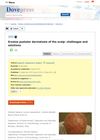
September 2019 in “Clinical, Cosmetic and Investigational Dermatology” Early treatment of EPDS can improve outcomes and reduce recurrence risk.