1 citations
,
January 2024 in “Pharmaceuticals” A new carrier improves skin delivery of tofacitinib for treating inflammatory skin diseases.
9 citations
,
January 2021 in “Acta Cirúrgica Brasileira” Dipotassium glycyrrhizinate helps wounds heal faster, especially in the early stages.
November 2024 in “Journal of Investigative Dermatology” Polygenic Score can help predict severe psoriasis and psoriatic arthritis.

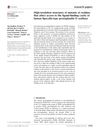
L-PGDS has specific binding sites for its functions and could help in drug delivery system design.
LGF injections may improve early Peyronie's disease by reducing penile curvature and plaque size.
14 citations
,
July 2021 in “Bioinformatics” rPanglaoDB helps study rare cell types by merging RNA data, showing fibrocytes aid in healing.
 205 citations
,
March 2012 in “Science Translational Medicine”
205 citations
,
March 2012 in “Science Translational Medicine” PGD2 stops hair growth and is higher in bald men with AGA.
Targeting the PGI2 pathway may help heal diabetic foot ulcers.
May 2021 in “bioRxiv (Cold Spring Harbor Laboratory)” rPanglaoDB helps study rare cell types by merging RNA data, confirming fibrocytes' role in healing.
 2 citations
,
April 2012 in “Science-business Exchange”
2 citations
,
April 2012 in “Science-business Exchange” Blocking a protein called prostaglandin D2 might help treat hair loss.
 June 2020 in “The journal of investigative dermatology/Journal of investigative dermatology”
 Platelet-rich Plasma Gel may help treat en coup de sabre scleroderma, improving symptoms and skin quality with minimal side effects.
62 citations
,
November 2022 in “Acta Pharmaceutica Sinica B” The injectable hydrogel effectively speeds up chronic wound healing.
 April 2026 in “Mathematics”
 Platelet dose in therapies varies greatly due to factors like injected volume and concentration.
18 citations
,
December 2016 in “European journal of pharmacology” A new compound slows cancer cell growth and causes cell death by blocking cell cycle progression and increasing cell-damaging molecules.
18 citations
,
January 2021 in “Theranostics” The targeted nanohybrids effectively reduced psoriasis symptoms and improved skin health.
PDGF signaling is crucial for cell development, wound healing, and fluid regulation in the body.
 March 1998 in “Journal of dermatological science”
 Diphencyprone initially increases mouse hair growth, then slows it, possibly due to changes in specific protein levels.
September 2019 in “Journal of Investigative Dermatology” PCE-DP brightens skin and promotes hair growth by enhancing cell growth and reducing melanin uptake.
 November 2022 in “The journal of investigative dermatology/Journal of investigative dermatology”
 Different types of PPARγ are found in varying amounts in human skin and its parts, which could affect how skin treatments work.
 January 2025 in “International Journal of Trichology”
 Combining DPCP with PRP doesn't improve hair regrowth in alopecia areata.
38 citations
,
January 2017 in “PPAR Research” PPAR-γ helps control skin oil glands and inflammation, and its disruption can cause hair loss diseases.
 June 2023 in “Journal of cosmetic dermatology”
 Both DPCP alone and with PRP are effective and safe for treating severe alopecia areata.
April 2011 in “Cancer Research” 20(S)-Protopanaxadiol-aglycone may help prevent and treat prostate cancer by reducing androgen receptor activity.
 5 citations
,
July 2014 in “Acta Crystallographica Section D-biological Crystallography”
5 citations
,
July 2014 in “Acta Crystallographica Section D-biological Crystallography” Mutations in the enzyme don't significantly change how it binds to its specific substances.
 May 2023 in “Elsevier eBooks”
 Platelet-rich plasma may help heal injuries.
January 2025 in “Fìzìologìčnij žurnal” PDRN may reduce inflammation and complications in revision rhinoplasty for patients with high fibrinogen levels.
9 citations
,
August 2023 in “Molecules” Two peptides, RMYYY and VMYMI, may be effective anti-inflammatory drugs.
11 citations
,
January 2009 in “Indian journal of dermatology, venereology, and leprology” DCPA is a chronic skin condition affecting the lower limbs, mainly in men, with unclear causes and treatments that often don't work well.
 October 2021 in “Dermatology reports”
 The care model improved timely diagnosis and treatment for psoriasis and psoriatic arthritis.
5 citations
,
August 2022 in “Mediators of Inflammation” Combining Pulsed Dye Laser with Pingyangmycin is effective and safe for treating acne scars.