32 citations
,
August 2024 in “Journal of Investigative Dermatology” In vitro skin models are improving but still need more innovation to fully replicate human skin.
17 citations
,
January 2023 in “Frontiers in Cell and Developmental Biology” iPSCs are promising for studying and treating COVID-19.
12 citations
,
September 2024 in “JID Innovations” Skin-on-a-chip devices better mimic human skin for research.
5 citations
,
November 2024 in “Cells” Fish cell spheroids are a promising tool for replicating real-life conditions in research.
 5 citations
,
June 2012 in “QJM: An International Journal of Medicine”
5 citations
,
June 2012 in “QJM: An International Journal of Medicine” The lecture concluded that drugs for human enhancement are here to stay and called for their responsible development and fair access.
 November 2016 in “Therapeutic Delivery”
 New drugs for Alzheimer's and rheumatoid arthritis advanced, a Zika vaccine is in development, and there were business deals in anesthesia and oncology.
 1 citations
,
August 2006 in “International forensic science and investigation series”
1 citations
,
August 2006 in “International forensic science and investigation series” Hair testing is a reliable method for detecting workplace drug use when done with proper sample preparation and confirmation.
 January 2026 in “Frontiers in Drug Discovery”
 Transforming skin disease treatment requires new strategies, better drug models, and patient-focused research.
 16 citations
,
June 2017 in “PLoS ONE”
16 citations
,
June 2017 in “PLoS ONE” A 6-group hair classification is more reliable for drug testing than an 8-group system.
 February 2025 in “Drug Testing and Analysis”
 All samples tested negative for banned substances, ensuring competition integrity.
 1 citations
,
October 2013 in “Expert Review of Dermatology”
1 citations
,
October 2013 in “Expert Review of Dermatology” Diagnosing alopecia areata is challenging and requires careful examination and various tests to distinguish it from other hair loss types.
 2 citations
,
August 2023 in “Pharmaceutics”
2 citations
,
August 2023 in “Pharmaceutics” New skin disease treatments using TDDS are improving but face challenges like side effects and high costs.
 2 citations
,
May 2023 in “Nanomaterials”
2 citations
,
May 2023 in “Nanomaterials” Microemulsions could improve skin drug delivery but face challenges like complex creation and potential toxicity.
December 2025 in “Pharmaceutics” EV-based drug delivery shows promise but faces challenges in standardization and scalability.
 January 2025 in “PROTEOMICS”
 Drug repositioning is a promising way to quickly develop new treatments, especially for rare diseases.
 May 2026 in “Frontiers in Cell and Developmental Biology”
 Hair follicle organoids can help study hair biology and disorders but need improvements for wider use.
 3 citations
,
March 2023 in “Scientific Reports”
3 citations
,
March 2023 in “Scientific Reports” Researchers developed a new method to test hair growth drugs and found that adult cells are best for hair growth, but the method needs improvement as it didn't create mature hair follicles.
5 citations
,
May 2025 in “Pharmaceutics” Sericin from silk cocoons could be a promising drug delivery tool, but stability and consistency need improvement.
1 citations
,
July 2021 in “Forensic science international” Both a lock of hair and a single hair strand can show chronic drug use, but at least six single hairs are needed for accurate results.

Forensic hair analysis for drugs is now more reliable and accurate.
 59 citations
,
September 2008 in “Experimental dermatology”
59 citations
,
September 2008 in “Experimental dermatology” Both mouse and rat models are effective for testing alopecia areata treatments.
 3 citations
,
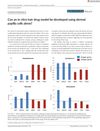
February 2021 in “Experimental dermatology”
3 citations
,
February 2021 in “Experimental dermatology” Dermal papilla microtissues could be useful for initial hair growth drug testing.
 77 citations
,
August 2025 in “Signal Transduction and Targeted Therapy”
77 citations
,
August 2025 in “Signal Transduction and Targeted Therapy” Extracellular vesicles show promise for treating diseases but face challenges in development and regulation.
 11 citations
,
June 2011 in “Expert Review of Dermatology”
11 citations
,
June 2011 in “Expert Review of Dermatology” Skin reactions to drugs are common and can be deadly, usually requiring stopping the drug and may be better prevented with genetic testing in the future.
 70 citations
,
July 2020 in “Pharmacological Reports”
70 citations
,
July 2020 in “Pharmacological Reports” Cepharanthine, a Japanese hair loss drug, shows promise as a COVID-19 treatment but needs more testing.
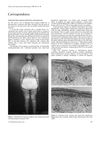 5 citations
,
January 1998 in “Clinical and experimental dermatology”
5 citations
,
January 1998 in “Clinical and experimental dermatology” Myotonic dystrophy should be considered in patients with hair thinning, and genetic counseling is important.
 1 citations
,
November 2021 in “Drug Testing and Analysis”
1 citations
,
November 2021 in “Drug Testing and Analysis” The 39th Manfred Donike Workshop discussed methods for detecting misuse of steroids, gene doping, and the complexity of identifying drug residues in urine, highlighting the ongoing efforts to improve global anti-doping work.
 3 citations
,
February 2018 in “Australian Veterinary Journal”
3 citations
,
February 2018 in “Australian Veterinary Journal” Veterinarians could test positive for ketamine from work exposure, not just substance abuse.
 October 2023 in “Biomedical science and engineering”
 Innovative methods are reducing animal testing and improving biomedical research.
34 citations
,
January 2016 in “Analytical Chemistry” A new method can quickly and accurately detect drugs in hair.