 147 citations
,
April 1994 in “Drug Safety”
147 citations
,
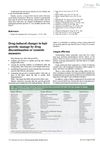
April 1994 in “Drug Safety” Some drugs can cause hair loss or increase hair growth, but these effects are usually reversible when the drug is stopped.
 17 citations
,
January 2013 in “Indian Journal of Pharmacology”
17 citations
,
January 2013 in “Indian Journal of Pharmacology” High levels of the seizure medication sodium valproate can cause hair loss.
 4 citations
,
March 1989 in “The BMJ”
4 citations
,
March 1989 in “The BMJ” Naproxen is not the cause of hair loss in a child; it's due to a toxic event with expected hair regrowth.
 July 2024 in “Skin Appendage Disorders”
 Certain medications, including some immune drugs, contraceptives, and hair loss treatments, are often linked to hair loss.
January 2014 in “Astrocyte” Some drugs may cause hair loss in women.
 3 citations
,
April 2021 in “Biomolecules & Therapeutics”
3 citations
,
April 2021 in “Biomolecules & Therapeutics” The protein ER71/ETV2 helps regrow hair after chemotherapy by improving the growth of new blood vessels.
 1 citations
,
October 2013 in “The Journal of Dermatology”
1 citations
,
October 2013 in “The Journal of Dermatology” Hair loss in a drug reaction case involved both a common shedding phase and an immune attack on hair follicle stem cells.
 July 2025 in “SKIN The Journal of Cutaneous Medicine”
 Oral minoxidil can help regrow hair lost from antibody-drug conjugate treatment.
 3 citations
,
January 2021 in “Plastic and Aesthetic Research”
3 citations
,
January 2021 in “Plastic and Aesthetic Research” Hair loss reduces hair thickness and coverage, but drug treatments mainly revive dormant hairs rather than reverse thinning; patients often undervalue their hair loss severity.
 114 citations
,
January 2007 in “Drug Safety”
114 citations
,
January 2007 in “Drug Safety” Some drugs can cause skin, nail, and hair problems, which are important for healthcare professionals to recognize and report.
9 citations
,
October 2012 in “Klinik Psikofarmakoloji Bülteni-Bulletin of Clinical Psychopharmacology” Stopping the drug olanzapine can reverse hair loss caused by it.
 April 2023 in “Journal of Investigative Dermatology”
 Some patients who had a severe drug reaction developed long-term hair loss.
 9 citations
,
January 1992 in “Journal of Investigative Dermatology”
9 citations
,
January 1992 in “Journal of Investigative Dermatology” Sugar molecule helps hair growth, less in balding, returns with treatment.
 August 1994 in “Drugs & Therapy Perspectives”
 Some drugs can cause hair loss or growth, but hair usually returns to normal after stopping the drug.
 2 citations
,
January 2014 in “Journal of clinical and investigative dermatology”
2 citations
,
January 2014 in “Journal of clinical and investigative dermatology” Some drugs used to treat immune conditions may cause different types of hair loss.
 5 citations
,
October 1984 in “The BMJ”
5 citations
,
October 1984 in “The BMJ” Up to 50% of scalp hair can be lost before it appears thin, and treatment is only needed for hair loss caused by diseases or deficiencies.
 1 citations
,
October 2016 in “Iranian journal of psychiatry and behavioral sciences”
1 citations
,
October 2016 in “Iranian journal of psychiatry and behavioral sciences” Sertraline, an antidepressant, may rarely cause hair loss.
 February 2019 in “PubMed”
 Methotrexate treatment often causes hair loss.
 39 citations
,
October 1967 in “British Journal of Dermatology”
39 citations
,
October 1967 in “British Journal of Dermatology” Hair loss in women often doesn't follow a pattern, isn't linked to age, may be genetic, and can be related to thyroid issues or other health factors.
 83 citations
,
May 1999 in “International Journal of Dermatology”
83 citations
,
May 1999 in “International Journal of Dermatology” Hair loss that spreads out can often fix itself or be treated by finding and handling the cause.
 40 citations
,
August 2006 in “Current Drug Safety”
40 citations
,
August 2006 in “Current Drug Safety” Some drugs can cause hair loss, excessive growth, or color changes, often reversible but sometimes permanent.
 7 citations
,
May 2014 in “Clinical practice”
7 citations
,
May 2014 in “Clinical practice” Cooling the scalp may prevent hair loss from chemotherapy, hair often grows back after treatment, and nail issues usually improve after stopping the drug.
5 citations
,
March 2011 in “Journal of proteomics” Histone H4, released by cells exposed to colchicine, can cause hair loss by inhibiting cell growth and enzyme activity.
 7 citations
,
June 2015 in “Cutaneous and Ocular Toxicology”
7 citations
,
June 2015 in “Cutaneous and Ocular Toxicology” Some drugs can cause skin reactions, which may improve when the drug is stopped, and rapid diagnosis and stopping the drug is crucial.
2 citations
,
January 2018 in “Indian Journal of Psychiatry/Indian journal of psychiatry” Methylphenidate can cause hair loss, which stops when the drug is discontinued.
1 citations
,
July 2006 in “American Journal of Psychiatry” Lamotrigine can cause hair loss.
 September 2022 in “Polish Hyperbaric Research”
 Some treatments for hair loss, like finasteride, biotin, and minoxidil, can be effective, but their success varies by individual case.
 5 citations
,
February 2013 in “Klinik Psikofarmakoloji Bulteni-bulletin of Clinical Psychopharmacology”
5 citations
,
February 2013 in “Klinik Psikofarmakoloji Bulteni-bulletin of Clinical Psychopharmacology” A teenager lost hair due to fluoxetine and sertraline, but it grew back after stopping these drugs and switching to a different one.
 4 citations
,
May 1999 in “PubMed”
4 citations
,
May 1999 in “PubMed” Some medications can cause reversible hair loss by affecting hair growth cycles.
20 citations
,
September 1995 in “PubMed” Many drugs can cause temporary hair loss, which usually stops when the drug is discontinued.