September 2024 in “Reproduction and Fertility” New methods may speed up drug development for male subfertility.
 August 2024 in “Current Protocols”
 The C3H/HeJ mouse model is useful for studying and testing treatments for alopecia areata.
 August 2024 in “Drug Design Development and Therapy”
 Decursin shows promise for treating cancer, neuroprotection, inflammation, and hair loss.
 July 2024 in “Skin Appendage Disorders”
 Certain medications, including some immune drugs, contraceptives, and hair loss treatments, are often linked to hair loss.
iEdgePathDDA effectively finds new drug-disease links, outperforming other methods.
 May 2024 in “Drug discovery today”
 Thyroid receptor β can help develop new drugs to treat hair loss.
 May 2024 in “International Journal of Nanomedicine”
 Biodegradable polymers can improve cannabinoid delivery but need more clinical trials.
 January 2024 in “Research Portal Denmark”
 Artificial hair fibers improve drug delivery accuracy through skin models.
January 2024 in “African Journal of Biomedical Research” Repurposing existing drugs can quickly and cheaply find new treatments for unmet medical needs.
 November 2023 in “Frontiers in pharmacology”
 Drug repositioning offers hope for new, affordable treatments for a genetic skin disorder called ARCI.
 November 2023 in “Circulation”
 Minoxidil can cause a rare but serious condition that leads to fluid buildup around the heart and drug-induced lupus.
 July 2023 in “Drug testing and analysis (Print)”
 Homemade hair treatments can significantly lower drug levels in hair, possibly causing false-negative drug tests.
 June 2023 in “Frontiers in Cardiovascular Medicine”
 Using existing drugs for new purposes could be a cost-effective way to treat chest pain and non-clogged heart arteries, with some drugs for lung blood pressure showing promise but needing more testing.
 May 2023 in “Current Medicinal Chemistry”
 Microneedle patches improve drug delivery for skin treatments and cosmetic enhancements.
 April 2023 in “IntechOpen eBooks”
 Drug repurposing speeds up drug development, saves money, and has led to about a third of new drug approvals.
 October 2022 in “Journal of experimental and clinical medicine”
 Repurposing existing drugs for COVID-19 shows promise but requires more research to confirm effectiveness.
August 2022 in “Frontiers in Pharmacology” Ultrasound can improve targeted drug delivery, making treatments more effective with fewer side effects.
 August 2022 in “Nature Biotechnology”
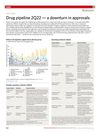
 Drug approvals slowed in 2Q22, but notable drugs like Amvuttra, Camzyos, and Olumiant were approved.
 January 2022 in “International Journal of Science and Research (IJSR)”
 Certain medications can cause hair loss, which varies in severity and can be treated with specific drugs.
 December 2021 in “The Korean Society of Beauty and Art”
 A microneedle patch system was developed for quick, convenient, and efficient delivery of hair loss treatment drug, Finasteride.
 November 2021 in “International journal of life science and pharma research”
 The new gel for psoriasis is effective, stable, and easy to apply.
 October 2021 in “Research Society and Development”
 Herbal medicines can reduce the effectiveness of birth control pills.
September 2021 in “Assay and drug development technologies” Drug repurposing shows promise for treating many medical conditions.
July 2021 in “Belarusian State Pedagogical University repository (Belarusian State Pedagogical University)” PMC shows promise as a treatment for hair loss.
 February 2021 in “Journal of pharmaceutical and biological sciences”
 No cure exists for alopecia areata, and treatments are personalized.
 September 2020 in “Farmacja Polska”
 Foams improve drug absorption and release in various medical applications.
 November 2018 in “The Journal of Allergy and Clinical Immunology: In Practice”
 Using old drugs for new uses can help treat rare immune deficiencies.
 April 2018 in “Journal of Ayurvedic and herbal medicine”
 Computational methods can speed up and improve the development and safety of herbal drugs.
September 2017 in “Journal of Investigative Dermatology” QMSI effectively maps and quantifies drug distribution in skin tissues.
 July 2017 in “Nursing2023”
 Actemra is approved for a specific artery condition, HIV treatment adherence has improved, women may pay more for a hair loss product, and incorrect dosing of blood thinners can be risky.