 February 2019 in “bioRxiv (Cold Spring Harbor Laboratory)”
 The gene Prss53 affects hair shape and bone development in rabbits.
April 2016 in “Journal of Investigative Dermatology” Mutations in the TSPEAR gene cause a new form of ectodermal dysplasia affecting hair and tooth development.
September 2013 in “Helda (University of Helsinki)” Mutations in specific genes cause certain congenital defects in dogs, aiding in understanding similar human diseases.
 1 citations
,
April 2025 in “Pediatria i Medycyna Rodzinna”
1 citations
,
April 2025 in “Pediatria i Medycyna Rodzinna” Restoring EDA and WNT pathways early may help improve skin, hair, and teeth issues in hypohidrotic ectodermal dysplasia.
 109 citations
,
October 2007 in “American Journal of Human Genetics”
109 citations
,
October 2007 in “American Journal of Human Genetics” Giving a special protein to dogs with a certain genetic disease improved their symptoms but didn't help with hair growth.
 85 citations
,
August 2015 in “Journal of Applied Genetics”
85 citations
,
August 2015 in “Journal of Applied Genetics” Mutations in specific genes disrupt development of sweat glands, teeth, hair, skin, and nails in HED.
46 citations
,
March 2005 in “Endocrinology” Overexpression of the glucocorticoid receptor in mice causes developmental defects similar to ectodermal dysplasia.
 35 citations
,
April 2014 in “American Journal of Medical Genetics”
35 citations
,
April 2014 in “American Journal of Medical Genetics” Boys with less severe EDA mutations in XLHED have milder symptoms and better sweat and hair production.
32 citations
,
January 1971 in “Annals of Internal Medicine” People with anhidrotic ectodermal dysplasia may get severe bronchitis if exposed to dust.
 30 citations
,
June 2016 in “Journal of Human Genetics”
30 citations
,
June 2016 in “Journal of Human Genetics” Researchers found genetic mutations causing hypohidrotic ectodermal dysplasia in 88% of studied patients and identified new mutations and genetic variations affecting the disease.
28 citations
,
June 1991 in “Veterinary Dermatology” Black and white Saluki dogs have a unique hair loss condition different from Doberman pinschers.
 20 citations
,
January 2009 in “International Journal of Dermatology”
20 citations
,
January 2009 in “International Journal of Dermatology” Hair loss in Clouston's syndrome improved with minoxidil and tretinoin treatment.
20 citations
,
January 1997 in “Dermatology” The patient with EEC syndrome had scarring alopecia due to deep folliculitis, possibly linked to abnormal hair structure.
 17 citations
,
August 2012 in “Journal of Medical Genetics”
17 citations
,
August 2012 in “Journal of Medical Genetics” A new mutation in the XEDAR gene might cause a rare skin condition called hypohidrotic ectodermal dysplasia.
 15 citations
,
May 2013 in “American Journal of Medical Genetics - Part A”
15 citations
,
May 2013 in “American Journal of Medical Genetics - Part A” People with X-linked hypohidrotic ectodermal dysplasia have no sweat ducts and less, thinner hair.
 12 citations
,
March 2013
12 citations
,
March 2013 Minoxidil cream can safely treat hair loss in kids with ectodermal dysplasia.
9 citations
,
October 1995 in “Clinical Dysmorphology” The family has a unique form of ectodermal dysplasia similar to Clouston syndrome but with different hair and skin symptoms.
7 citations
,
February 2012 in “Journal of cutaneous pathology” The document describes previously unreported unique skin changes in a rare genetic disorder called Hereditary mucoepithelial dysplasia.
6 citations
,
June 2021 in “The journal of investigative dermatology/Journal of investigative dermatology” A mutation in the SREBF1 gene causes both hereditary mucoepithelial dysplasia and IFAP syndrome, which are related conditions.
4 citations
,
November 2020 in “Acta Dermato Venereologica” Tofacitinib effectively improved severe skin symptoms in a patient with Hypohidrotic Ectodermal Dysplasia.
4 citations
,
January 2017 in “Acta dermato-venereologica” A new EDA gene mutation was found in a Chinese family with a specific skin disorder.
 3 citations
,
September 2016 in “British Journal of Dermatology”
3 citations
,
September 2016 in “British Journal of Dermatology” Warts in HIV-positive men can have serious abnormal cell growth, needing careful analysis and treatment to prevent cancer.
 3 citations
,
February 2016 in “Pediatric dermatology”
3 citations
,
February 2016 in “Pediatric dermatology” Strong skin creams work well for long-term scalp inflammation in Rapp-Hodgkin Ectodermal Dysplasia.
 2 citations
,
September 2021 in “Orphanet Journal of Rare Diseases”
2 citations
,
September 2021 in “Orphanet Journal of Rare Diseases” People with hypohidrotic ectodermal dysplasia are more likely to experience long-term fatigue and hair loss after COVID-19.
2 citations
,
May 2016 in “Journal of dermatology” Tissue expansion successfully treated alopecia in a child with hypohidrotic ectodermal dysplasia.
 1 citations
,
November 2017 in “Expert opinion on orphan drugs”
1 citations
,
November 2017 in “Expert opinion on orphan drugs” Scientists now better understand the genetics of hypohidrotic ectodermal dysplasia, leading to more accurate diagnoses and potential new treatments.
February 2026 in “Pediatric Dermatology”  February 2026 in “Orphanet Journal of Rare Diseases”
 Most genetic mutations causing hypohidrotic ectodermal dysplasia in Russian patients are found in the EDA gene.
January 2026 in “Acta Dermato Venereologica” Dupilumab effectively treats severe skin issues in a rare genetic disorder.
 January 2026 in “Journal of Clinical and Investigative Dermatology”
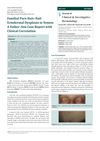
 A father and son in Yemen have a genetic condition causing hair loss and nail problems.