 November 2025 in “Bioscientia Medicina Journal of Biomedicine and Translational Research”
 A combined treatment with microneedling and vitamin D3 led to complete hair regrowth in a woman with stubborn patch alopecia areata.
 November 2025 in “EXPERIMENTAL ANIMALS”
 Stingless bee propolis may help regenerate hair follicles and improve pigment function in chemotherapy-induced hair loss.
 November 2025 in “Turkish Journal of Dermatology”
 Both baricitinib and tofacitinib effectively reduce alopecia areata severity, with tofacitinib showing more improvement over longer use.
 September 2025 in “Journal of Dhaka Medical College”
 Lower vitamin D levels are linked to more severe alopecia areata.
 September 2025 in “Dermatology and Therapy”
 Activated PRP effectively increases hair density and reduces hair loss in alopecia.
 July 2025 in “Current Treatment Options in Oncology”
 Scalp cooling helps prevent hair loss during chemotherapy, and minoxidil aids regrowth.
 July 2025 in “International Journal of Dermatology Venereology and Leprosy Sciences”
 Higher stress levels may worsen alopecia areata, suggesting stress management is important for treatment.
 January 2025 in “TURKDERM”
 Alopecia areata incognito in children can be effectively treated with triamcinolone acetonide and supplements, leading to full hair regrowth.
 January 2025 in “Universidad de Córdoba Insitutional Repository (Universidad de Córdoba)”
 An imbalanced scalp microbiome may worsen alopecia areata severity and inflammation, but treatment can partially restore balance.
 May 2024 in “Clinical, cosmetic and investigational dermatology”
 5% topical minoxidil effectively treated a boy's congenital triangular alopecia without side effects.
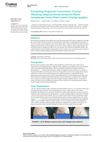
Genetic testing can help diagnose skin conditions but needs more research for full effectiveness.
 April 2024 in “International Journal of Research Publication and Reviews”
 Alopecia areata causes hair loss with varied treatment responses and frequent relapses.
 February 2024 in “International journal of biology, pharmacy and allied sciences”
 Plant-based treatments can effectively and safely treat hair loss.
 January 2024 in “International Journal of Health Science”
 Scalp cooling and low-power light therapy show promise in reducing chemotherapy-induced hair loss but need more research.
 January 2024 in “Archives of dermatological research”
 Both treatments for alopecia areata showed similar modest effectiveness.
 December 2023 in “EPRA international journal of multidisciplinary research”
 Alopecia areata causes sudden hair loss, has genetic links, and can be managed but not cured.
Non-invasive methods can effectively diagnose and manage alopecia areata.
COVID-19 may trigger or worsen rapid hair loss in alopecia areata.
 January 2023 in “International journal of homoeopathic sciences”
 The document says homoeopathic treatments are good for hair regrowth in alopecia areata but doesn't give proof.
 March 2022 in “International Journal of Health Sciences”
 Pentoxifylline helps hair regrowth in rats with hair loss.
 October 2021 in “International journal of research in dermatology”
 No link between scalp patterns and alopecia severity in children, but more severe cases often had nail abnormalities.
 July 2021 in “International journal of dermatology, venereology and leprosy sciences”
 Diphenylcyclopropenone is more effective and has fewer side effects than dinitrochlorobenzene for treating alopecia areata.
 June 2019 in “Journal of evolution of medical and dental sciences”
 Dermoscopy is useful for tracking alopecia areata treatment, with yellow dots and new vellus hairs being good indicators of hair regrowth.
 October 2018 in “InTech eBooks”
 The gene Foxn1 is important for hair growth, and understanding it may lead to new alopecia treatments.
 June 2018 in “The Medical Journal of Cairo University/The Medical Journal of Cairo University”
 Dermoscopy can quickly and reliably distinguish Tinea Capitis from Alopecia Areata by identifying specific hair patterns.
 May 2018 in “White Rose eTheses Online (University of Leeds, The University of Sheffield, University of York)”
 Alopecia areata may be treated by using EGCG to balance immune cells and reduce inflammation.
 December 2017 in “The journal of investigative dermatology. Symposium proceedings/The Journal of investigative dermatology symposium proceedings”
 The summit aimed to speed up finding treatments for alopecia areata.
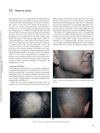 April 2012 in “Informa Healthcare eBooks”
 Alopecia areata is a common autoimmune condition causing varying hair loss, diagnosed by specific patterns of inflammation around hair follicles, with several treatment options available.
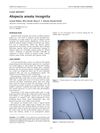 December 2007 in “CRC Press eBooks”
 Alopecia areata incognita causes widespread hair loss without patches and needs a scalp biopsy for diagnosis.
 122 citations
,
November 1984 in “Journal of the American Academy of Dermatology”
122 citations
,
November 1984 in “Journal of the American Academy of Dermatology” No single treatment is consistently effective for alopecia areata, and more research is needed.