January 2005 in “世界胃肠病学杂志:英文版(电子版)” Etoposide makes radiation therapy more effective against tumors without major side effects.
December 2009 in “Cancer Research” Over-expression of Sp2 can lead to cancer by preventing proper stem cell differentiation.
 24 citations
,
January 2019 in “Theranostics”
24 citations
,
January 2019 in “Theranostics” Loss of Pten in certain hair follicle stem cells increases skin cancer risk.
 July 2020 in “Benha Journal of Applied Sciences”
 People with alopecia areata have higher levels of EGF in their blood than healthy people.
41 citations
,
January 2015 in “Development” Atoh1 expression can create new Merkel cells in the skin.
2 citations
,
June 2006 in “Journal of Clinical Pathology” Localized breast cancer can affect skin and hair.
164 citations
,
December 1984 in “Proceedings of the National Academy of Sciences” TCDD reduces EGF receptor activity and causes various developmental changes in animals.
3 citations
,
June 2017 in “Journal of Physiology & Pathology in Korean Medicine” Puerariae Radix extract may help hair growth by increasing cell activity.
38 citations
,
July 2020 in “EMBO journal” SIRT7 protein is crucial for starting hair growth in mice.
Finasteride may help treat childhood brain tumors by activating certain genes.
113 citations
,
May 2002 in “PubMed” Overexpressing COX-2 in mice skin reduces skin tumor development.
 October 2011 in “Journal of dermatology”
 A man with a rare skin condition and a new gene mutation developed high calcium levels due to his treatment.
October 2024 in “Frontiers in Oncology” A new gene mutation linked to Olmsted syndrome may increase cancer risk, suggesting the need for ongoing patient monitoring.
 January 2025 in “JCEM Case Reports”
 Enzyme replacement therapy may help alleviate symptoms in complex cases like this.
 1 citations
,
September 2019 in “Journal of Investigative Dermatology”
1 citations
,
September 2019 in “Journal of Investigative Dermatology” The research showed that CRISPR/Cas9 can fix mutations causing a skin disease in stem cells, which then improved skin grafts in mice, but more work on safety and efficiency is needed.
 April 2026 in “Apollo (University of Cambridge)”
 SOX9 is crucial for cell development and repair but can cause fibrosis and cancer if misregulated.
 7 citations
,
August 2017 in “PloS one”
7 citations
,
August 2017 in “PloS one” Key genes linked to hair growth and cancer were identified in hairless mice.
21 citations
,
February 2006 in “Clinical Cancer Research” Mitf plays a key role in melanoma progression and is linked to disease stage.
46 citations
,
May 2013 in “The journal of investigative dermatology/Journal of investigative dermatology” Significant progress was made in understanding PXE, but effective treatments are still needed.
April 2016 in “Journal of Investigative Dermatology” CD73 may regulate hair growth and could be targeted for hair growth treatments.
19 citations
,
September 2008 in “Journal of Cellular Physiology” Blocking EGFR can cause skin inflammation by disrupting IL-1 signaling.
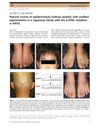 3 citations
,
January 2019 in “Journal of Dermatology”
3 citations
,
January 2019 in “Journal of Dermatology” The p.P25L mutation in the KRT5 gene causes a rare skin condition that worsens over time and may lead to hair loss starting in young adulthood.
1 citations
,
January 2020 in “Indian journal of dermatology, venereology, and leprology” CD117 and platelet-derived growth factor receptor α may play a role in alopecia areata.
39 citations
,
December 1998 in “Journal of Cell Science” The LEF-1 binding site enhances gene expression in hair follicles, with other proteins aiding specific regulation.
 87 citations
,
January 2017 in “PLoS Genetics”
87 citations
,
January 2017 in “PLoS Genetics” Removing both KLK5 and KLK7 proteins can prevent death and skin issues in Netherton syndrome.
 September 2019 in “Journal of Investigative Dermatology”
 Targeted therapy with Ustekinumab significantly improved a skin condition called ILVEN, which is caused by mutations in the CARD14 gene.
 6 citations
,
January 2020 in “International Journal of Biological Sciences”
6 citations
,
January 2020 in “International Journal of Biological Sciences” Septin4 helps kill colon cancer cells by working with the protein BAX.
July 2017 in “Cancer Research” Krt15+ cells in mice can resist radiation, regenerate tissue, and start tumors, suggesting new cancer treatment targets.
31 citations
,
February 2007 in “Molecular Carcinogenesis” Overexpressing ATF3 in mice's epithelial cells may lead to oral cancer.
 28 citations
,
November 2018 in “Journal of Cellular and Molecular Medicine”
28 citations
,
November 2018 in “Journal of Cellular and Molecular Medicine” CXXC5 is a protein that controls cell growth and healing processes, and changes in its activity can lead to diseases like cancer and hair loss.